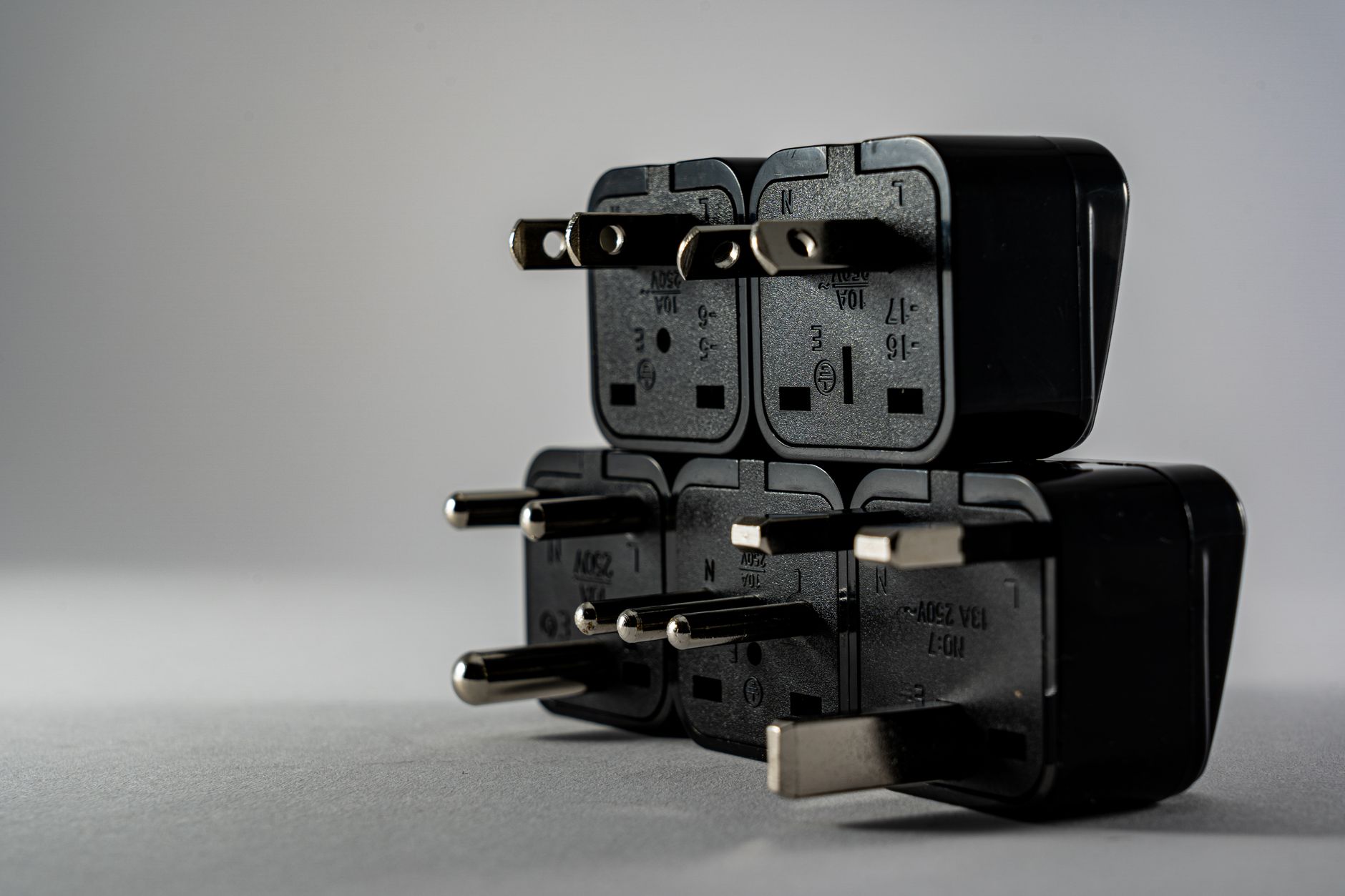
The standard advice is to buy a universal travel adapter. I think that’s the wrong purchase. Those chunky all-in-one blocks are heavy, they sag out of loose sockets, and they only solve half the problem. The real problem in a hotel room is that you own four devices and there are two outlets, one of them behind the bed.
Buy the charger, not the adapter
A single multi-port USB charger, ideally with at least one USB-C port strong enough for a laptop, replaces every brick in your bag. Phone, earbuds, e-reader and camera battery all go through one plug and take one outlet. Check the wattage against what your laptop asks for. The number is printed on its original charger, and a weak port will charge it slowly or not at all.
Then add one cheap plug converter
You only need a plug shape that matches the wall. Much of continental Europe will take the two-round-pin Europlug, which fits both the older and the newer socket styles in most countries. The UK, Ireland, Malta and Cyprus use the three-rectangular-pin Type G, which is a different thing entirely. Buy the specific converter for where you’re going, or a small slim one that covers the places you travel most. They weigh almost nothing and you can lose one without grief.
Read the label before you plug in
Phone and laptop chargers are usually marked “Input: 100–240V”, which means they handle foreign mains without trouble. Hair dryers, straighteners and many cheap travel kettles often don’t. Those are the things that fail loudly, sometimes with a bang and a tripped hotel fuse. If it doesn’t say 100–240V on the label, leave it at home and use the hotel’s dryer.
About power strips
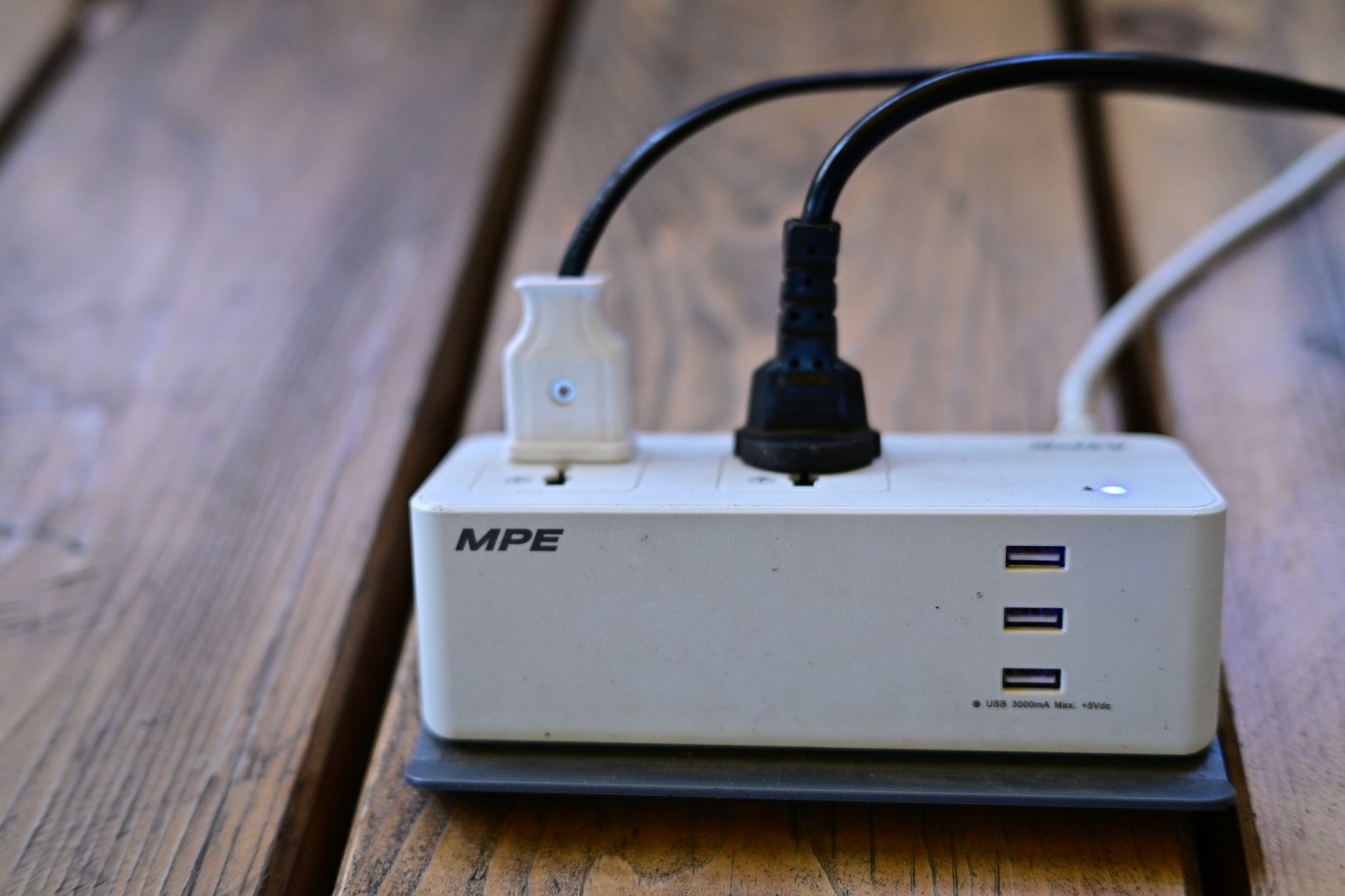
A small extension lead is a good idea only if it’s rated for the voltage where you’re going. A lot of strips sold for travel are built for 120V and should not be run from 230V sockets. Check the label here too.
The short version of the bedside problem
Bring a three-metre cable. It’s the cheapest upgrade you can make. It turns a socket behind the wardrobe into a charging spot you can use from bed.