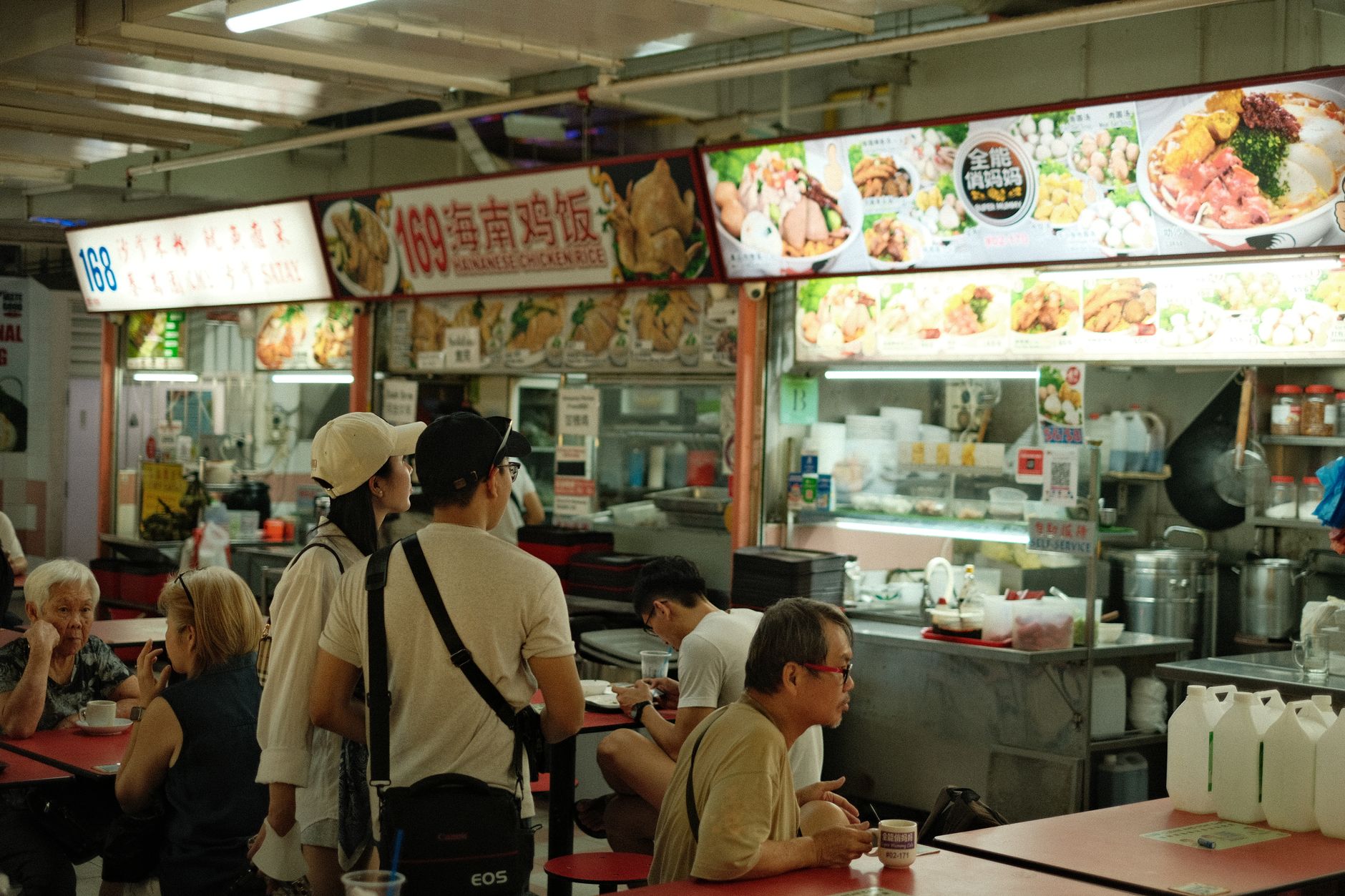
Most visitors to Singapore file hawker centres under “saving money.” That framing is backwards. These open-sided food halls, with dozens of single-dish stalls under one roof, are how the city has fed itself for decades, and UNESCO added Singapore’s hawker culture to its Intangible Cultural Heritage list in December 2020. Nobody is eating there because they can’t afford a restaurant.
The stall does one thing
The logic is specialisation. One stall makes Hainanese chicken rice. The next makes char kway teow, flat rice noodles fried hard over high heat. Another does bak kut teh, a peppery pork rib soup, or laksa, noodles in a coconut-curry broth. A stall that sells one dish all day tends to be very good at it, and that’s the real reason to go. The price is a bonus.
Skip the famous one, at least once
Maxwell Food Centre and Lau Pa Sat are central and easy, and they’re fine. But the more revealing meal is in a neighbourhood centre where office workers and grandparents fill the tables. Tiong Bahru Market is a good example. Go at an awkward hour, say 11am or 2pm, and you’ll skip the worst of the lunch crush and still find most stalls open. Some sell out and close early, so an evening arrival is a gamble.
How the tables work
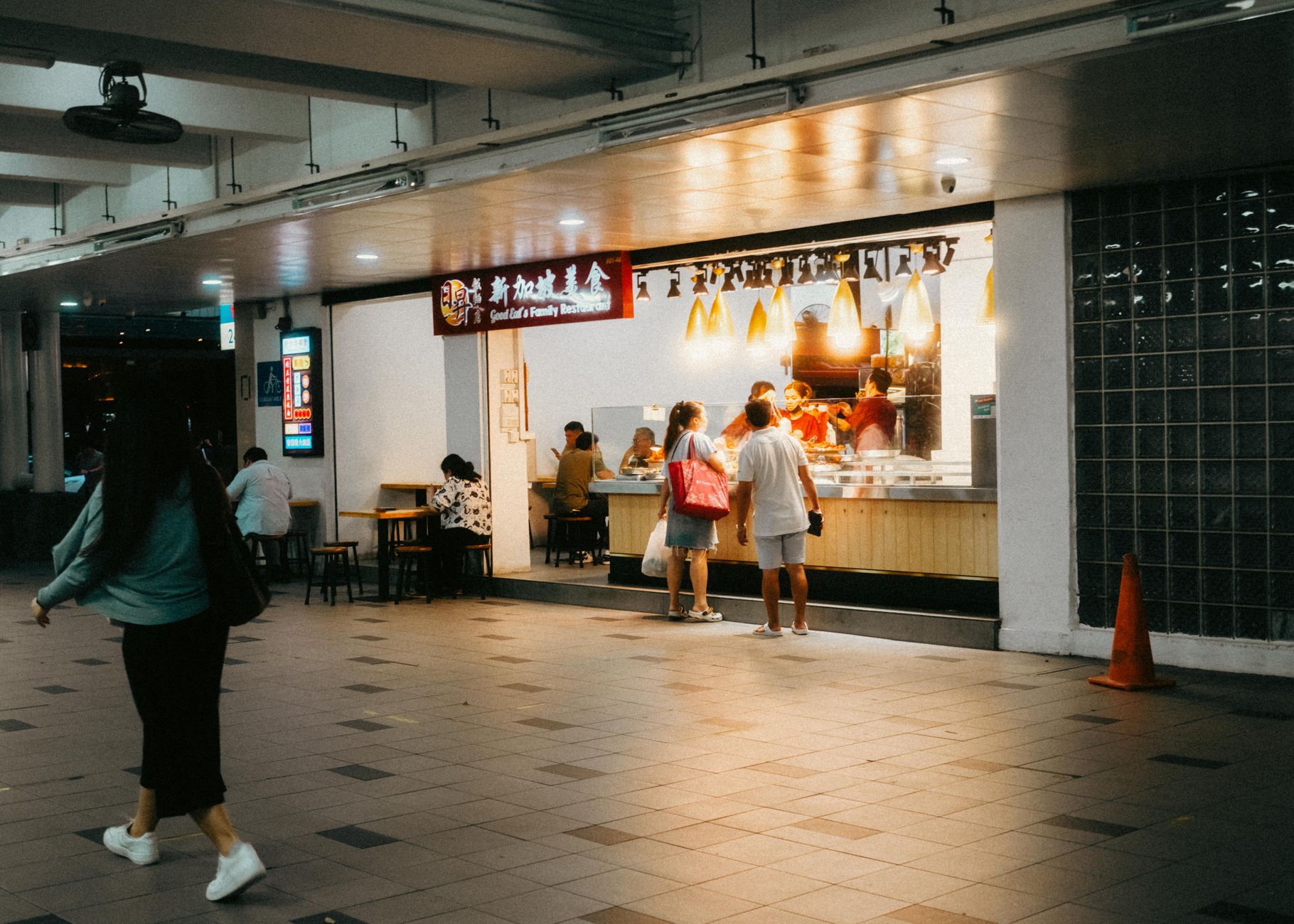
You’ll see packets of tissues sitting on empty tables. That’s “chope,” the local habit of reserving a seat by leaving something on it. If you’re alone, you can do the same. Find a table, leave a packet, then go and queue. Order, carry your food back, and when you’re done, return your tray to the collection point rather than leaving it behind.
Cash is still common, though many stalls now take QR payments. Carry some small notes anyway.
Order the drink too
Kopi, the local coffee, comes sweetened with condensed milk by default. Kopi O is black with sugar, and kopi C uses evaporated milk. Add “siew dai” for less sugar. It takes about thirty seconds to learn and it’s the quickest way to stop looking like you’re guessing.
I’d rather eat three meals in three different hawker centres than book one tasting menu in the Marina Bay area. Both are valid ways to spend an evening, but only one of them tells you how Singapore lives.