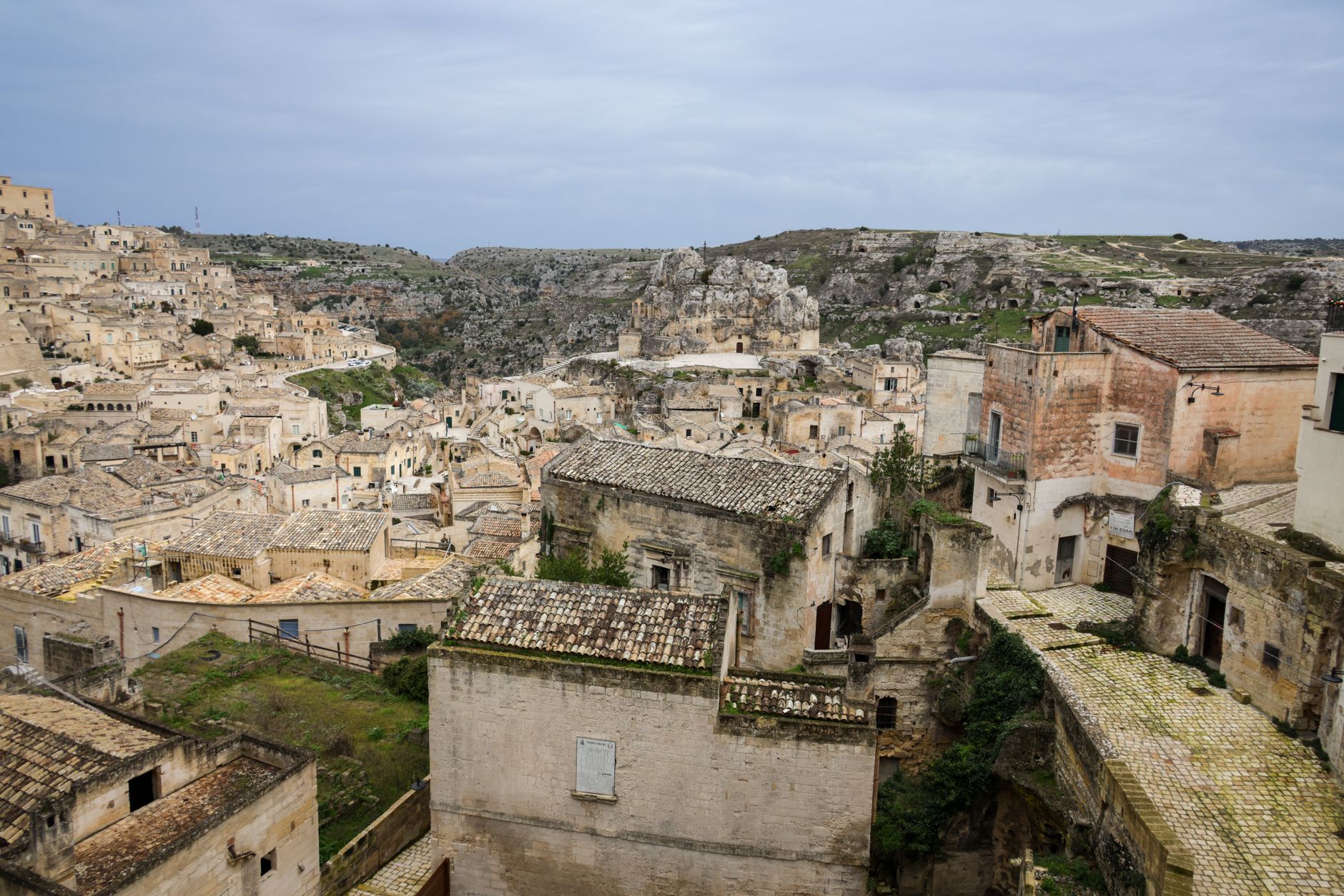
Matera gets photographed constantly and understood rarely. Visitors arrive, walk the ridge above the Sassi, take the shot of the canyon honeycombed with ancient dwellings, and leave thinking they’ve seen a remarkably preserved medieval town. What they’ve actually seen is one of the longest continuously occupied human settlements on the planet - people have lived in these caves since the Palaeolithic - and also the site of one of modern Italy’s most uncomfortable social episodes.
Until 1952, roughly 15,000 people still lived in the Sassi. Carlo Levi called the conditions there a national disgrace in his 1945 memoir Christ Stopped at Eboli, and the Italian government eventually agreed. Residents were forcibly relocated to new public housing on the plateau above the canyon. The caves were sealed. For decades, the Sassi sat empty.
Then, slowly, they became fashionable. Some were converted into boutique hotels and restaurants. UNESCO listed the site in 1993. Mel Gibson filmed The Passion of the Christ here in 2004 because the stone architecture reads convincingly as ancient Jerusalem. Now a cave room with a canyon view can cost €300 a night.
This reversal - from embarrassment to luxury destination in under 50 years - is the actual story of Matera, and it’s a stranger and more interesting one than the brochures suggest.
What to Actually Look At
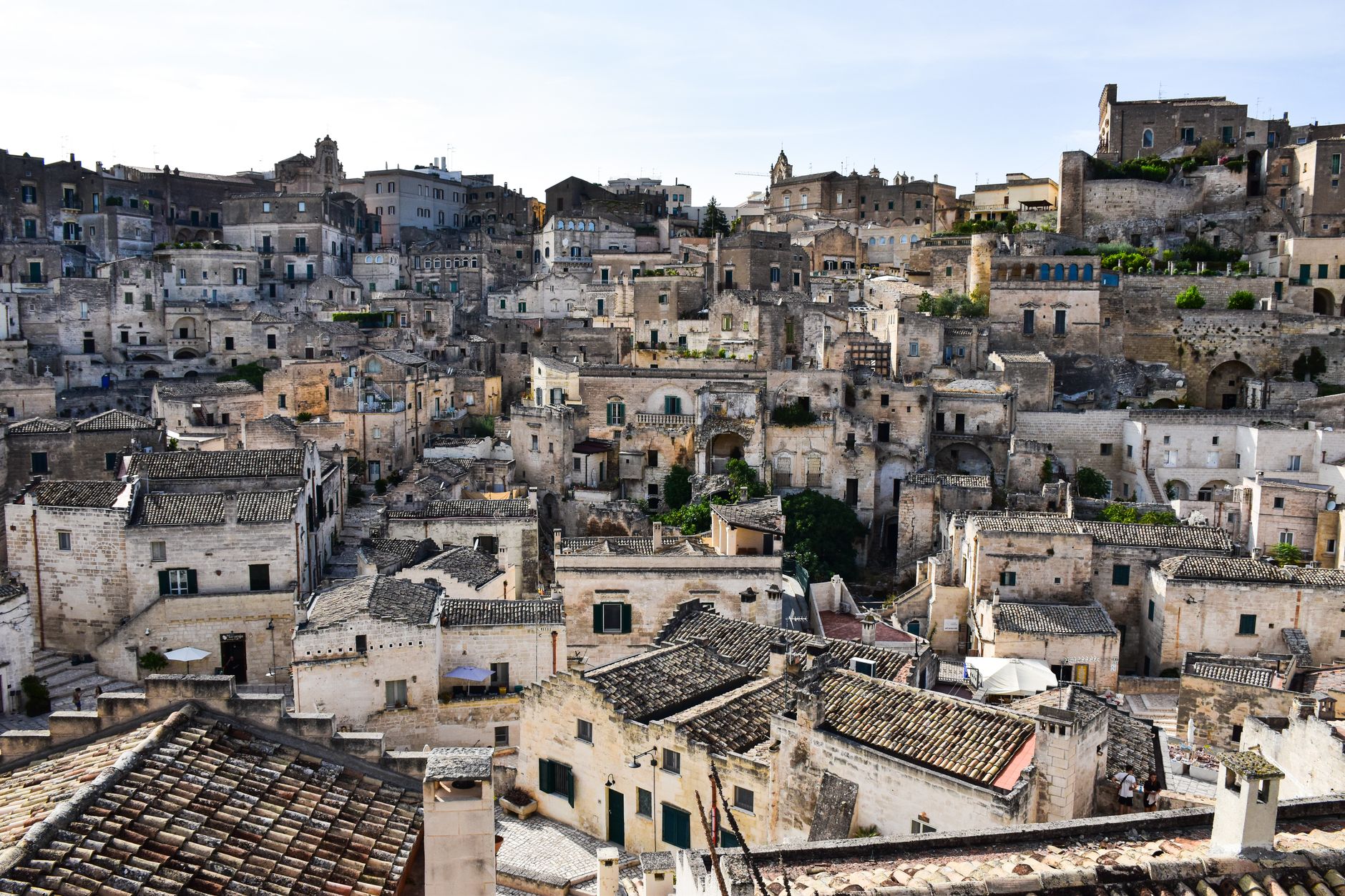
The two Sassi districts, Sasso Caveoso and Sasso Barisano, are separated by a rocky outcrop called the Civita, where the cathedral sits. Sasso Caveoso is the older and less restored of the two - the rupestrian churches carved directly into the cliff face here, like Santa Maria de Idris, still feel like they belong to a different civilisation entirely. The frescoes inside are faded and fragmentary, which is exactly the point.
The Casa Grotta di Vico Solitario is a reconstructed cave dwelling showing how a family actually lived in the Sassi into the mid-20th century - donkeys included, sharing the single-room space. It’s small and cheap to enter and more informative than almost anything else in the city.
Getting There
Matera is in Basilicata, one of the least visited regions in Italy, which partly explains why it retains any atmosphere at all. There’s no direct train from major Italian cities. The practical approach is to fly into Bari, then take the Ferrovie Appulo Lucane regional line - a narrow-gauge railway that takes about 1 hour 20 minutes and costs a few euros. Renting a car in Bari also works if you’re combining the trip with the rest of Basilicata, which rewards that kind of slower movement.
Staying overnight matters here. The day-trip crowd from Bari clears out by early evening, and the Sassi at dusk - lit amber, mostly empty, genuinely quiet - is when the place makes the most sense.