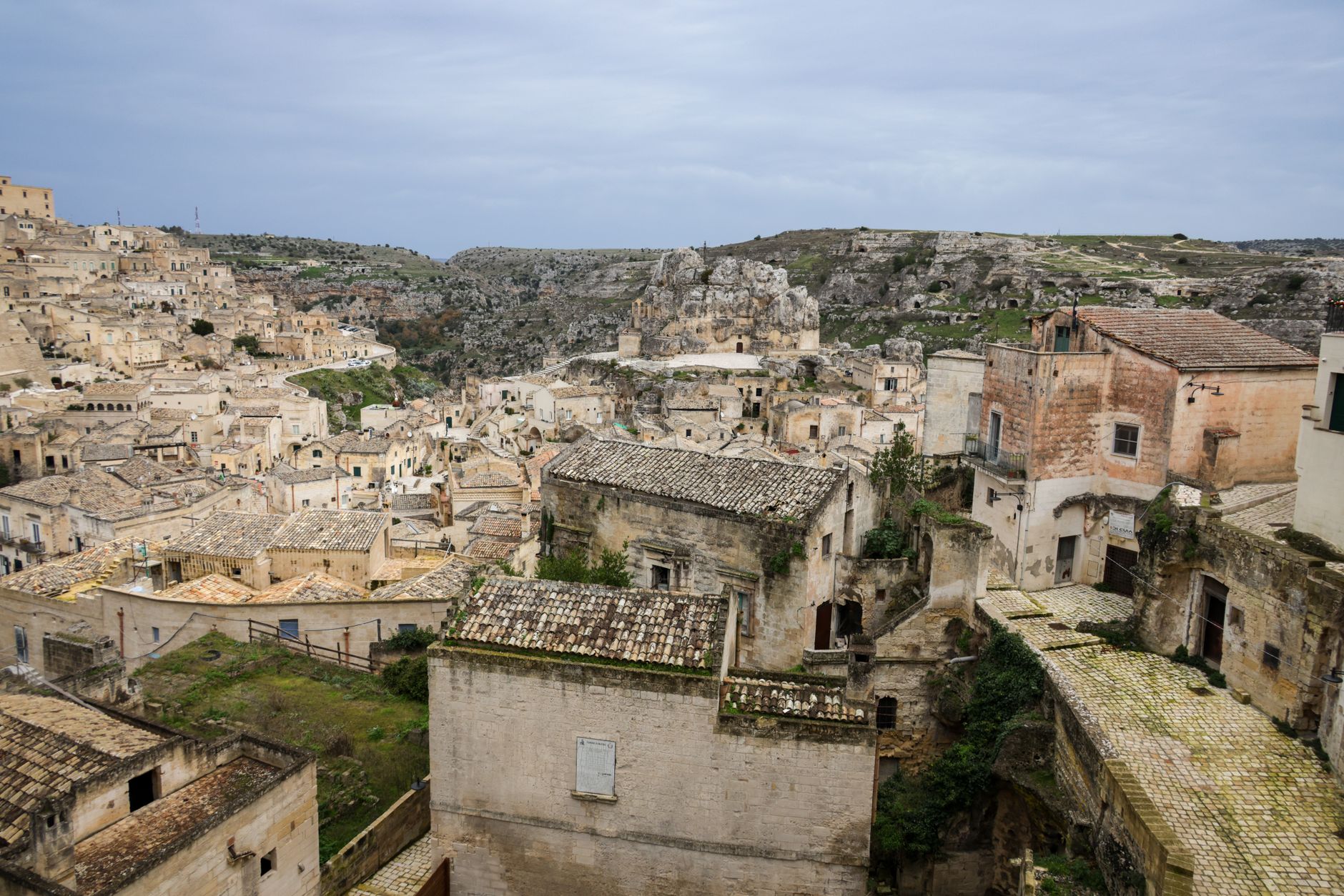
Most people arrive in Matera having already decided what it is: an ancient ruin, a film set, a UNESCO stamp to collect. The reality is more unsettling and more interesting than that. The sassi - the two districts of cave dwellings carved into the ravine - were still fully occupied until the Italian government forcibly evacuated their residents in 1952. Around 15,000 people were moved out and rehoused in modern apartments on the plateau above. The caves were considered an embarrassment, evidence of poverty the postwar Italian state wanted to erase.
Then, starting in the 1980s, the policy reversed. The sassi were reclassified as architectural heritage, restored, and gradually reoccupied - as homes, hotels, restaurants, and wine bars. Some of the people who moved back are descendants of families who were evicted. Others are outsiders who bought property precisely because it was cheap and strange. Walking through the Sasso Caveoso now, you pass cave apartments with real doorbells, herb pots on the ledges, someone’s laundry. It does not feel like a museum because it isn’t one.
What the city actually looks like
The ravine, called the Gravina, cuts deep enough that you lose the sense of scale quickly. The cave churches are the strangest part - rupestrian sanctuaries carved directly into the cliff face, some still containing faded Byzantine frescoes from the 9th and 10th centuries. The most accessible is the Cripta del Peccato Originale, though it sits about 15 kilometres outside the city and requires advance booking. Inside the sassi themselves, the Church of Santa Maria de Idris is small enough that two tour groups make it feel crowded, but early morning it’s often empty.
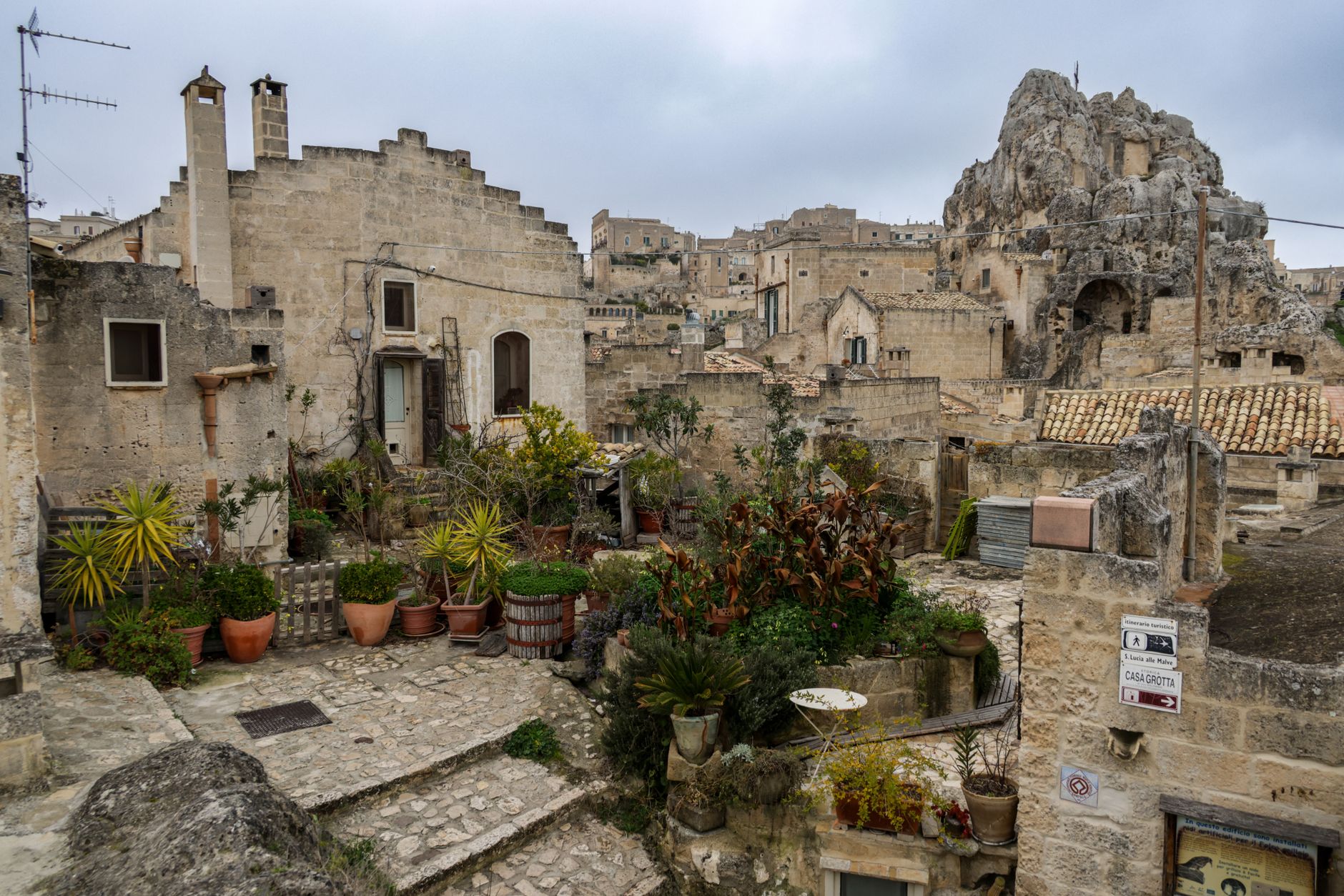
The plateau city above - the civita and the newer districts - gets almost no attention from visitors, which is exactly why it’s worth half an hour. The market near Piazza Vittorio Veneto sells the same things markets sell everywhere in southern Italy, which is to say it sells very good things.
On timing
Summer here is genuinely brutal. Matera sits inland in Basilicata, and the stone holds heat well past sunset. September cools it down enough to walk the ravine paths without suffering, and the crowds thin sharply after the first week of the month.
Basilicata as a region is one of the least visited in Italy, which means Matera absorbs a disproportionate share of the tourists who do come. The day-trippers mostly leave by 5pm. The city that remains after that - quieter, lit differently, the cave windows starting to glow - is the one worth staying for.
Whether the current version of Matera, with its boutique cave hotels and tasting menus, constitutes a genuine reoccupation or a more comfortable form of erasure is a question the city doesn’t fully answer.