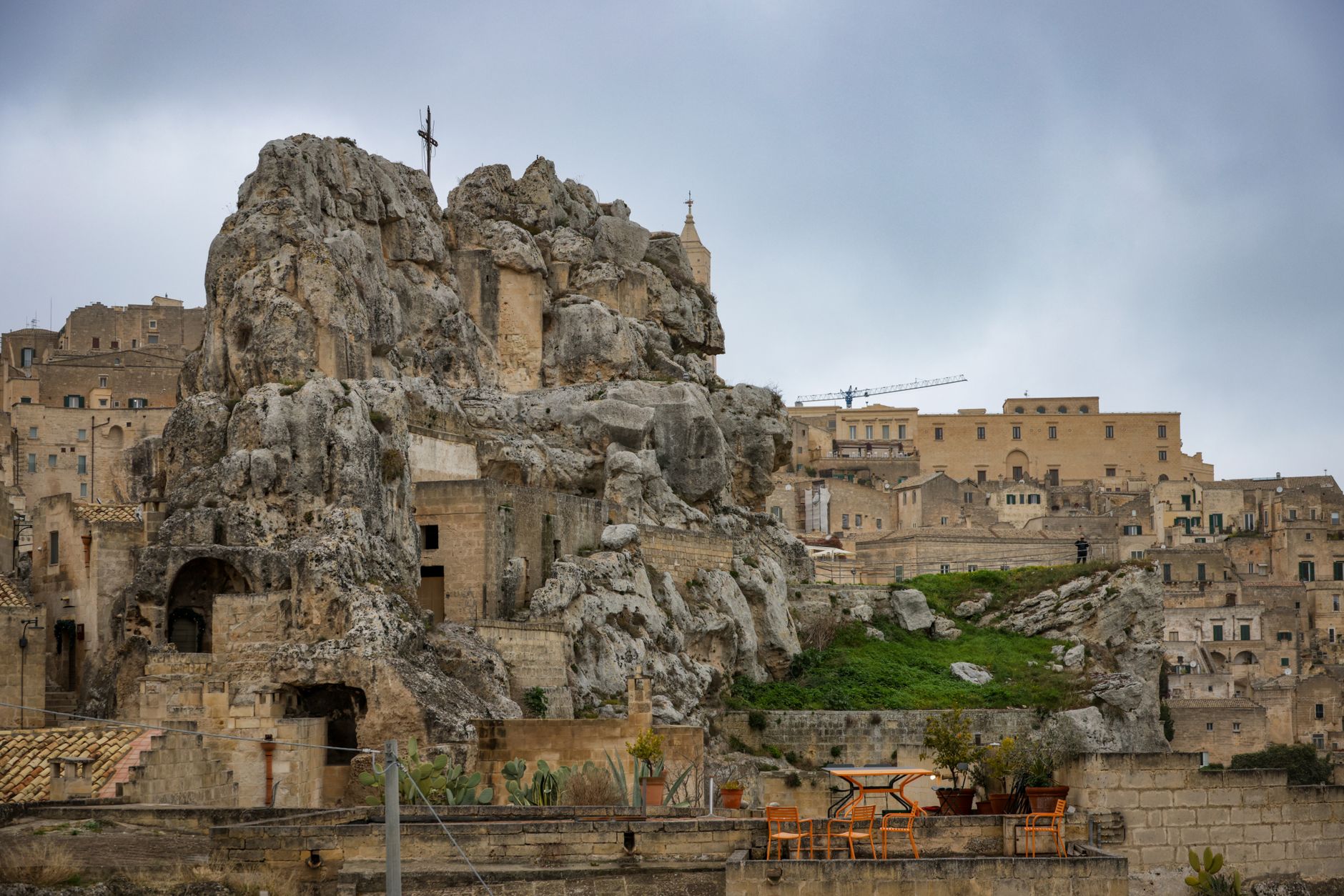
Most towns with UNESCO status wear it like a warning sign - that particular combination of souvenir shops, €18 aperitivi, and guided-tour clusters that signals a place has been optimised for visitors rather than inhabitants. Matera, in Basilicata, has the UNESCO status. It has the tour groups. What it also has, against reasonable expectation, is actual life happening inside the stone.
The sassi - the two ancient cave districts of Sasso Caveoso and Sasso Barisano - are the reason everyone comes. Carved directly into a ravine in the instep of Italy, they’re among the oldest continuously inhabited settlements in the world, though the city evacuated most residents in the 1950s and 60s under government orders, deeming the cave homes too primitive. What looks like perfect preservation is partly the result of that forced abandonment, and partly of careful restoration since the 1980s when people began returning and converting the caves into homes, hotels, and restaurants.
That history matters when you’re walking through it, because the sassi aren’t a reconstruction. The narrow lanes don’t follow tourist logic - they follow drainage patterns, old property boundaries, the logic of people who needed to get from one carved terrace to another without falling into the ravine. You get lost. That’s not a design choice by a heritage committee; it’s just what happens when a settlement is 9,000 years old and nobody sat down with a grid.
What to Actually Do With a Day There
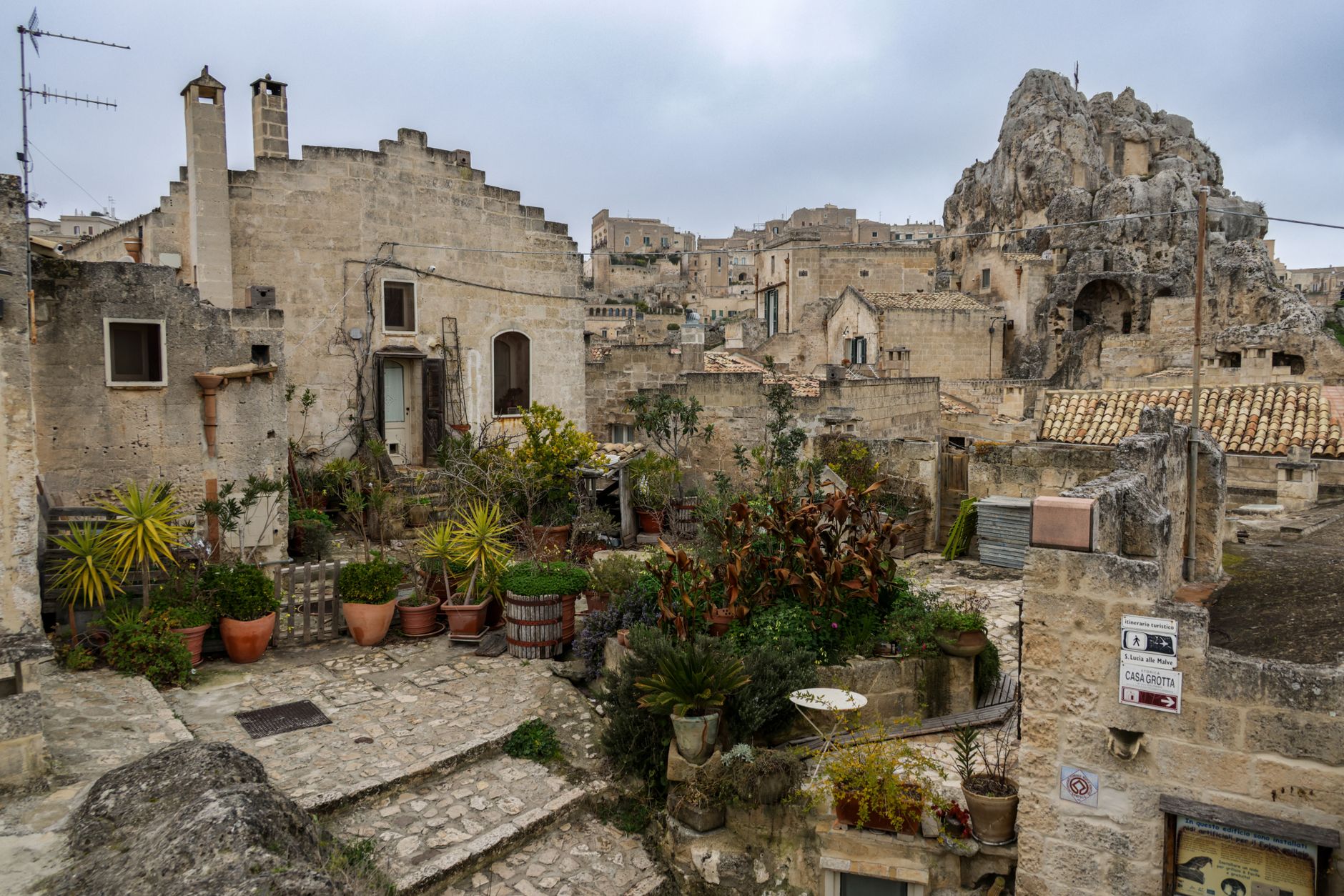
The Museo Nazionale d’Arte Medievale e Moderna della Basilicata in Palazzo Lanfranchi is small and almost always uncrowded. The church of Santa Maria de Idris is cut directly into the rock of the Monterrone cliff - the frescoes inside have held their colour for centuries in that dry cave air. Neither place will take more than an hour, which is fine. Matera is better walked than scheduled.
The ravine overlook at Piazza Vittorio Veneto is where the town actually gathers in the evening, not for tourists, but because it’s where people go. The passeggiata here is unhurried and pointed at nothing in particular.
The Practical Friction
Getting to Matera is inconvenient, and that inconvenience is doing a lot of the work. There’s no direct train from Rome or Naples. The usual route goes through Potenza or via the FAL rail line from Bari, which takes roughly an hour and a half from Bari Centrale. Most people drive. That friction filters the day-tripper numbers just enough.
Staying overnight changes the calculation entirely - the sassi at night, after the last tour bus has reversed up the hill, are genuinely quiet in a way that’s hard to find in a town this famous. Whether that justifies the accommodation prices, which have climbed sharply since Matera was European Capital of Culture in 2019, depends on how much the silence is worth to you.