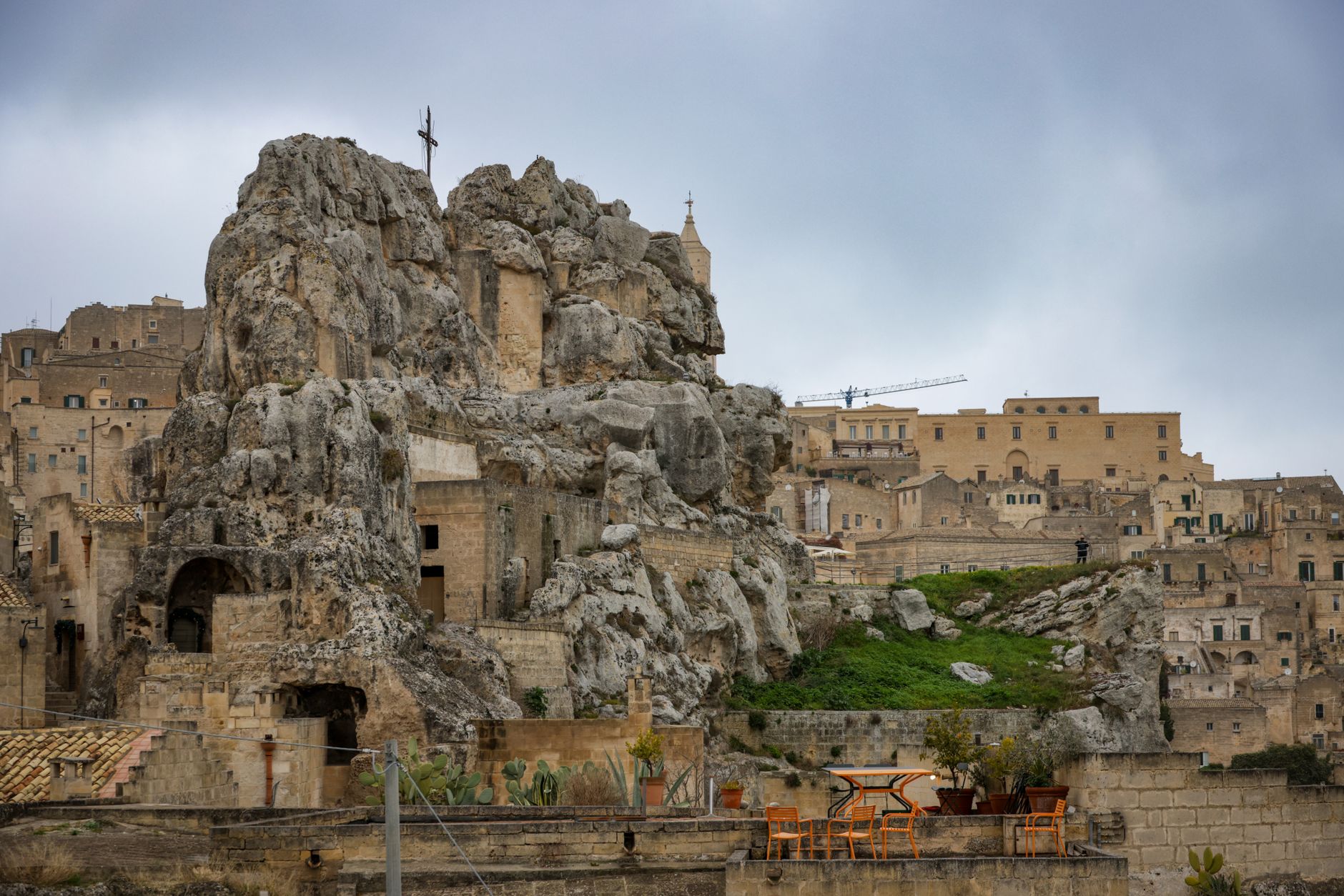
Most people who visit Matera come on a day trip from Bari or Taranto, spend three hours photographing the sassi from the same two overlooks, and leave before dinner. This is technically fine. It is also a waste of a genuinely strange place.
Matera sits in Basilicata, in the instep of Italy’s boot - a region that most Italian itineraries skip entirely. The city is built into two ravines carved by the Gravina river, and the sassi - the cave districts - were continuously inhabited from the Palaeolithic period until the 1950s, when the Italian government forcibly relocated residents to new housing on the plateau above. The caves were considered an embarrassment, a symbol of southern poverty. Primo Levi called Matera a city of troglodytes. By the 1990s, UNESCO had listed the sassi as a World Heritage Site. The embarrassment became the attraction.
What makes staying there worth the logistics is the texture of the place at night. After the tour groups leave - and they do leave, almost all of them - the sassi go quiet in a way that feels geological rather than social. The streets are mostly stone stairs. There are no cars inside the main districts. The lighting is low. The cave hotels, which range from basic to genuinely expensive, have cut their rooms directly into the tufa rock, so the temperature stays cool regardless of what August is doing outside.
The Part Nobody Mentions
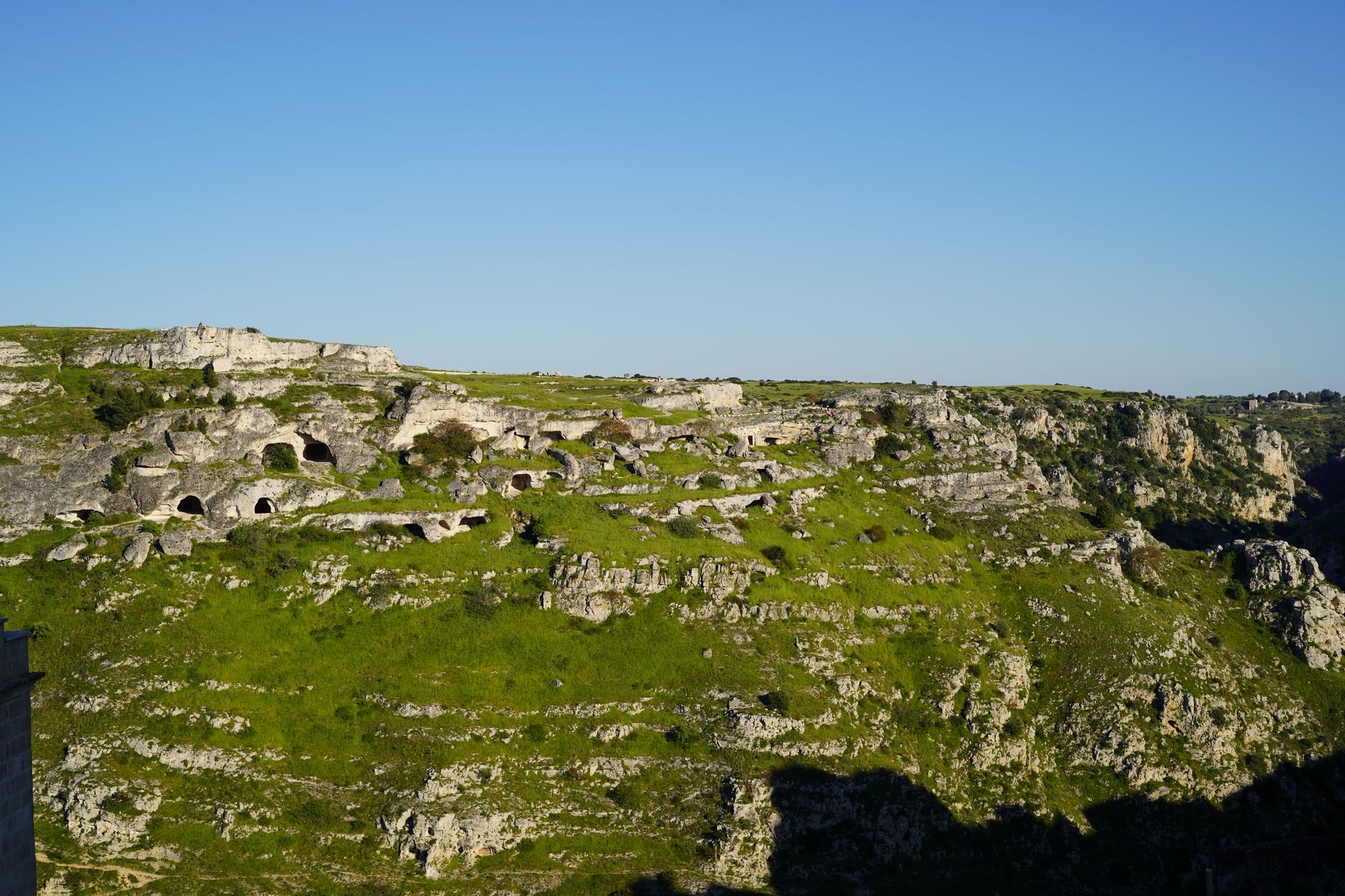
The Murgia plateau, directly across the ravine, has a free path along the rim that looks back at the entire sassi. Most visitors photograph it from inside the city. Walking the opposite side - across the old Ponte Tibetano suspension bridge - takes about forty minutes and puts the whole thing in a different perspective. No entrance fee. Often empty by late afternoon.
Basilicata as a region doesn’t have the tourist infrastructure of Puglia or Campania, which means restaurants in Matera are cooking for locals as much as visitors. Crapiata - a peasant legume and grain soup - appears on menus here because it’s actually local, not because it’s been curated for a food tour.
Flights go to Bari or Naples. From Bari, Matera is about an hour and a half by a combination of train and bus via the Ferrovie Appulo Lucane regional line. It’s not seamless, but it’s manageable, and the alternative - renting a car - opens up the rest of Basilicata, which is mostly empty and occasionally extraordinary.