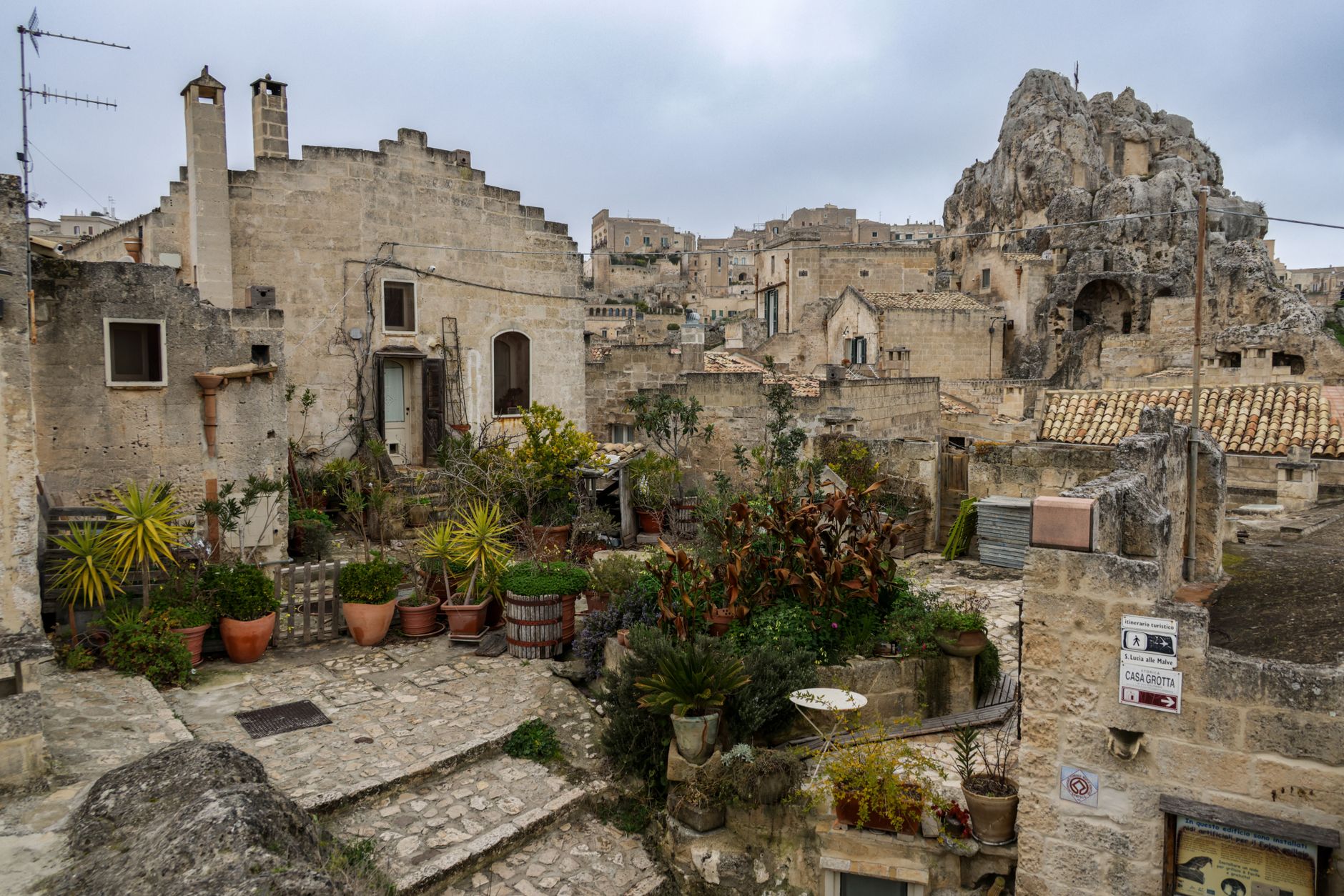
Most people arrive in Matera expecting an open-air ruin. What they find instead is a barista making espresso in a room carved directly into limestone, a cat sleeping on a sassi rooftop, laundry hanging between ancient stone walls. The city’s cave districts - the Sasso Caveoso and Sasso Barisano - have been continuously inhabited for millennia, and while many of the original cave dwellings (sassi) were evacuated by Italian government order in the 1950s due to poverty and poor sanitation, significant parts of the city have since been repopulated and restored. It is now a UNESCO World Heritage Site, and it hosted the European Capital of Culture designation in 2019.
None of that heritage framing quite prepares you for how functional the place is.
The Cave Part Is Literal
This is not metaphor. The sassi are actual caves - some natural, some carved by hand over centuries - layered into two ravines that drop sharply from the modern upper town (the Piano). Walking down into them from the main piazza takes about three minutes, and then the geometry stops making sense in the way that any city built vertically rather than horizontally eventually does. What looks like a rooftop terrace from one lane is the street level from another. Churches are built into cliff faces. Some hotels occupy former cave complexes that once housed entire extended families and their livestock in the same connected rooms.
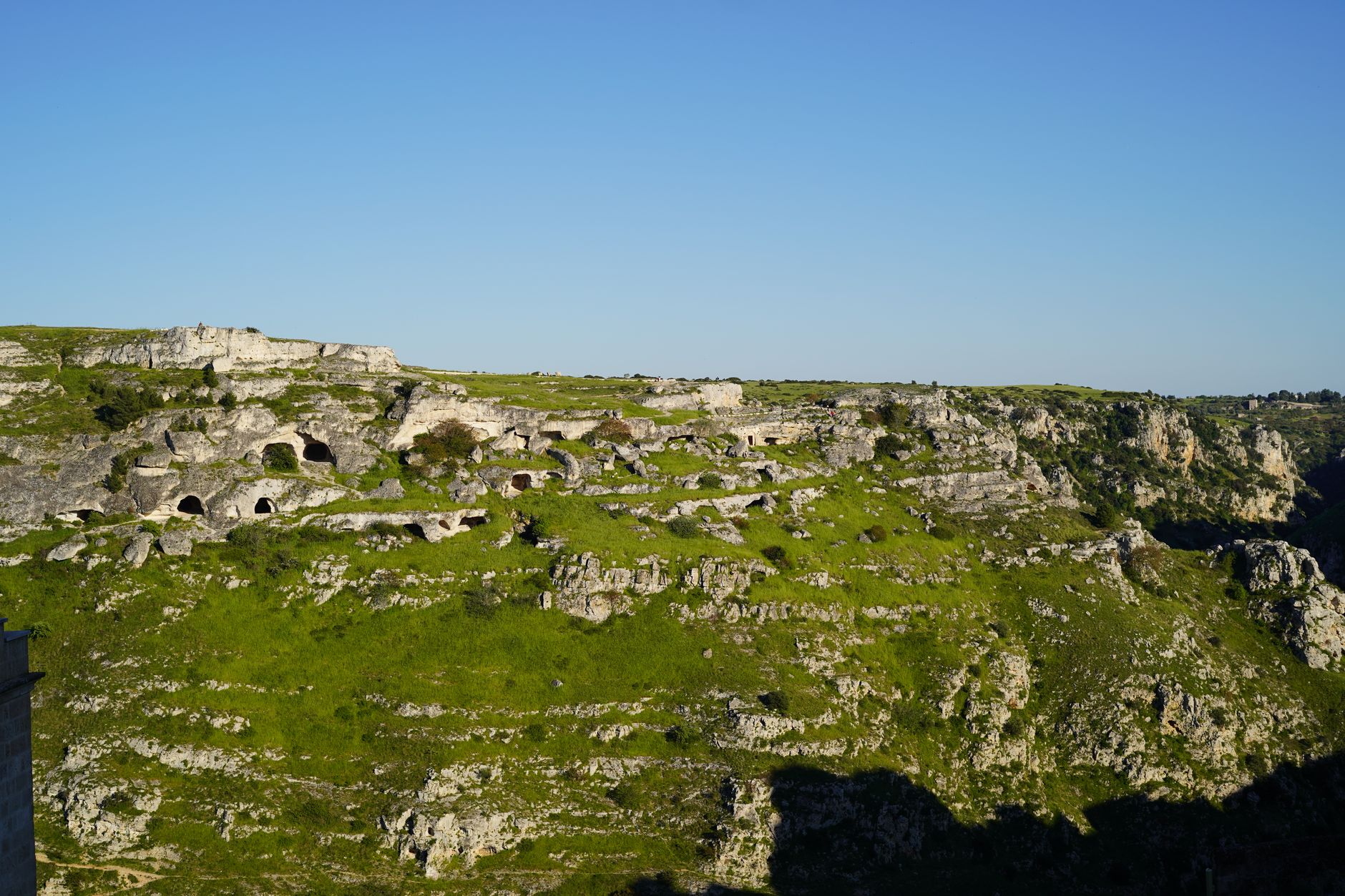
The livestock detail is not incidental - it explains much of the Italian government’s decision to relocate residents in the mid-twentieth century, when Matera’s poverty was considered a national embarrassment. Carlo Levi wrote about it. The conditions were genuinely bad. The city’s subsequent transformation into a destination is complicated, and not everyone who thinks about it lands on straightforward celebration.
Getting There Shapes the Visit
Matera sits in Basilicata, one of Italy’s least-visited regions, and the rail connections reflect that. The city is reachable by a narrow-gauge train from Bari (run by Ferrovie Appulo Lucane), which takes roughly 90 minutes. Bari itself is a major Adriatic port with regular trains from Naples, Rome, and Bologna. The drive from Naples is around two and a half hours.
Basing yourself in the sassi rather than the upper town changes the experience entirely. At night, after the day visitors have left, the ravines go almost quiet. The floodlit cave churches across the gorge are visible from most rooftop terraces. That specific silence - not rural, not urban - is the thing Matera does that nowhere else really does.