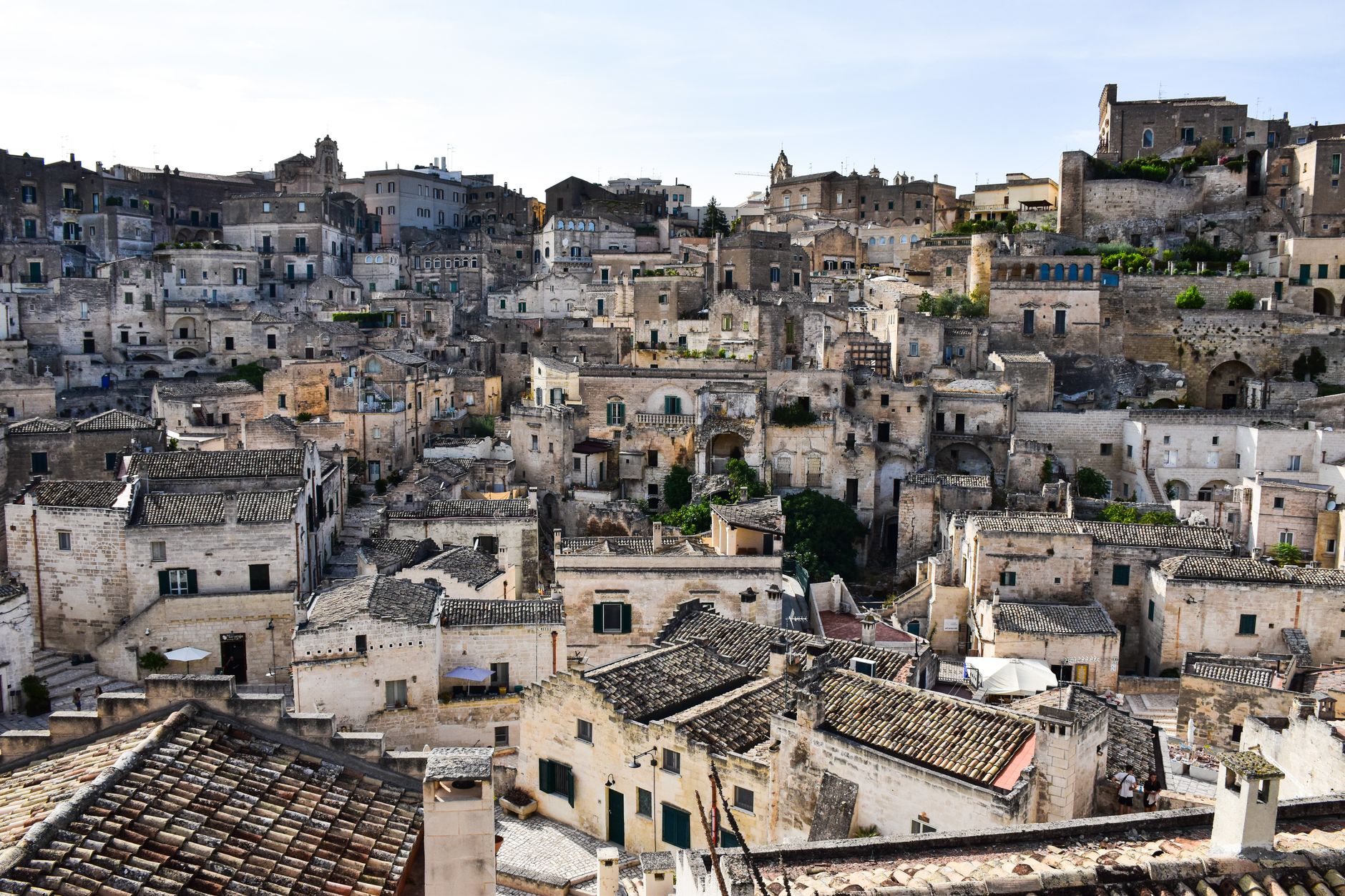
Most cities that end up on UNESCO lists start performing for tourists within a decade. Matera has so far resisted this, not through any particular effort, but because the place is genuinely too strange to flatten into a highlight reel.
The sassi - the cave districts carved into the ravine on the edge of the city - were inhabited continuously for thousands of years, then forcibly evacuated by the Italian government in the 1950s. Families were relocated to new apartment blocks on the plateau above. The caves were considered a national embarrassment, evidence of poverty the postwar state didn’t want photographed. By the 1990s, the same dwellings were a UNESCO World Heritage Site. Some have since been converted into hotels, restaurants, and at least one spa.
What makes Matera interesting to actually walk around is that this reversal hasn’t fully resolved itself. The upper town - the civita and the newer districts - is where people go to school, buy groceries, argue about parking. The sassi below are partly inhabited, partly hospitality, partly crumbling and inaccessible. There’s no clean line between the historic zone and the living city, which means you can turn off the main tourist path and immediately be somewhere that feels like it has nothing to do with you.
When to Go
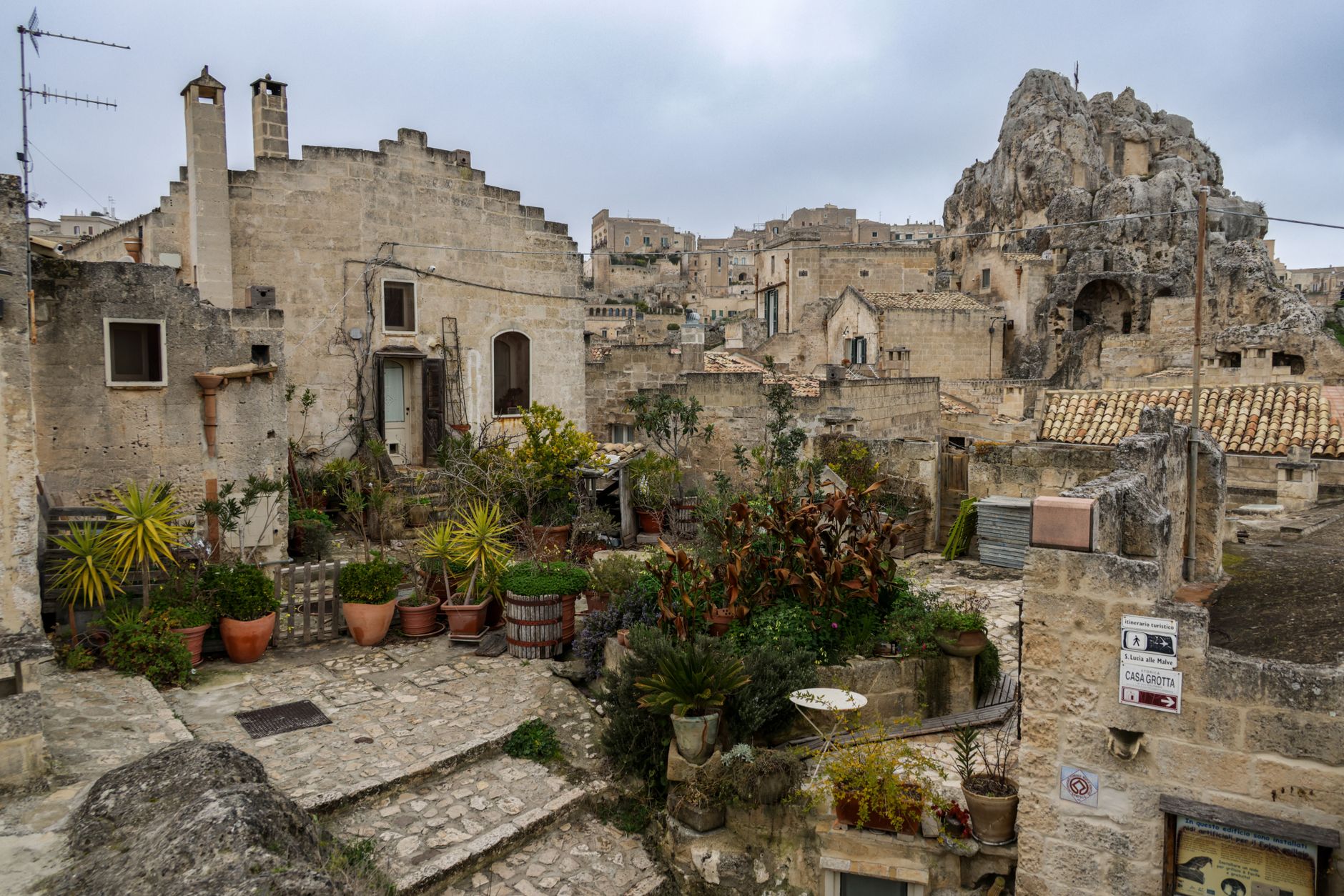
July in Matera is punishing. The ravine traps heat and there’s almost no shade in the sassi during the middle of the day. The town gets busy in summer, but not overwhelmingly so - it doesn’t have the infrastructure to absorb the volumes that hit the Amalfi Coast or Florence. October is noticeably better: the light on the stone in autumn is genuinely extraordinary, and the crowd thins to a manageable level.
The nearest major airport is Bari, about 65 kilometres away. Trains run between Bari and Matera on the Ferrovie Appulo Lucane line - a regional service that takes around an hour and a half and costs almost nothing. It’s a slow, unremarkable ride through flat agricultural land, which makes arriving at the ravine edge all the more abrupt.
A Note on the Hotels
Staying in a converted cave is worth doing once, specifically for the sensation of sleeping inside stone walls that have been occupied in some form since the Palaeolithic. The rooms tend to be cool, quiet, and slightly damp-smelling in a way that no amount of renovation fully eliminates. That smell is not a complaint. It’s the whole point.