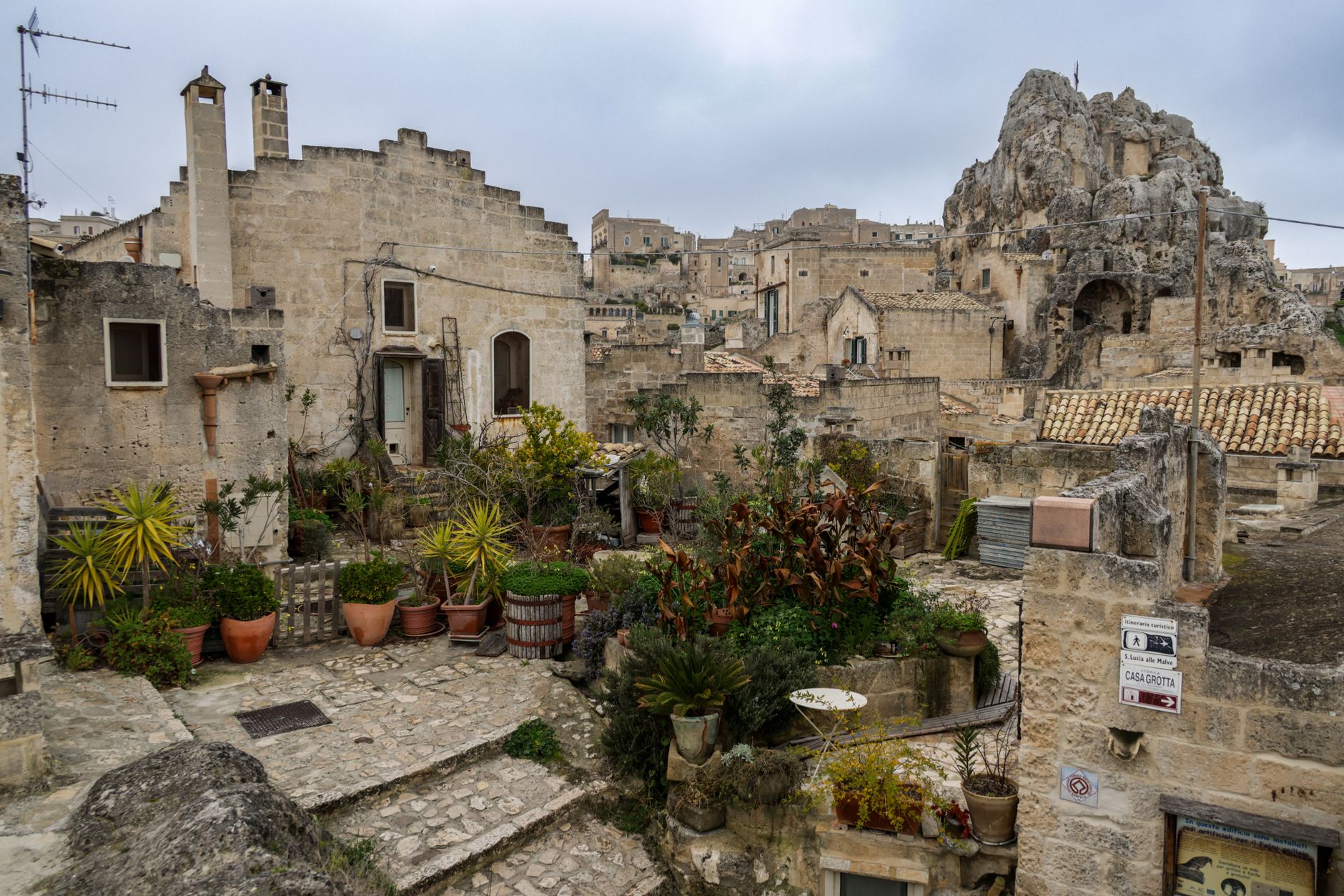
Most visitors arrive by morning bus from Bari, spend three hours walking the rim of the ravine taking photographs of the sassi, eat somewhere with a terrace view, and leave before dinner. That circuit is understandable - Matera photographs beautifully and the sassi districts are genuinely dramatic from above. But the city reads completely differently once you stop treating the ridge as a viewing platform and walk down into it.
The sassi - the two ancient cave districts called Sasso Caveoso and Sasso Barisano - were inhabited continuously for thousands of years, then forcibly evacuated by the Italian government in the late 1950s on the grounds that the living conditions were a national embarrassment. Carlo Levi had written about them. Alcide De Gasperi had called them a disgrace. Families who had lived there for generations were relocated to new public housing on the plateau above. Since then, Matera has been through a slow reversal: UNESCO listing in 1993, years of restoration, and eventually its designation as a European Capital of Culture in 2019.
What that history produces on the ground is a place with a genuinely strange texture. Some cave dwellings have been converted into boutique hotels - and good ones, where the stone keeps temperatures cool without air conditioning. Others are still empty, sealed with iron gates, their interiors dark. A few have been turned into small museums showing how families actually lived in the early 20th century: a single room shared with livestock, a sleeping area partitioned by a curtain, cisterns carved directly into the rock beneath the floor. Standing inside one of those reconstructed dwellings is the moment Matera stops being picturesque and starts being something harder to categorise.
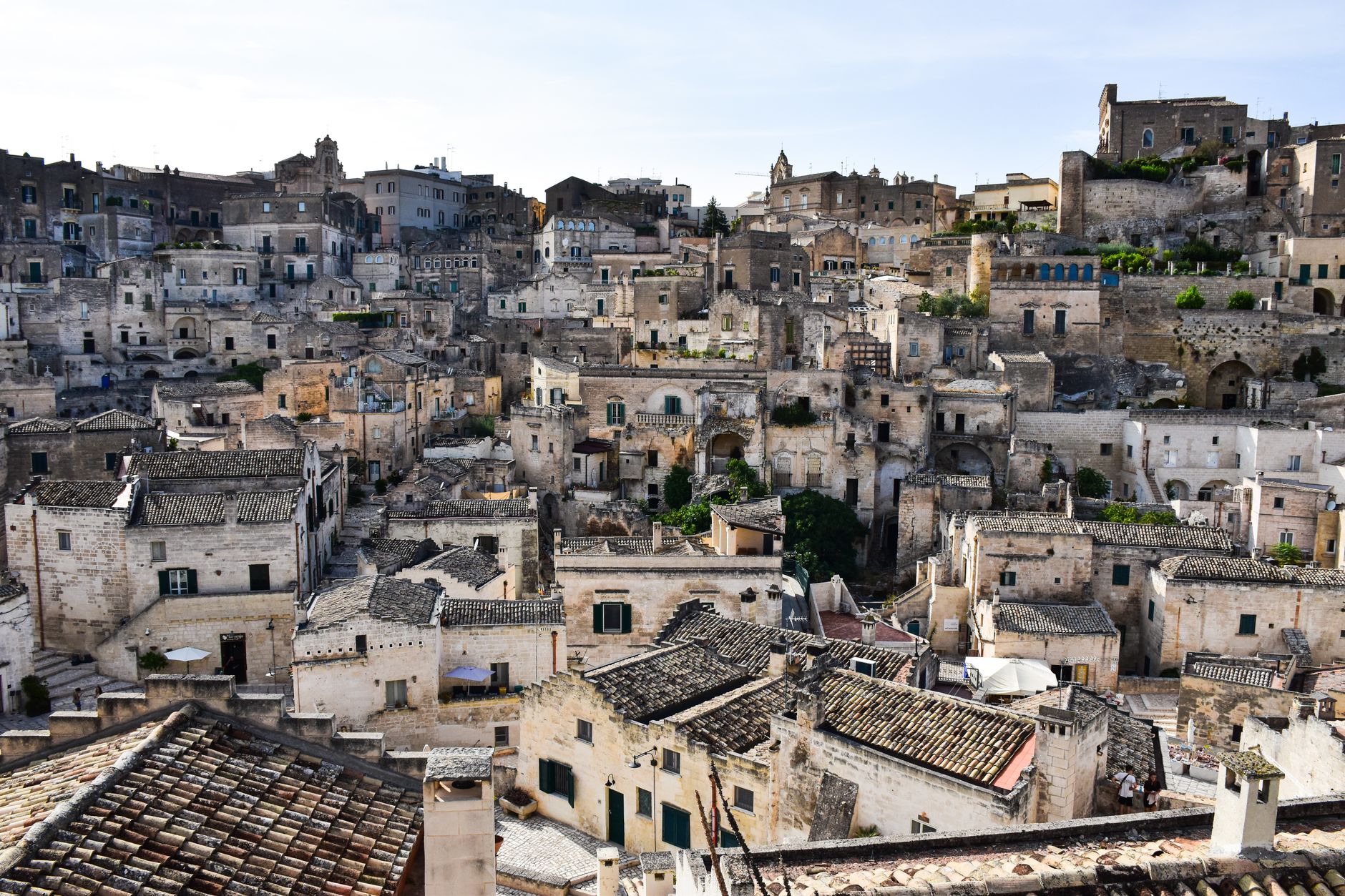
Timing matters more than most guides admit
August is brutal. The stone radiates heat in the afternoon, the ravine traps it, and the main paths are crowded enough to make the whole place feel like a theme park. Come in October or even November - the light is extraordinary in autumn, the tourist numbers drop sharply, and the restaurants that stay open are the ones locals actually use.
The cathedral on the ridge, a 13th-century Apulian Romanesque structure, is often overlooked because visitors are focused on the cave districts below. It shouldn’t be. The carved portal and the view from the square in front of it - looking back over the sassi - is the one angle where the scale of the whole thing becomes clear.
Matera is about four hours from Rome by train, changing at Potenza or Taranto depending on the route. It is not a quick detour. Whether that inconvenience is part of why the city still feels like itself, rather than fully absorbed into the Italian heritage tourism circuit, is an open question - but probably not an accident.