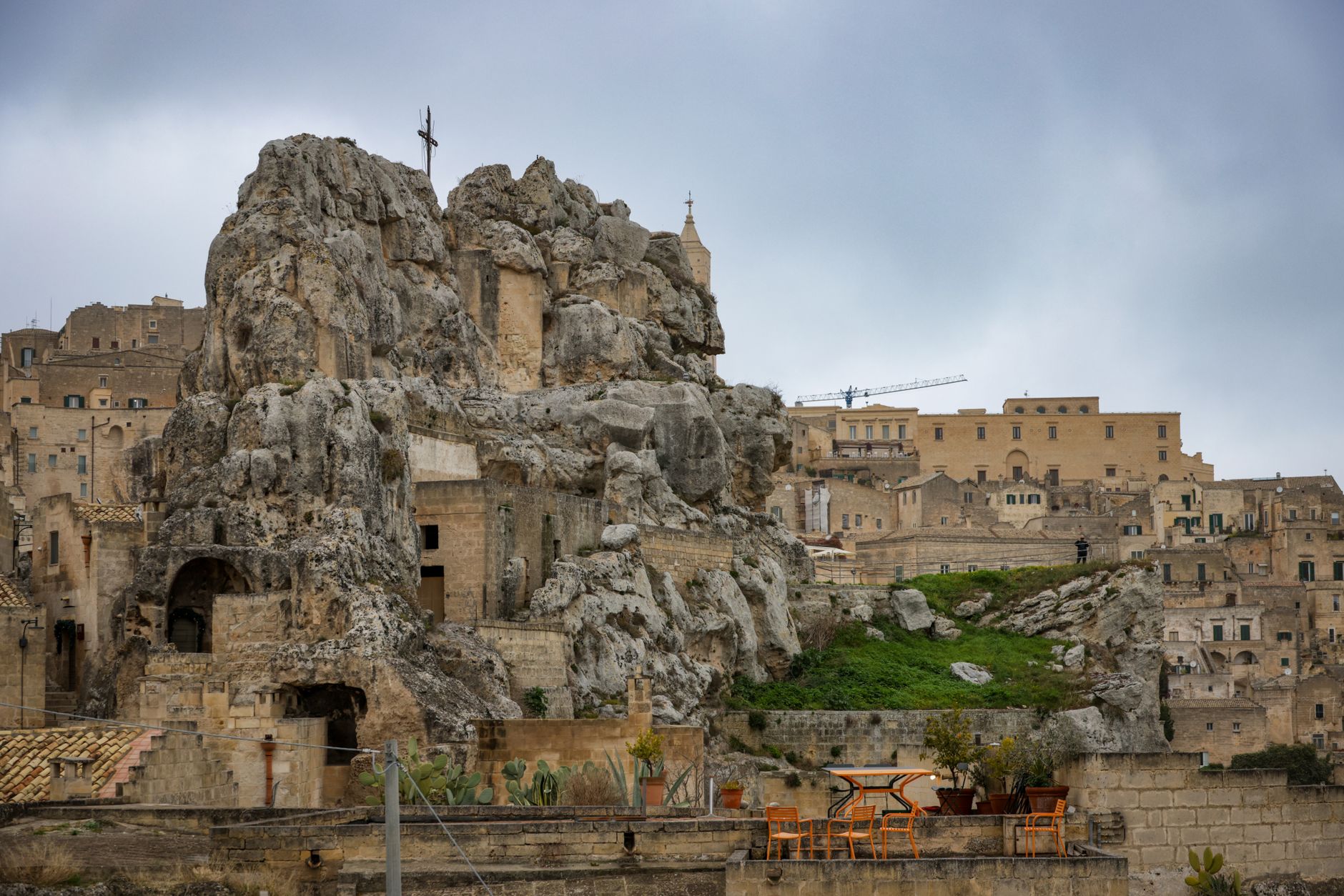
Matera was inhabited continuously for roughly 9,000 years before UNESCO declared it a World Heritage Site in 1993. That timeline puts it among the oldest continually settled human habitats on earth. The town itself seems aware of this in a low-key, undemonstrative way - not through museums that announce it loudly, but through the simple fact that the sassi, the ancient cave-dwelling districts carved into the ravine walls, are still the part of the city people actually live in and eat in and drink coffee in front of.
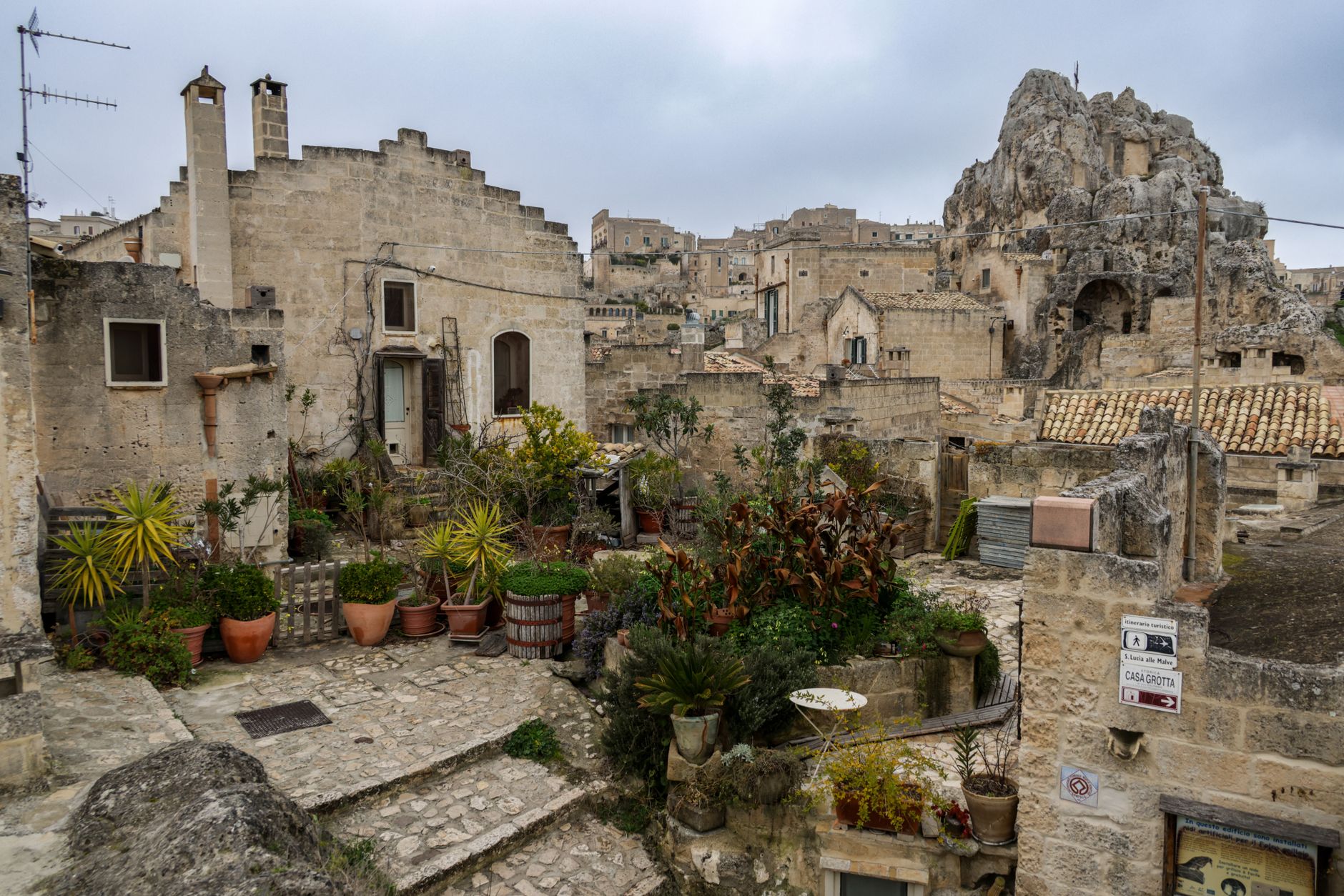
Most visitors come on a day trip from Bari or Taranto, spend three hours, and leave thinking they’ve seen it. They haven’t. Matera operates on a slower clock than that. The sassi - Sasso Caveoso and Sasso Barisano - are best understood not by following a numbered route but by getting lost in them, which takes longer and rewards more. The lanes narrow and split unpredictably. Some paths dead-end at a door that used to be a cave church. Others open suddenly onto a terrace looking across the Gravina gorge, where the opposite cliff face is riddled with cave openings like a cross-section of an abandoned city that never quite got abandoned.
The cave churches are worth pausing over. Santa Maria de Idris is built directly into the rock and decorated with Byzantine frescoes that have survived in varying states of legibility. The rupestrian churches scattered through the ravine - some accessible, some just visible from above - date mostly to the early medieval period, when the area attracted monks looking for isolation. There are more than 150 of them in the wider Matera territory, though only a fraction are open to visitors.
On the question of crowds
Mater became the European Capital of Culture in 2019, which brought a lot of attention and some anxiety among locals about over-tourism. That attention has partially redistributed - it’s no longer a secret, but it hasn’t been overrun in the way that Cinque Terre or Dubrovnik have. Midweek in October, the sassi feel genuinely quiet.
Staying overnight matters more here than in most places. Once the day-trippers clear out - and they do clear out, usually by late afternoon - the town shifts. The lighting changes, the streets thin, and the view across the ravine after dark, with the cave facades lit from below, is one of those things that’s difficult to describe without sounding like you’re exaggerating.
The nearest train connection is Ferrandina-Matera Sud on the Trenitalia network, with a shuttle bus covering the final stretch. It’s not particularly fast from anywhere. That mild inaccessibility has probably protected Matera more than any planning policy could.