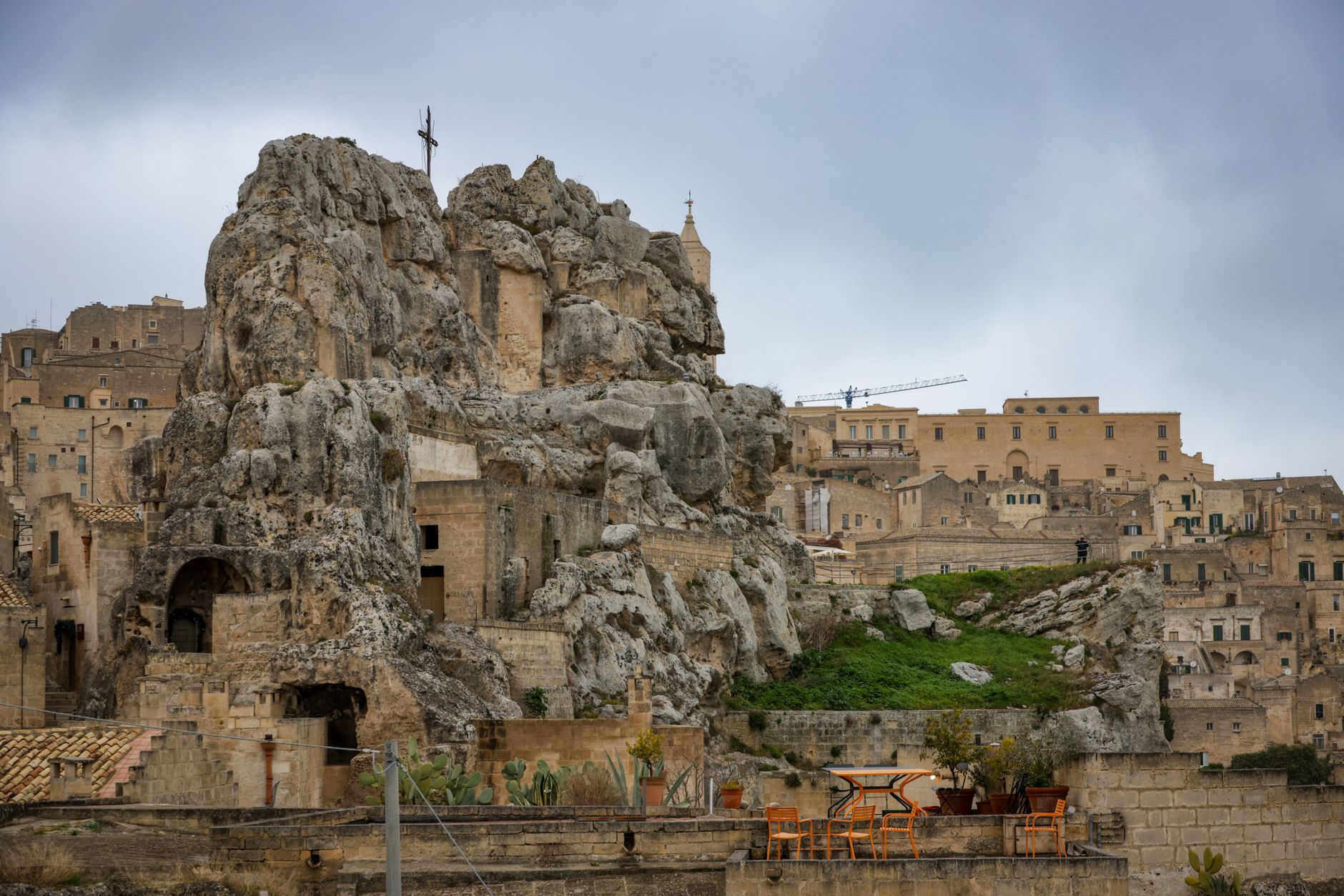
Matera’s sassi - the ancient cave dwellings carved into two ravines in southern Basilicata - were inhabited continuously for roughly 9,000 years before the Italian government forcibly evacuated residents in the 1950s, deeming them a national disgrace. Decades later, UNESCO named the same neighbourhoods a World Heritage Site. The city was the European Capital of Culture in 2019. That reversal is almost too neat to be true, and yet that’s exactly what happened.
What this history produces is a place with no particular performance anxiety. Matera isn’t trying to charm you. The streets in the Sasso Caveoso are uneven and steep and largely unmarked. There are no helpful colour-coded tourist routes embedded in the pavement. If you take a wrong turn you’ll end up at someone’s front door, which is also a cliff edge, which is also somehow a restaurant terrace. The spatial logic only resolves after about two hours of walking it.
The practical case for going is straightforward: Matera is roughly 65 kilometres from Bari, which has a major airport with budget airline connections across Europe. The FAL railway runs between Bari Centrale and Matera Sud - the journey takes around an hour and a half and costs a few euros. You don’t need a car to get there, though you’ll want one if you plan to explore the Murgia plateau on the opposite side of the ravine, where the rupestrian churches are scattered across open grassland without signage.
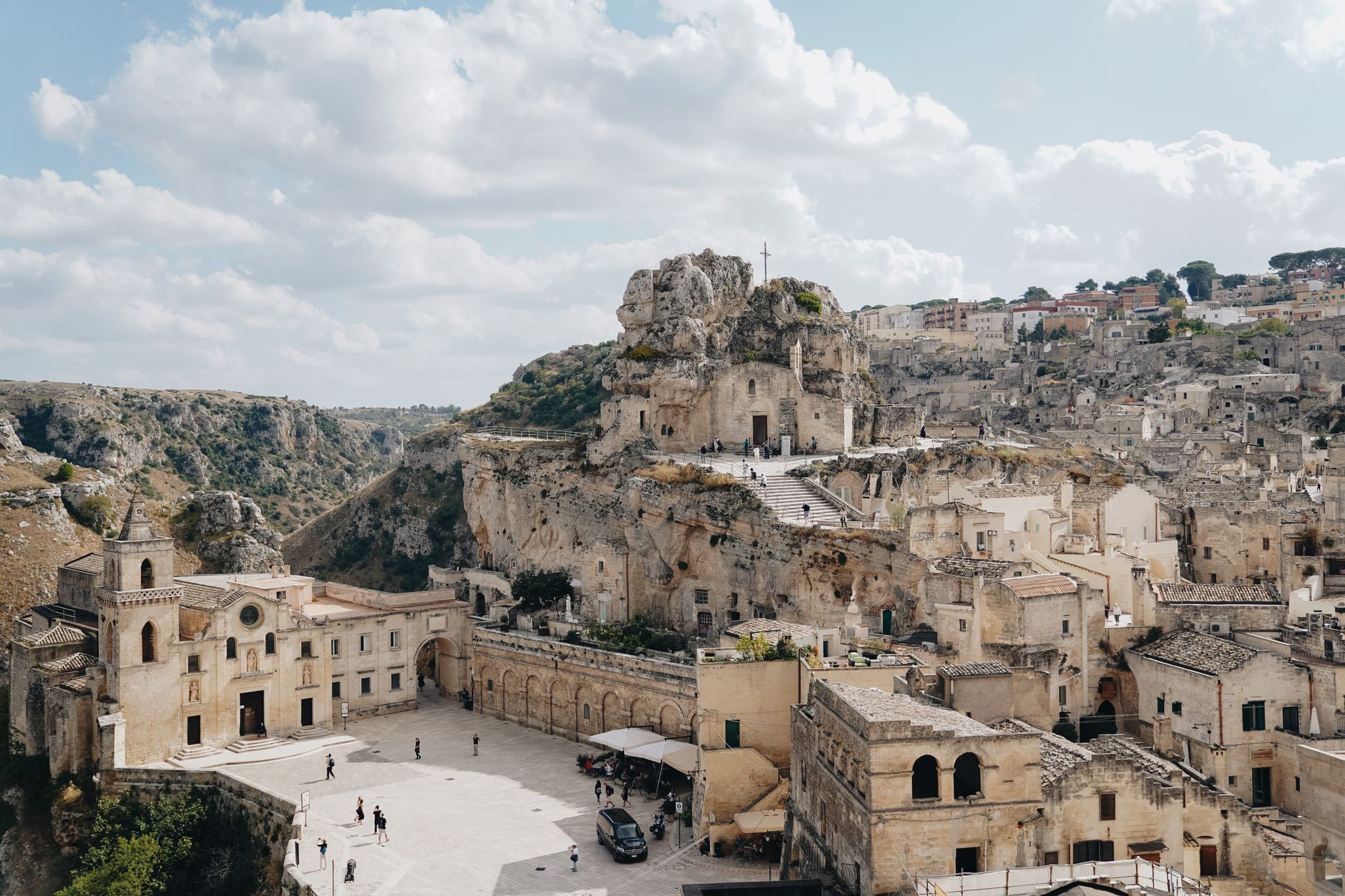
Accommodation inside the sassi ranges from budget guesthouses to cave hotels with plunge pools carved into the tufa. The mid-range options are genuinely good - staying inside the rock itself is not a gimmick, the temperature regulation is natural and the walls are a metre thick.
The Part Most Guides Skip
The ravine opposite the sassi - the Murgia Materana - is where the older cave churches are, and most day-trippers never cross to it. The trail down and across takes maybe 40 minutes from the belvedere near the Civita, and the difference in atmosphere is significant. You go from a busy terrace with espresso to silence and scrubland in under an hour.
August is crowded by southern Italian standards, though nothing like the Amalfi coast. Evenings cool down considerably once the sun drops below the ravine walls, which happens earlier than you’d expect given the orientation of the city - something worth knowing if you’re planning to eat outside and didn’t bring a layer.