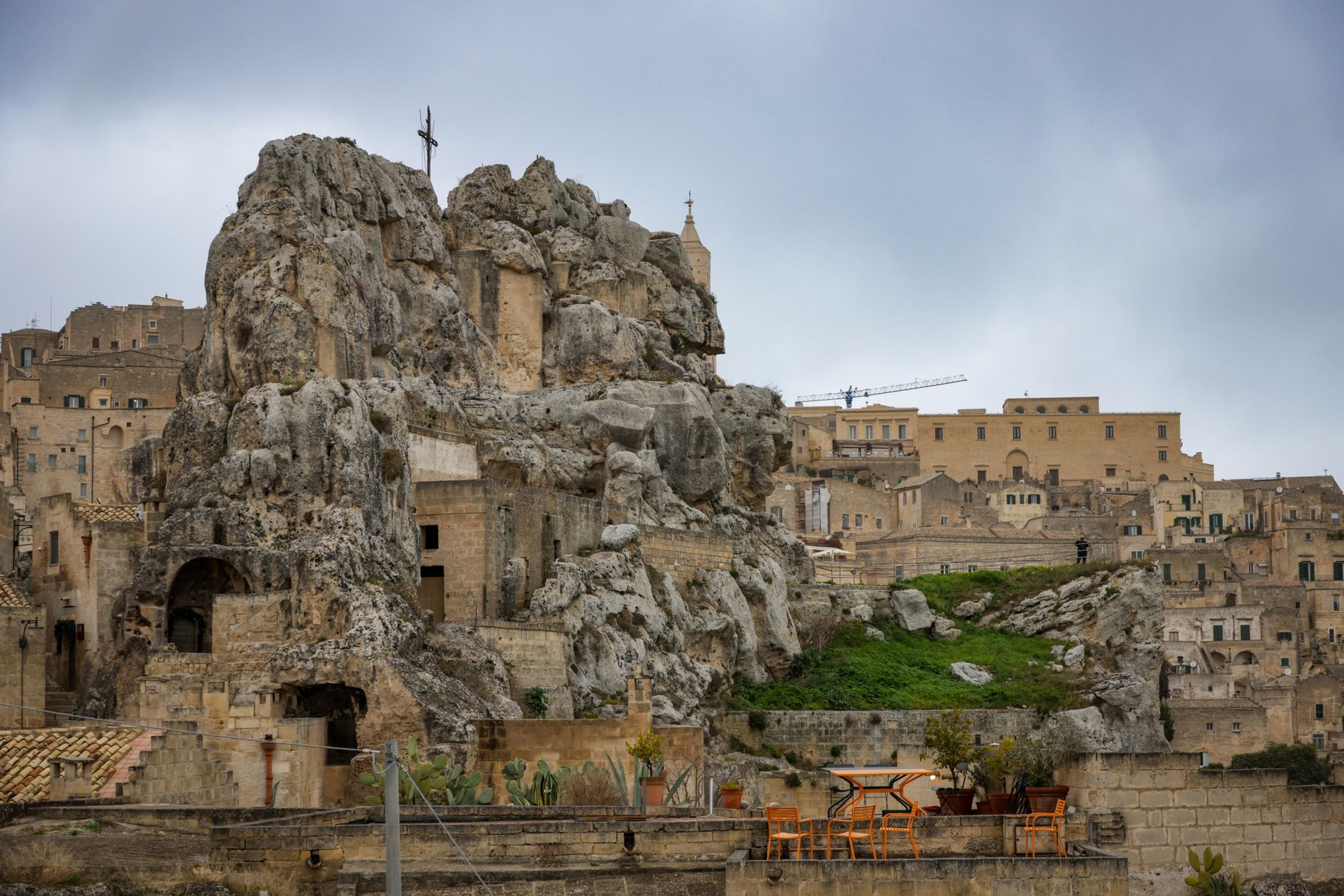
Matera was declared a UNESCO World Heritage Site in 1993, when southern Italy wasn’t exactly pulling tourists away from Rome and the Amalfi Coast. For decades after, it sat quietly in Basilicata - one of Italy’s least visited regions - doing nothing to market itself and nothing to make arrival easier. The roads in are still slow. The nearest airport with meaningful connections is Bari, about 65 kilometres away. None of this has been fixed. It doesn’t seem to bother anyone who lives there.
The city is built into and over two ravines called the Sassi - Sasso Caveoso and Sasso Barisano - where people lived in cave dwellings for thousands of years. The Italian government forcibly relocated the residents in the 1950s, considering the caves uninhabitable and the living conditions an embarrassment. By the 1980s, some of those same caves were being restored. Now they’re restaurants, hotels, and wine bars. The architectural logic of the place - structures that are simultaneously carved into the rock face and built on top of it - creates something that photos genuinely cannot replicate. You understand it only by walking it, which means walking a lot of uneven stone staircases with no particular signage.
The practical reality is that Matera rewards staying at least two nights. One day is enough to walk the main paths and photograph the Duomo from across the ravine, but not enough to understand how the neighbourhoods actually connect, or to find the churches that are partly underground, or to eat dinner somewhere that isn’t positioned directly on the tourist circuit.
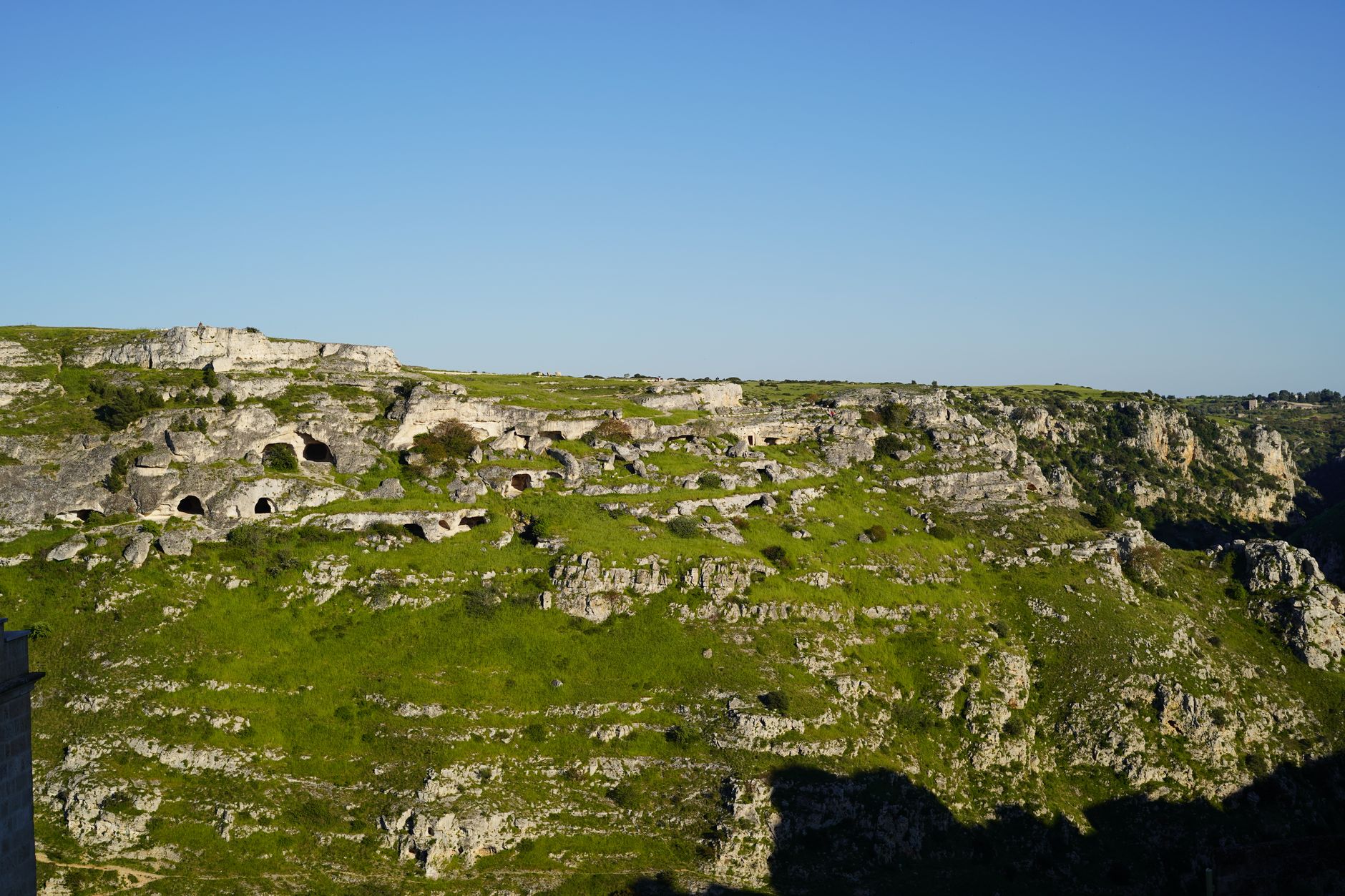
Accommodation inside the Sassi ranges from converted cave rooms - some genuinely atmospheric, some overpriced for what they are - to more conventional hotels on the upper town’s flat streets. The upper town, called Il Piano, is where locals actually live and where bars charge normal prices.
June is already warm in Basilicata, pushing into the mid-thirties by midday. The stone radiates heat. August is worse. The shoulder months - April, May, late September - are more comfortable and the lighting in the ravine in early morning is better than anything the middle of the day produces.
Matera was also the European Capital of Culture in 2019. Most cities use that designation to build new infrastructure and temporarily inflate their cultural programming. Matera used it and then went back to being Matera, which was the correct move.