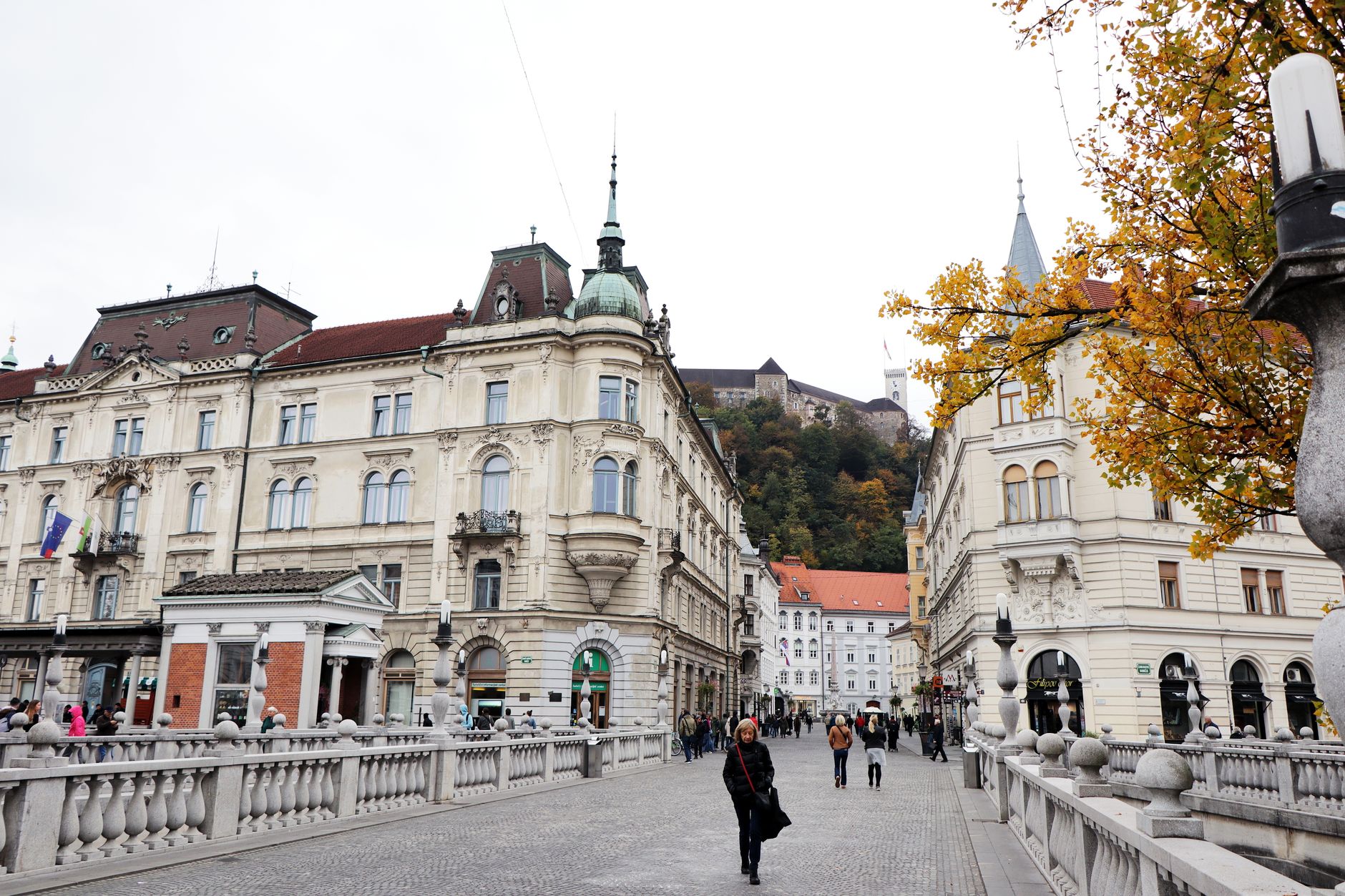
Most people treat Ljubljana as a one-night stop between Venice and Zagreb. The Interrail crowd rolls in, photographs the dragon bridge, drinks one coffee on the Ljubljanica, and catches a morning bus to Lake Bled. The city has absorbed this rhythm so thoroughly that it no longer seems bothered by it.
That indifference is what makes Ljubljana genuinely pleasant to spend time in.
The old town is compact but not precious about itself. Cafés spill onto the riverbanks along Gallusovo nabrežje without the performative quaintness you get in cities that know they’re being watched. The streets between the market and the castle hill fill with locals on weekday afternoons - office workers, students from the university, older residents doing errands - not because Ljubljana has hidden itself from tourism, but because it hasn’t reorganised itself around it. Prices reflect this. A sit-down lunch in the covered market area costs roughly what lunch should cost, not what a city charging for atmosphere would charge.
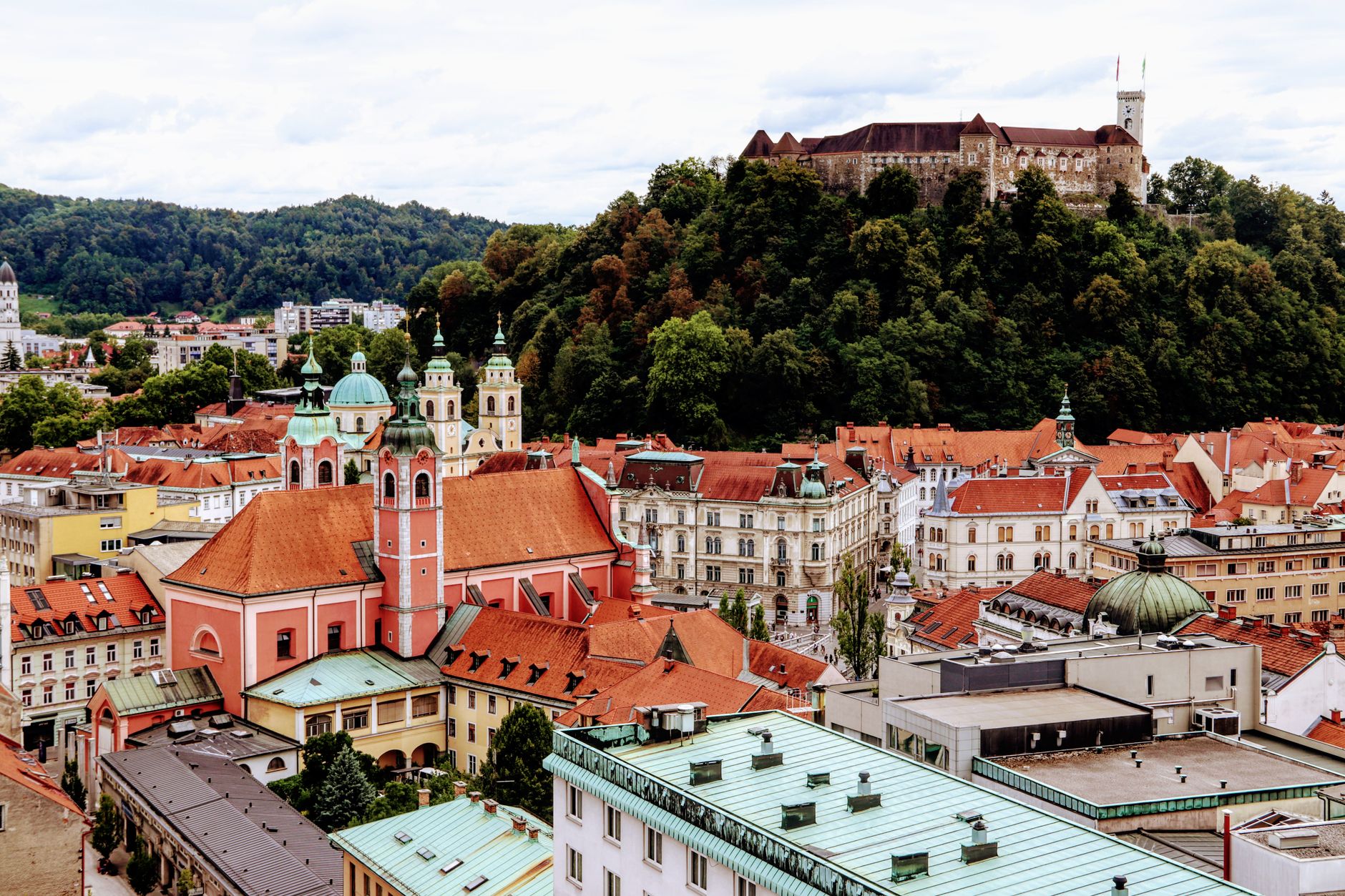
The castle is worth the walk, though not for the views people assume. The view of the Julian Alps to the northwest on a clear morning is the thing - not the city spread below, which is modest, but the mountains sitting behind it, white and enormous, belonging to a completely different scale.
What Takes More Than One Day
The Museum of Modern Art on Tomšičeva has a permanent collection that moves through Slovenian modernism in a way that’s genuinely interesting if you care about Central European art between the wars - a specific interest, but one the museum rewards seriously rather than superficially. Metelkova, the autonomous cultural zone carved out of a former military barracks in the 1990s, still operates as a functioning arts and nightlife district. It’s neither polished nor derelict. The graffiti is layered enough that some of it is now historical.
Day trips to Bled consume most visitors the moment they arrive, which is understandable - the lake is exactly as dramatic as advertised. But Škocjan Caves, across the border in Slovenia’s karst region near the Italian frontier, is the more unusual thing. The underground canyon there is one of the largest in Europe, and the guided walk through it takes about an hour and a half. Most visitors to the country never go.
Ljubljana works well as a base partly because Slovenia is small enough that almost everything is within two hours. But it also works as a place to simply be, which is a different thing - and one that not every small European capital manages.