Most people who end up in Ljubljana booked a night there as a stopover between Vienna and Dubrovnik, or because the flight was cheap into the wrong city. That accidental quality is, oddly, part of what makes it worth staying longer.
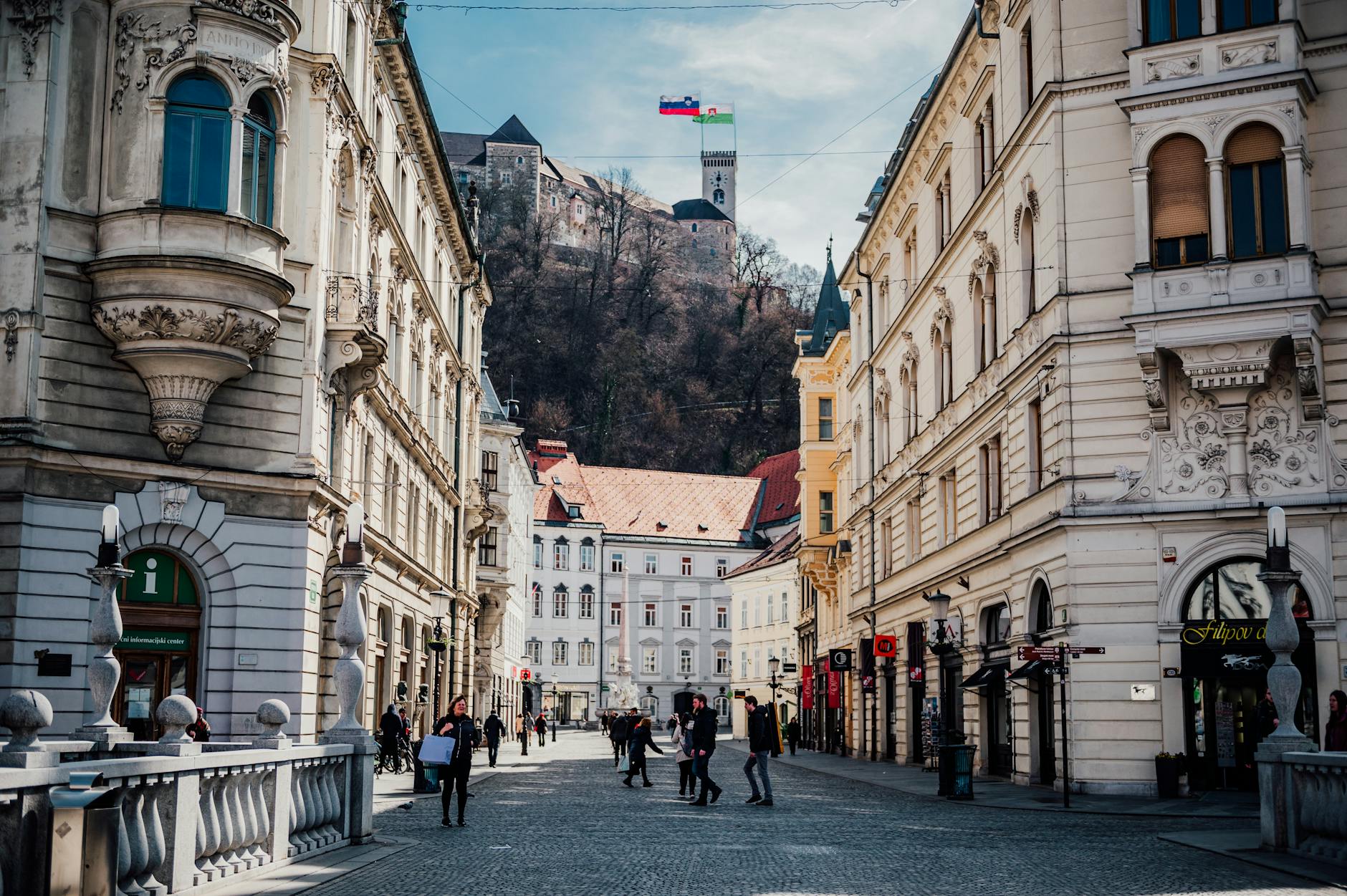
The Slovenian capital has a population of around 280,000. Its old town is genuinely walkable in under twenty minutes - not in the compressed, tourist-corridor way of somewhere like Bruges, but in a way that feels like a real city that happens to be small. The Ljubljanica river runs through the centre, and the embankments on both sides are closed to cars for most of their length, which means the café terraces that line them actually feel calm rather than exhaust-facing.
The castle is not the point
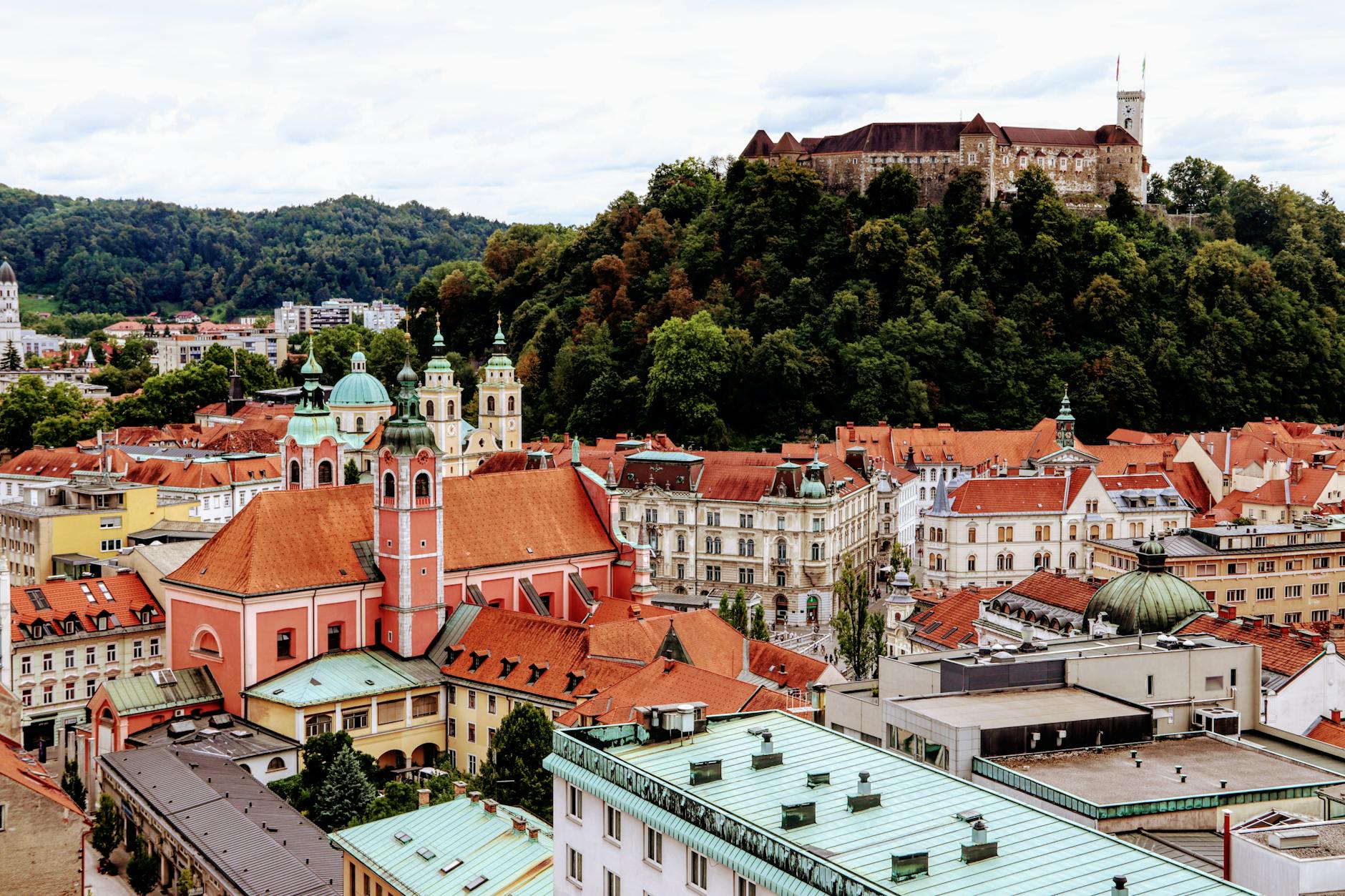
Ljubljanа Castle sits on a hill above the old town and most first-time visitors go up, take the view, come back down, and consider themselves done with the city. The view is good. But the hill itself - Grajska Planota - is the more interesting thing. There are paths through the woods, benches that never seem crowded, and a quiet that’s unusual for something that close to a city centre. The castle itself is a partial reconstruction and not especially ancient in what it shows you; the forest around it is worth more of your time.
The market is the best reason to arrive on a Friday
The Central Market along Pogačarjev trg operates daily but reaches its fullest on Fridays. It’s not a tourist market in the way that almost every other central European capital’s “traditional market” has become. Vendors sell Slovenian honey - the country has a serious beekeeping tradition, and Carniolan bees are a recognised indigenous breed - alongside foraged mushrooms, aged cheese from the Karst plateau, and dried herbs from the Julian Alps. Prices are reasonable by any Western European standard.
Getting the timing right
June and September are quieter than July and August without any meaningful trade-off in weather. The city doesn’t have the hotel infrastructure to absorb large crowds gracefully, and in peak summer the old town can feel briefly overwhelmed. Give it a long weekend at minimum - arriving, seeing the castle, and leaving the next morning means you’ve seen the scenery without the city.
Slovenia runs on the euro and is part of the Schengen Area. Direct trains connect Ljubljana to Vienna (around six hours), Zagreb (two and a half hours), and Venice (roughly three and a half hours via the scenic Semmering route, depending on the service).