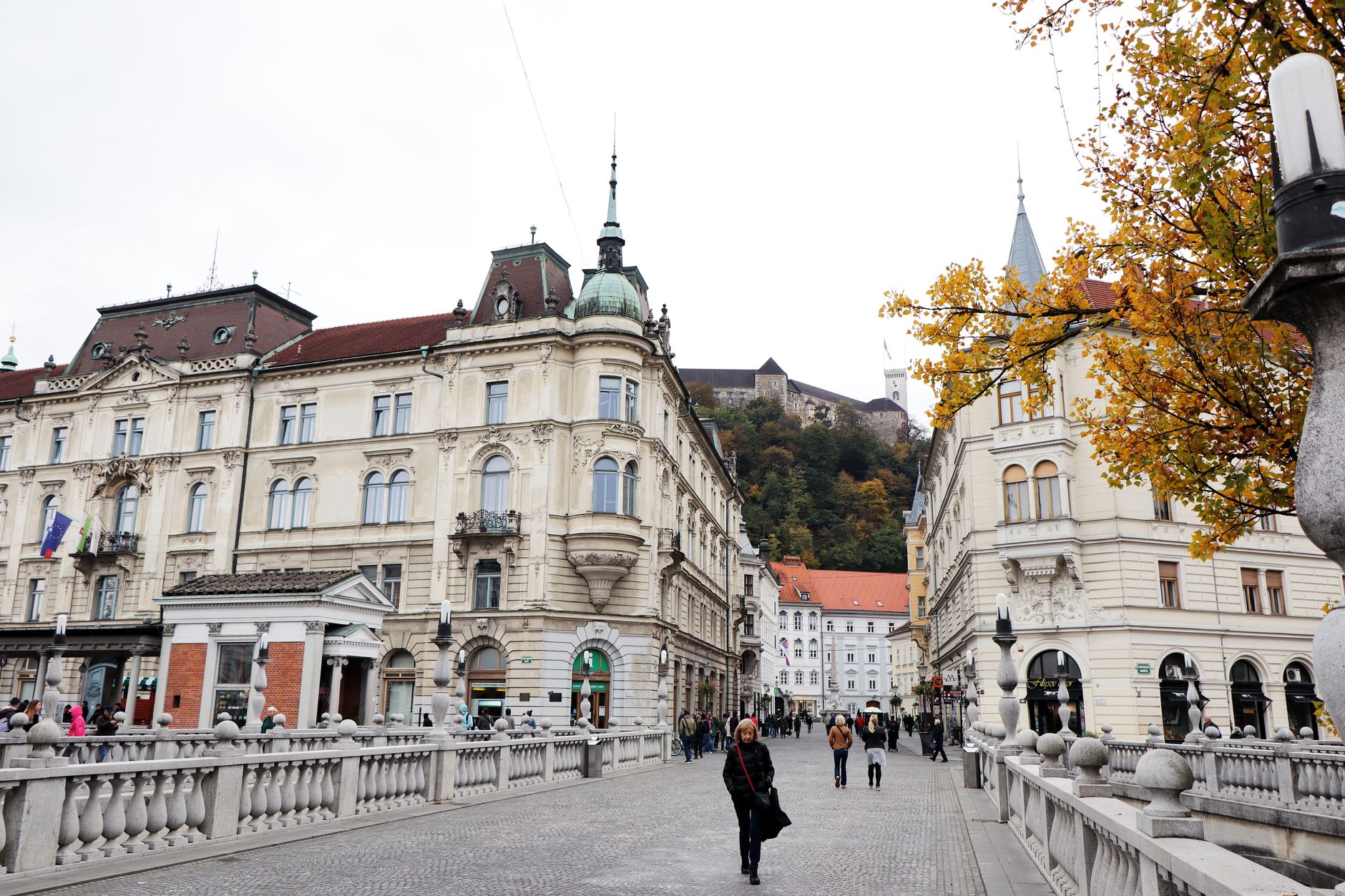
Most European capitals extract money through friction - the metro ticket, the museum entry, the €4 coffee you buy just to sit somewhere. Ljubljana is built differently. The car-free centre means you walk or cycle. The Ljubljanica river runs straight through the old town with benches and grass banks that nobody charges you to use. Prešeren Square sits at the centre of the city and functions as a public living room in a way that most main squares in comparable cities have stopped doing.
The castle on the hill above the old town does charge an entry fee for the interior, but the hill itself is free to walk up, and the view from outside the walls is nearly identical. Most people who go up there don’t bother going in. That’s not a workaround - it’s just how the place is set up.
The covered market along the river, designed by Jože Plečnik and built across several decades of the early 20th century, runs on weekday mornings and Saturday. It’s a proper working market - fruit, cheese, meat, bread - not a tourist version of one. Prices are in line with Slovenian supermarkets, which are already considerably cheaper than Western European equivalents. A full breakfast’s worth of food costs almost nothing.
Plečnik Is Everywhere Once You Know to Look
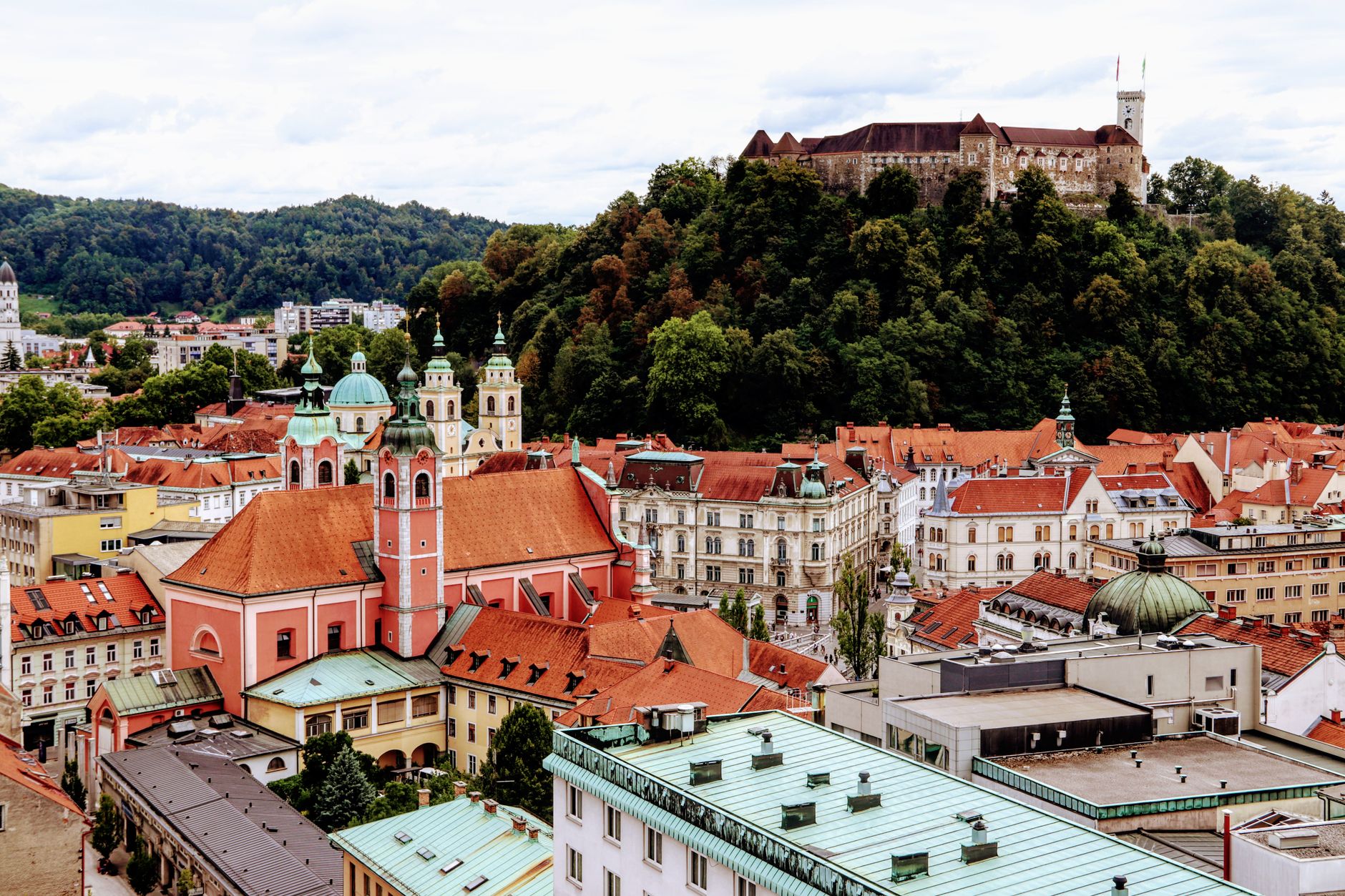
Plečnik is the reason Ljubljana looks the way it does. The Slovenian architect spent decades reshaping the city after returning from Vienna and Prague in 1921, and his influence runs from the triple bridge at Prešeren Square through the colonnaded market, the willow-lined banks, the lamp posts, the public fountains. The city organised a Plečnik trail - a self-guided walking route - which is free and takes about two hours at a slow pace. It’s genuinely one of the better architectural walking routes in Central Europe, partly because the buildings are still in daily use rather than preserved as monuments.
Ljubljana’s walkable core takes under twenty minutes to cross. That density means you cover a lot without planning to. You end up somewhere you weren’t heading, sit down, and stay longer than expected.
The Size Question
People sometimes frame Ljubljana’s smallness as a limitation - something to acknowledge before reassuring you it’s still worth the trip. It isn’t a limitation. Two or three days here is enough to feel like you’ve understood the city rather than just passed through it, which is rarer than it sounds for a European capital.
Whether that feeling of having understood a place is actually what it claims to be is a separate question worth sitting with.