Kotor’s old town takes about forty minutes to walk end to end. The medieval walls are real, the cats are real, the Venetian stonework is genuinely impressive - but if you spend your entire visit inside those walls, you’ve missed what makes the Bay of Kotor different from every other walled city on the Adriatic.
The bay is not a backdrop. It’s the thing.
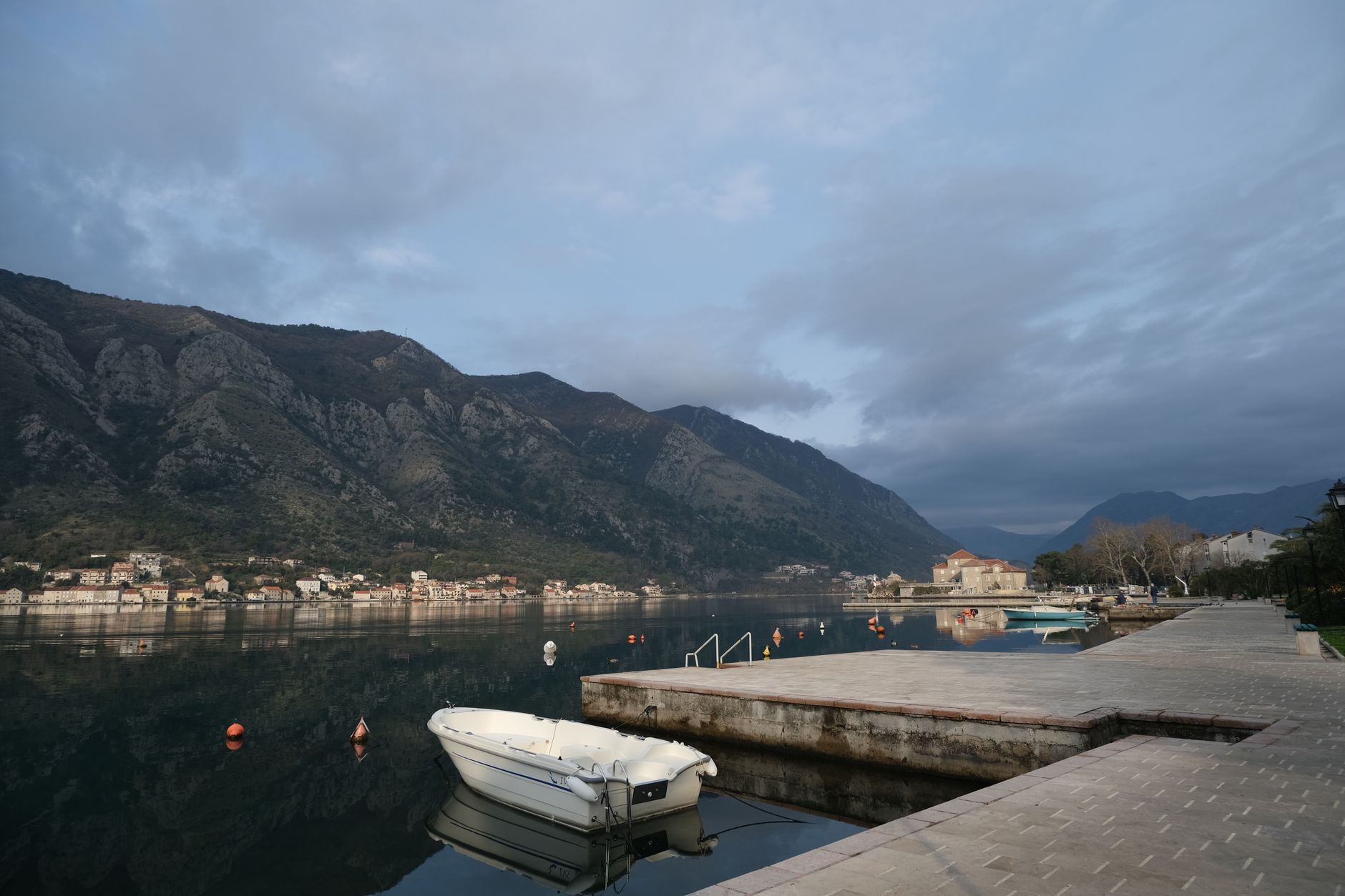
Geologically, the Bay of Kotor (Boka Kotorska) is sometimes described as the southernmost fjord in Europe, though that classification is contested - it’s technically a submerged river canyon. What isn’t contested is the effect it has when you’re on it: the mountains drop almost vertically into the water, the villages on the far shore look miniature and unreachable, and the light in the early morning does something to the surface that no photograph has ever properly captured.
Getting on the Water Without a Tour Boat
The ferry that crosses between Lepetane and Kamenari runs continuously and costs almost nothing - a few euros for a car, less for a passenger on foot. It’s a working ferry, not a sightseeing service, which means you share it with locals running errands and trucks moving between the two sides of the bay. The crossing takes about five minutes and gives you a clean, unobstructed view of the full bay that no viewpoint on land replicates.
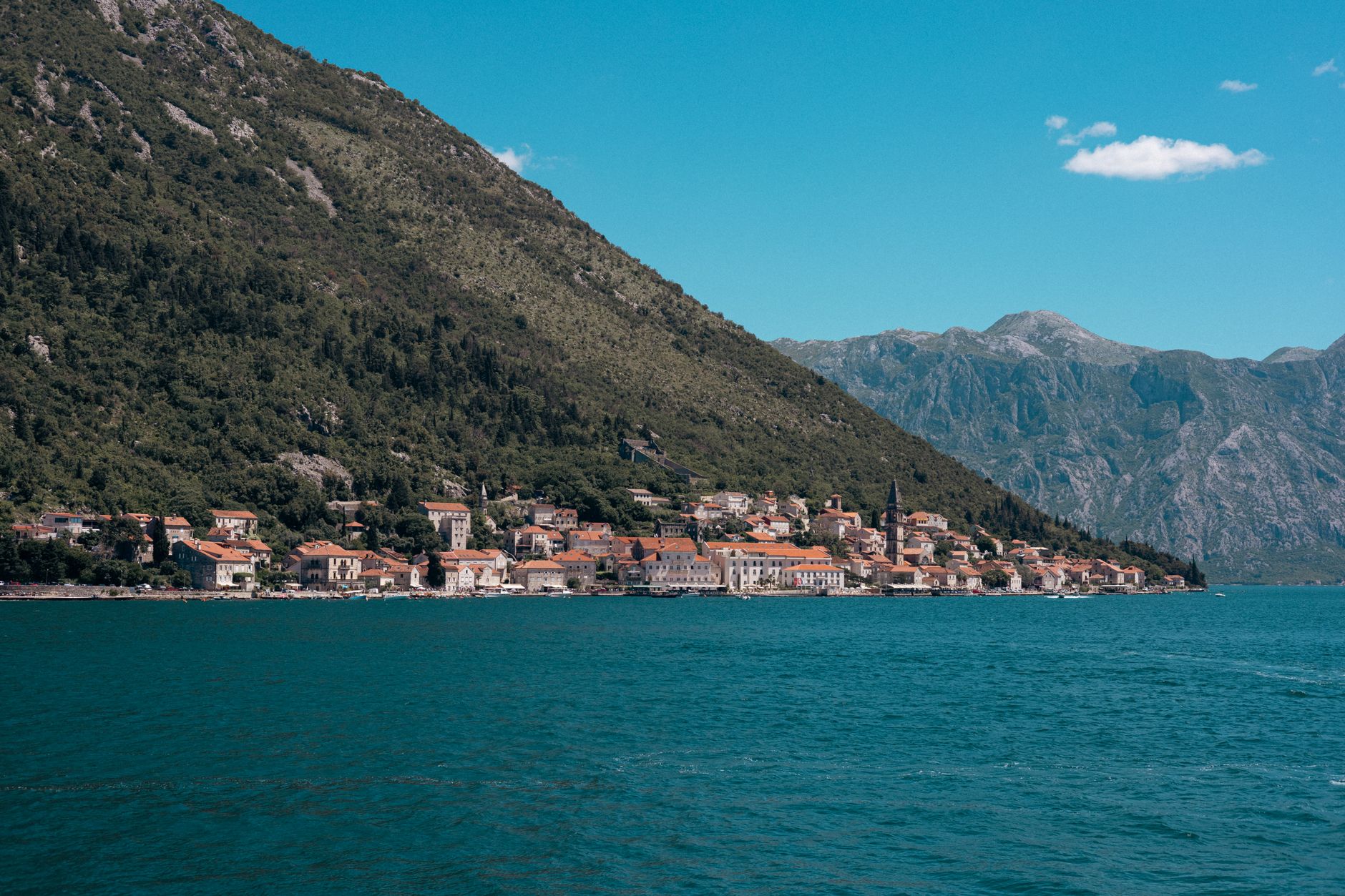
From Kamenari, the road north along the western shore of the outer bay passes through Herceg Novi, which is dramatically less visited than Kotor and has its own old town, its own fortress, and a functioning daily market that doesn’t organise itself around cruise ship arrival times.
The Timing Problem
Kotor receives a significant number of cruise ship passengers during peak summer months. The ships dock in the morning and passengers are largely gone by mid-afternoon. If you’re staying overnight - which almost no cruise visitor does - the town transforms after about 5pm. The narrow streets clear, the restaurants shift their energy, and the whole place feels like it belongs to the people eating dinner in it.
This isn’t a secret. But it does mean the decision of where to sleep matters more in Kotor than in most places. A hotel inside the walls puts you there when it counts. Staying across the bay in Perast or Prčanj means a drive back in the dark on a road that rewards attention.
Perast, for what it’s worth, has two islands visible from its waterfront - one of them, Our Lady of the Rocks, is artificial, built over centuries by local sailors dropping stones as an act of devotion. The other, St. George, is a Benedictine monastery and is closed to visitors. The contrast between the two - one open, one sealed - feels like the bay in miniature.