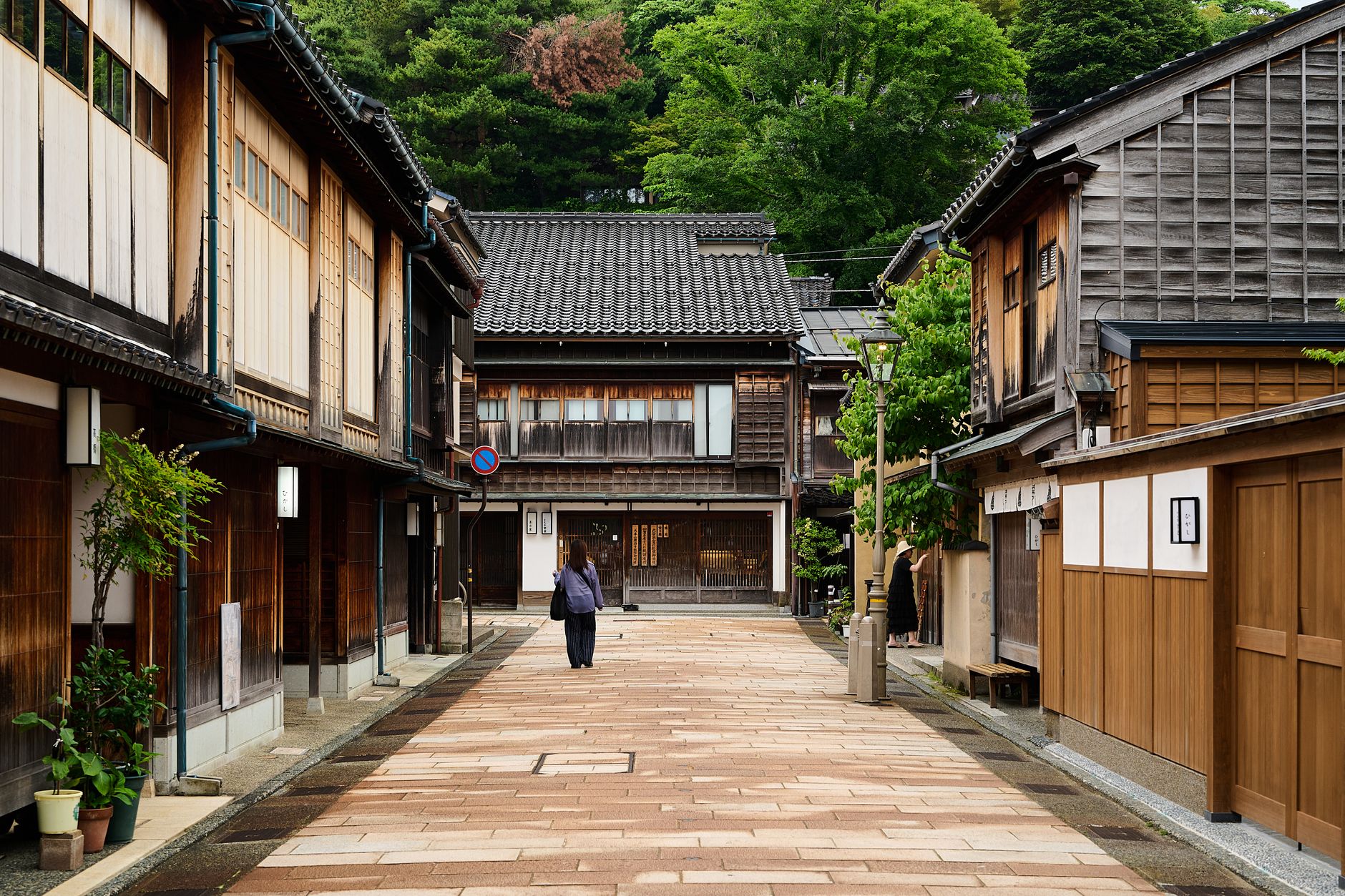
Kyoto in peak season now requires timed entry tickets to gardens, rope barriers around photogenic alleys, and a tolerance for tour groups moving in formation. Kanazawa, three hours north by bullet train, has most of what made Kyoto worth visiting in the first place - and hasn’t yet been consumed by the infrastructure that tourism demands of itself.
The Higashi Chaya district is the obvious place to start. It’s a preserved geisha quarter of two-storey wooden machiya townhouses running along a narrow grid of streets, and on a weekday morning it’s genuinely quiet. Not performatively quiet - actually quiet. A few of the ochaya teahouses operate as museums or sell local gold-leaf crafts; others are still working establishments. The district isn’t recreated. It’s just old and still standing.
Kenroku-en, the garden that appears in every piece of Kanazawa tourism material, earns its reputation more honestly than most famous gardens. It was developed over two centuries by the Maeda clan, the feudal lords who controlled the region during the Edo period, and the name translates roughly to ‘garden of six attributes’ - a reference to a Chinese landscape theory about what constitutes a perfect garden. Whether or not you care about the theory, the result is a large, unhurried space that rewards slow walking rather than punishing you for not arriving at dawn.
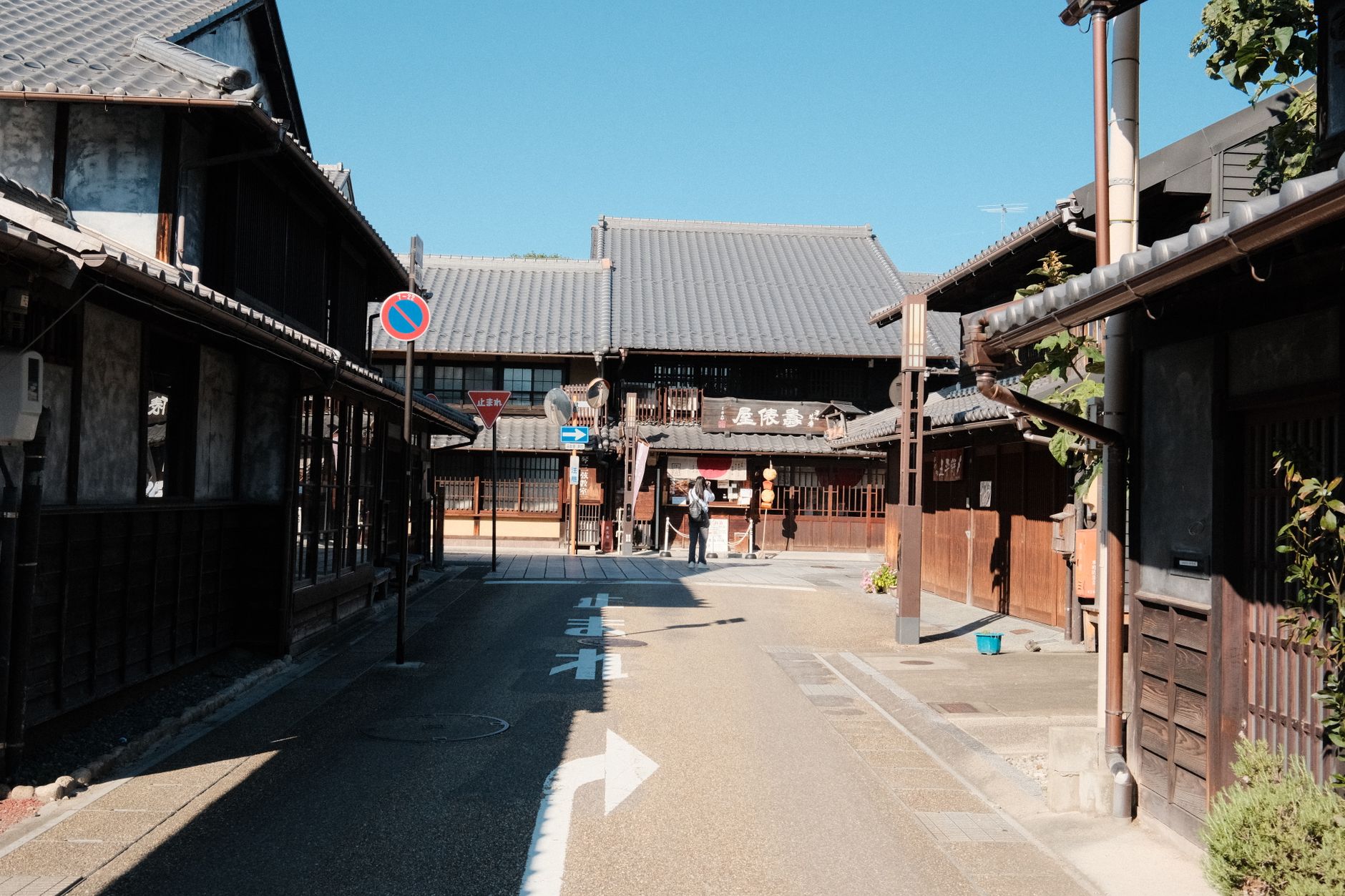
The food case for Kanazawa is strong and specific. The city sits between the Sea of Japan and the mountains, which means the seafood market - Omicho Market - has access to snow crab, yellowtail, and clams that don’t travel far to get there. Omicho isn’t a tourist market pretending to be a working one. Vendors sell to restaurants and locals, and the sushi around the market edges reflects that supply chain directly.
The practical friction is low
Kanazawa Station itself has a dramatic wooden torii-style gate structure at the entrance, and the city is compact enough that a one-day bus pass covers the main areas comfortably. Most visitors come as a day trip from Kyoto or Tokyo, which means accommodation options are relatively uncrowded and still reasonably priced compared to those cities.
The Hokuriku Shinkansen connects Kanazawa to Tokyo in about two and a half hours. From Kyoto, the Thunderbird limited express runs through Osaka, taking roughly two and a quarter hours. Neither route requires advance booking under normal circumstances - which, by itself, already makes Kanazawa a different kind of trip.