Kyoto’s temples are magnificent. They’re also photographed from behind a wall of selfie sticks, booked months out, and surrounded by matcha-flavoured everything sold at ten times the reasonable price. None of that is Kyoto’s fault - it’s simply what happens when a city becomes the default answer to “where do I go in Japan.”
Kanazawa, on the Japan Sea coast of Honshu, has been absorbing the overflow praise from Japan veterans for years. It’s the kind of recommendation passed between travellers who’ve already done the obvious circuit and feel faintly embarrassed about how long it took them to get here.
What the city actually has
Kenroku-en, one of Japan’s three officially designated “great gardens,” sits in the centre of the city. It’s a Edo-period garden - meaning it was designed with specific aesthetic criteria: spaciousness, seclusion, artifice, antiquity, water, and panorama - and it functions as a working park that residents use on weekday mornings as a matter of routine. That’s not something you get in Kyoto’s Arashiyama in 2026.
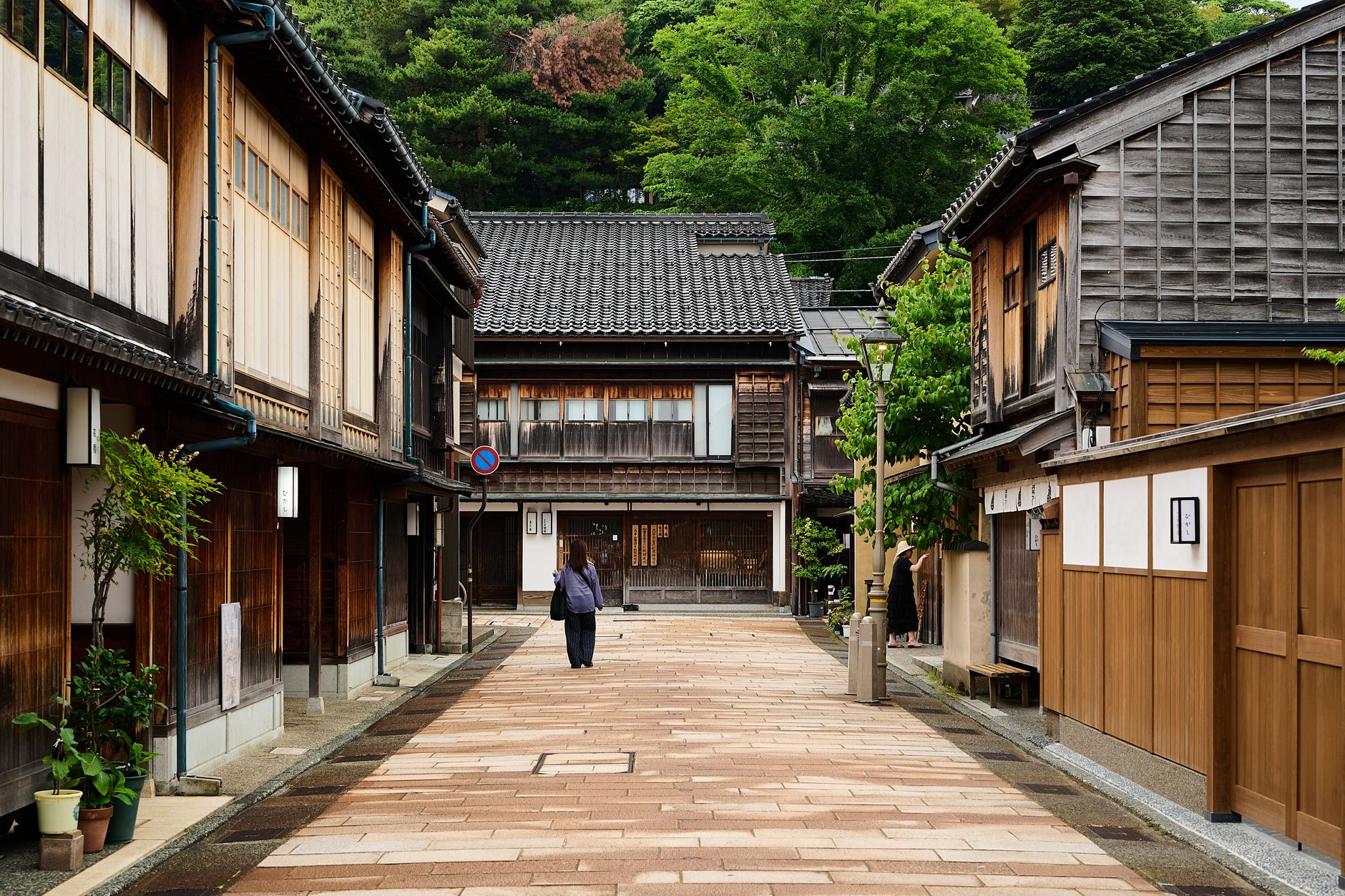
The Higashi Chaya district is a preserved geisha quarter from the early nineteenth century. The wooden lattice facades along the main lane are original, not reconstructed. Several teahouses still operate as actual performance spaces, not just souvenir shops.
The D.T. Suzuki Museum - dedicated to the Buddhist philosopher who largely introduced Zen to Western audiences - is one of the better small museums in Japan, designed by Yoshio Taniguchi and built almost entirely around silence and reflected water. It is genuinely easy to miss if you don’t know to look for it, which is part of the point.
Getting there
The Hokuriku Shinkansen from Tokyo reaches Kanazawa in just over two and a half hours. Since the line extended to Tsuruga in early 2024, connections west toward Kyoto and Osaka are now possible by Thunderbird limited express, though that segment involves a transfer. From Tokyo, Kanazawa is more straightforward than most people expect.
One thing worth sitting with
Kanazawa has a local reputation as a city where traditional arts - lacquerware, Kutani porcelain, Nishijin-style silk weaving - were protected because the ruling Maeda clan during the Edo period deliberately avoided military expansion. The theory is that wealth went into craft instead of conflict. Whether that’s historically precise or partly myth, the craft culture is real and visible in a way that’s harder to find intact elsewhere.
That’s the version of Japan a lot of people are looking for without quite knowing how to name it.