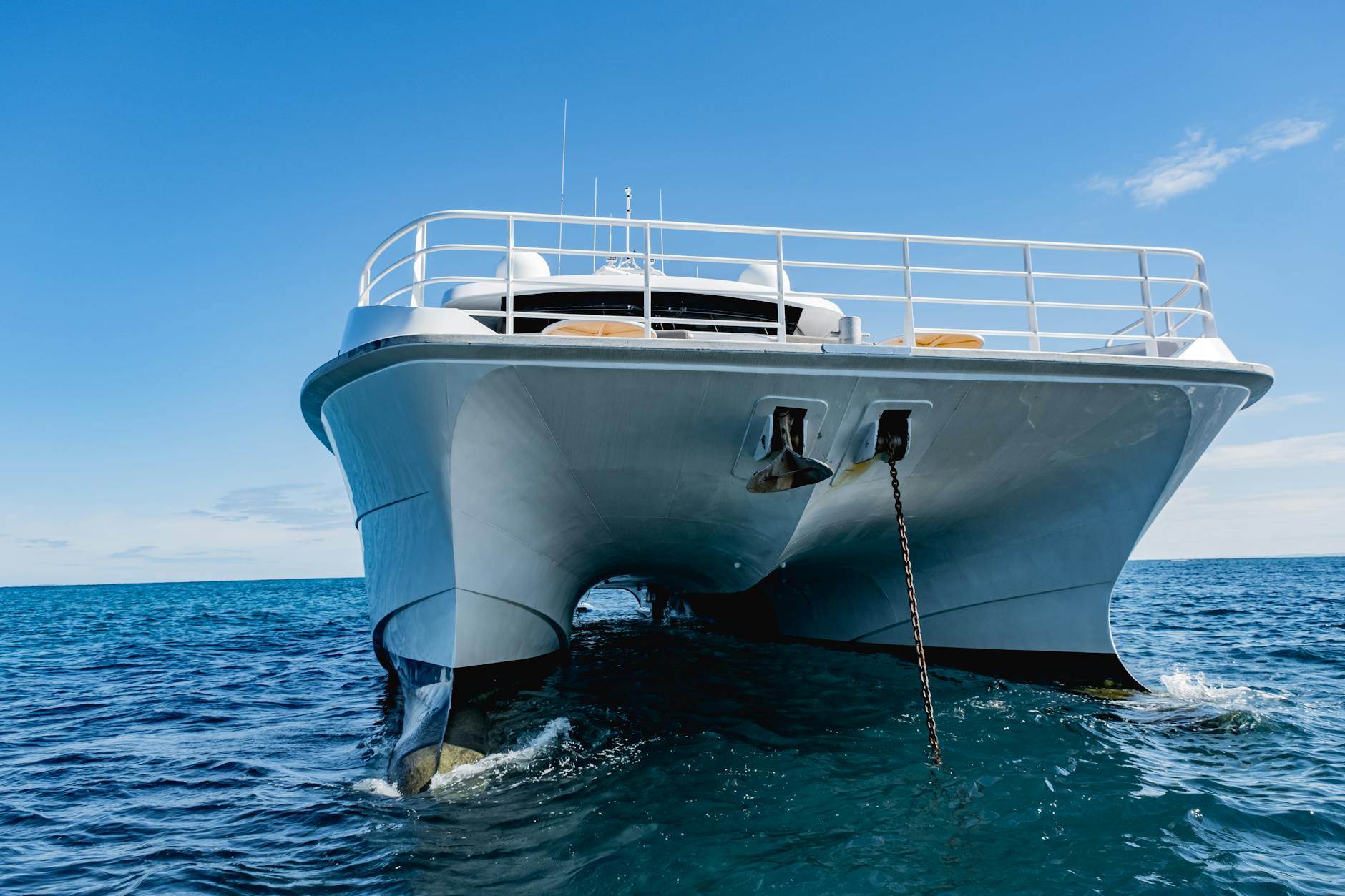
The engine cuts out. The sails fill. The boat tilts just slightly to one side and begins to glide - quietly, smoothly through water so clear you can count the rocks six meters down. That moment, somewhere between Brač and Hvar, is why you come to Croatia on a sailing trip.
We spent five days on a catamaran with More Sailing, a Swedish-run operator that hosts skippered sailing trips out of Trogir, just outside Split. It wasn’t my first time on a sailboat or in Croatia, but it was the first time I felt like I finally understood the rhythm of the country.
Getting to Split
The airport sits across the bay from the city, but getting in is straightforward. Two buses run the route. The Platanus airport shuttle departs right outside arrivals and costs €10 in peak season, €9 off-season; the journey is 40 to 60 minutes depending on traffic, dropping you at the train station and harbor. If you’re watching the budget, the Promet Split city bus (Line 37) boards from the main road about 100 meters from the terminal and costs €3 per person, though it takes longer and stops more frequently. A taxi or Uber from the airport currently runs around €35–50.
One Day in Split
We arrived the afternoon before the boat trip and had a few hours to spare. For a single overnight, you don’t need anything fancy. We stayed at Best Location Rooms (Ul. Vlahe Bukovca 11) in the Bačvice district - about a 10-minute walk to Diocletian’s Palace and only steps from Bačvice beach. We took the smallest and cheapest room: tiny, but clean, and exactly what you need for one night.
The meals you remember in Split won’t be the ones you grabbed on the Riva out of convenience. They’ll be the ones where you sat slightly off the main drag and let the evening stretch. Ask the staff at your accommodation for tips - they’ll know who’s cooking something worth eating that day.
Boarding the Catamaran
Check-in is typically between 3:00 and 5:00 p.m., depending on how quickly the cleaning crew finishes after the previous group. If weather and timing cooperate, the skipper usually gets moving straight away.
We headed directly to Mala Luka Bay on the island of Drvenik Veli for the first night - a quiet anchored bay, a light welcome meal, and a sunset that needed no help from us. This is the way to start: no town, no noise, just the boat rolling softly while you watch the sky go dark.
The Route: Stops Along the Way
From Drvenik Veli, the route wound through several of the Dalmatian islands. Stomorska on Šolta made a gentle first proper stop - unhurried and low-key. Milna on Brač offered a compact harbor town worth an afternoon wander. A bay called Uvala Smrka carried a more unusual character, with remnants of Cold War-era Yugoslav military infrastructure in the surrounding landscape.
The sailing itself - not just the destinations - was consistently the highlight. Open water between the islands, good wind, the hull moving without engine noise.
Stari Grad on Hvar was the furthest point of the trip. One of the oldest continuously inhabited towns in Europe, it has a quieter, less tourist-saturated feel than Hvar Town, with a handful of genuinely good places to eat.
Getting Back
The return leg brought us back to Trogir. With a day to spare, we rented scooters and made it out to Primošten - a small old town on a peninsula north of Split, and a worthwhile detour if you have the time.
About More Sailing
More Sailing runs skippered catamaran trips out of Trogir. The format suits people who want to sail without needing prior experience or their own vessel - the skipper handles navigation while guests move between islands at a pace that actually allows you to see them.
Source: Five Days on a Catamaran: Sailing Croatia’s Dalmatian Coast