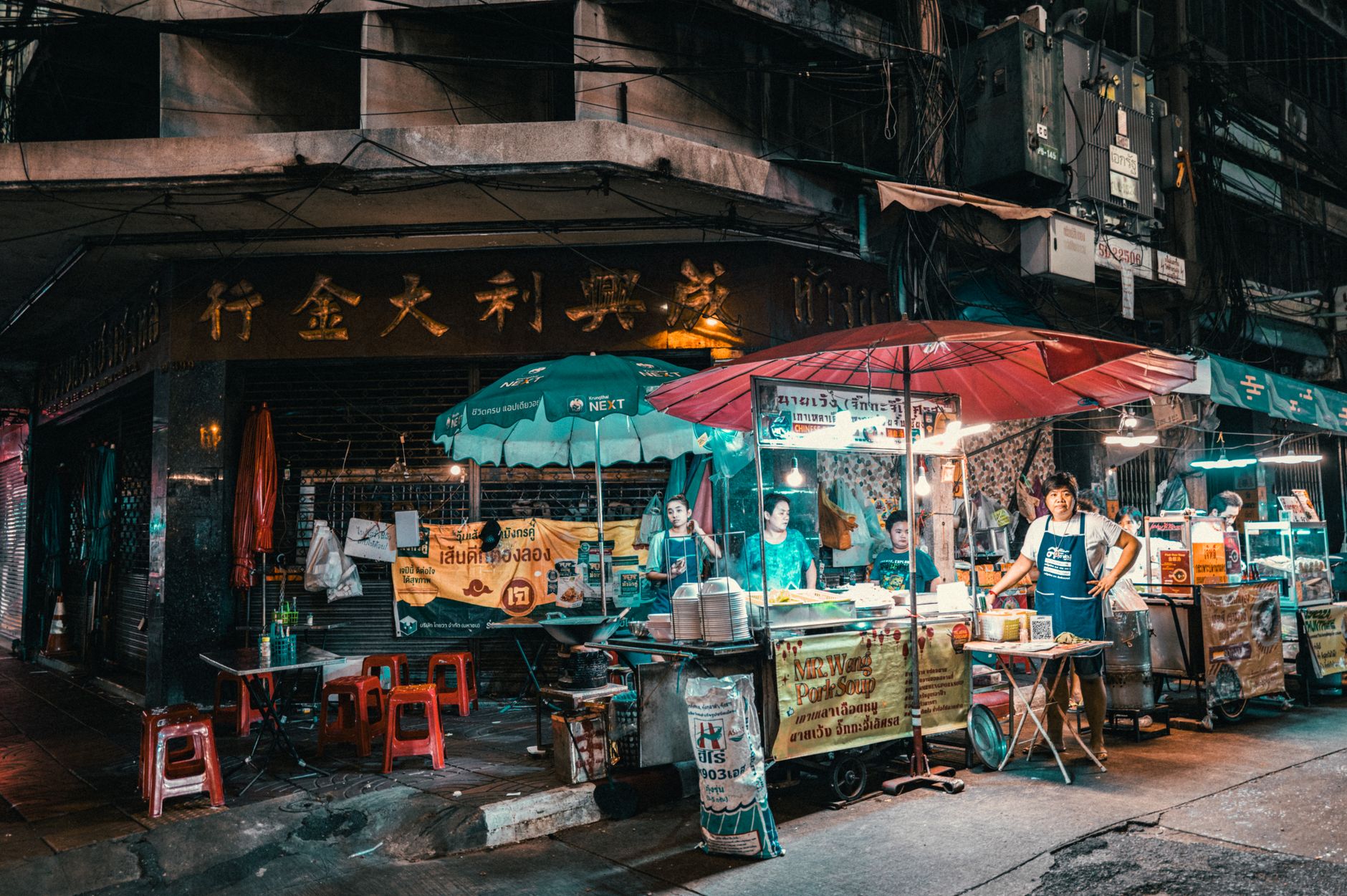
The assumption that eating cheaply while travelling means eating badly is mostly a Western export. In Southeast Asia, it doesn’t hold. The best meal you’ll eat in Chiang Mai will probably cost less than a coffee at the airport, and it won’t come from a restaurant with linen napkins - it’ll come from a woman who has been making the same khao soi for twenty years from a cart near Warorot Market.
This is the single most underestimated cost lever available to travellers in the region. Accommodation is harder to compress without genuine discomfort. Transport has a floor. But food has an extraordinary range, and the bottom of that range is not the unpleasant end.
The pricing logic is backwards from what you’d expect
In most of Europe or North America, cheap food signals low quality - fast food chains, reheated things, portions designed to fill without satisfying. In Thailand, Vietnam, Malaysia, and Cambodia, the opposite is more often true. Street vendors and hawker stalls operate on volume and repetition. They cook one or two things, they cook them constantly, and over years they get very good at those things. A bowl of bún bò Huế from a street stall in Hue costs around 30,000–40,000 VND (roughly USD 1.20–1.60 as of mid-2026). The same dish at a tourist-facing restaurant in the same city costs three to four times more and is frequently blander.
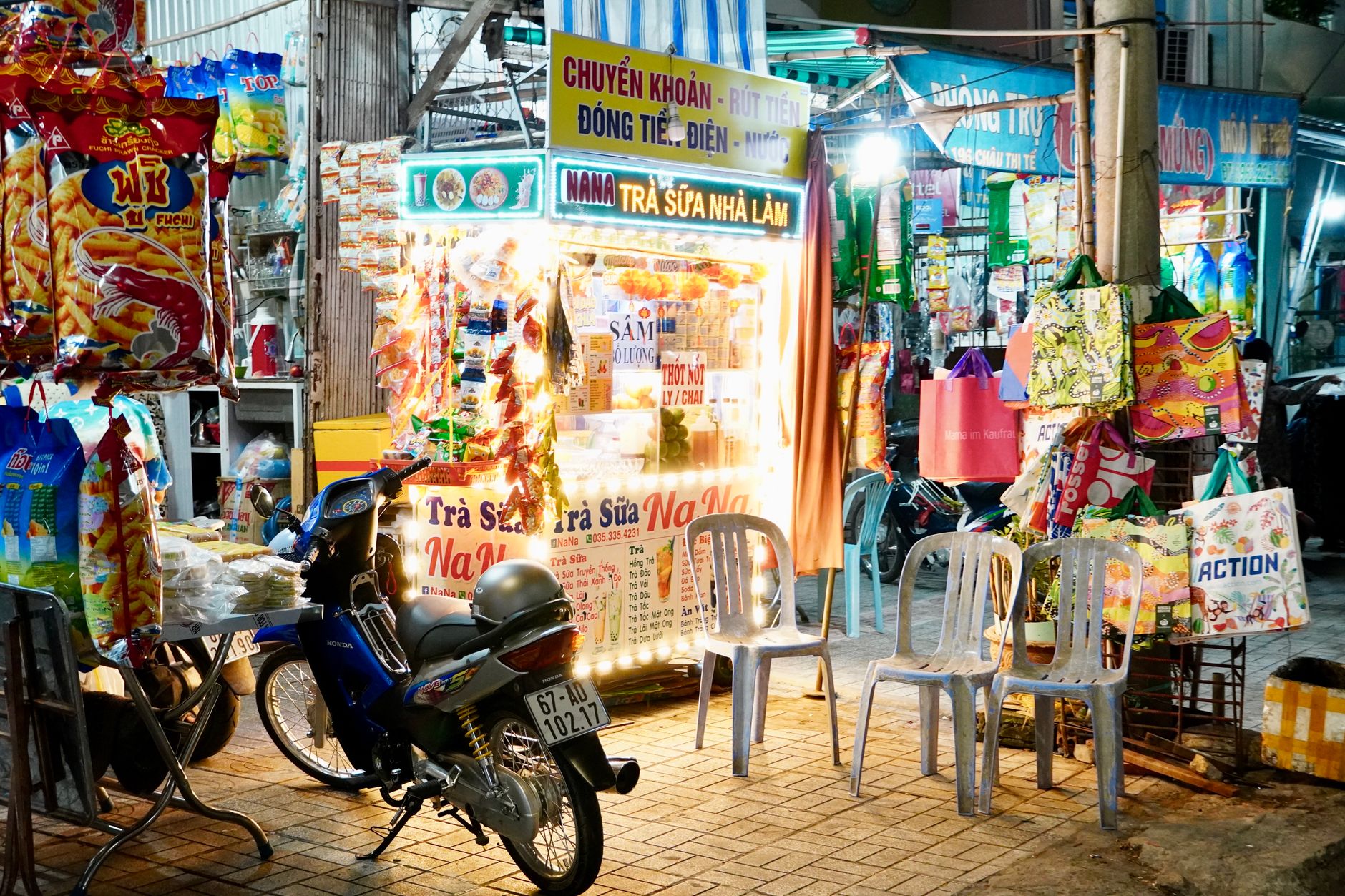
Sit-down restaurants in these countries - particularly those with English menus displayed prominently outside - are almost always priced for foreign visitors and optimised for foreign palates. Neither of those things tends to produce the best food.
What this actually means for a daily budget
A traveller eating primarily from street stalls and local markets in northern Thailand or central Vietnam can spend USD 5–8 per day on food, including drinks, without trying particularly hard. That’s not a backpacker stunt. It’s just eating where locals eat.
The practical barrier is usually comfort, not cost. Finding the stalls requires some wandering, some pointing, occasionally eating something without knowing exactly what it is. That’s a reasonable trade-off for most people once they’ve made peace with it.
The travellers who spend the most on food in Southeast Asia are often the ones trying hardest to replicate the eating habits they have at home. The ones who spend least tend to eat better.