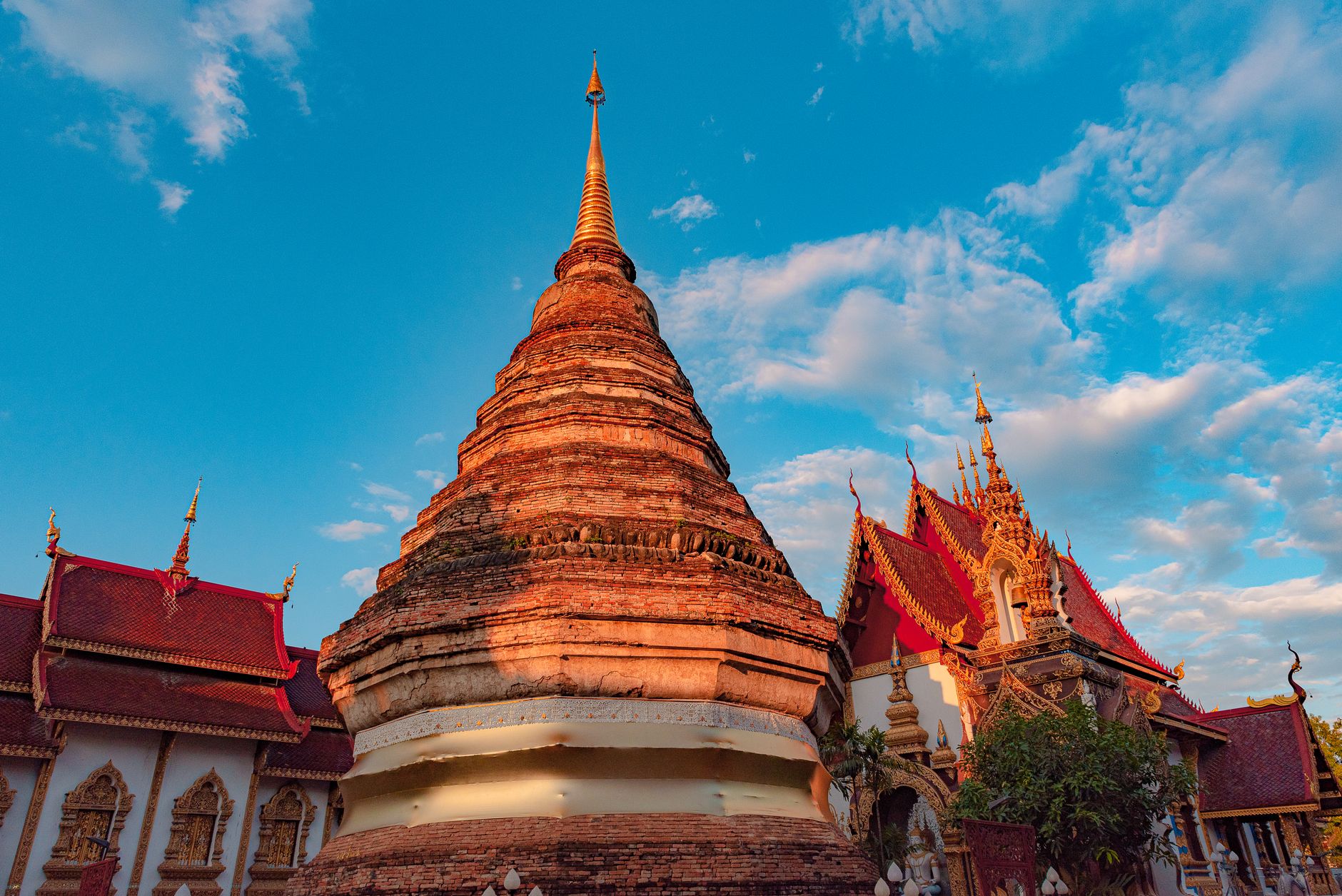
Most travel guides treat Chiang Mai’s rainy season as something to apologise for - a section titled ‘When Not to Go’ dressed up in diplomatic language. The reality is that July and August in northern Thailand produce a version of the city that the cool-season crowds never see, and it’s frequently better.
The rain here doesn’t behave like the sustained grey drizzle of northern Europe. It comes hard and fast, usually in the late afternoon, and then it stops. Mornings are often clear. The light after a downpour is different - the air has actual depth to it, the greens around Doi Suthep look almost theatrical, and the temperature sits around 26–28°C rather than the dry-season peak that pushes past 40°C in April.
The Crowds Thin Out Considerably
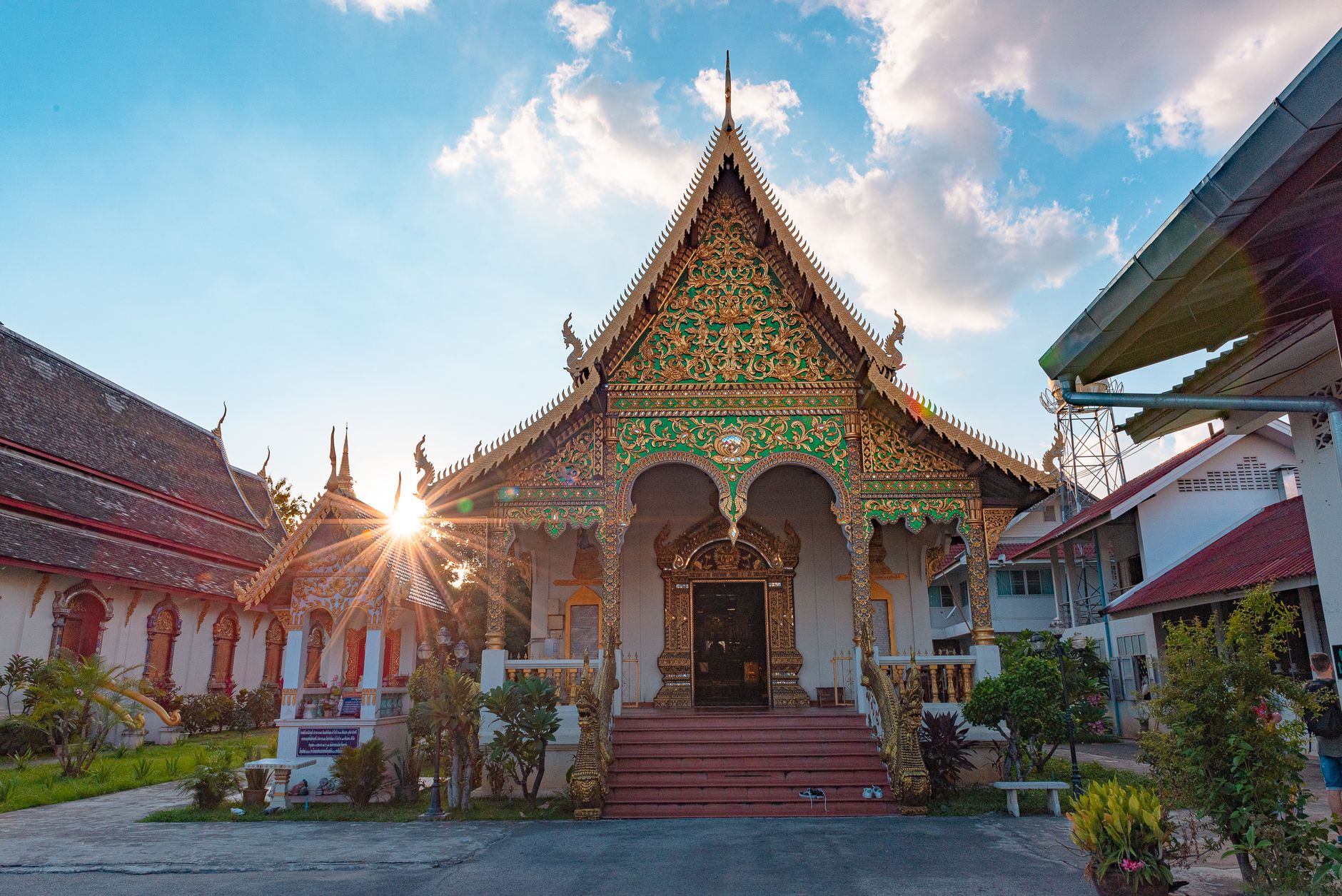
Wat Chedi Luang and Wat Phra Singh, which run near-constant coach traffic from November through February, become navigable again. You can spend time inside the wihan at Phra Singh without being shoulder-to-shoulder with tour groups or waiting for someone to step out of your frame. The Saturday and Sunday Walking Streets on Wualai Road and Tha Phae Road still operate, but they feel like local markets rather than managed tourist experiences.
Accommodation prices drop noticeably - guesthouses in the Nimman area and inside the Old City that charge premium rates in peak season offer significantly lower rack rates, and availability is rarely a concern.
The Moat Fills Up
This sounds minor. It isn’t. The square moat encircling the Old City runs low and brownish by March and April. In rainy season it fills completely, the lotus plants around the corners come back, and the evening light on the water around Tha Phae Gate looks like it was staged for a postcard. It’s one of those things that photographs badly and looks genuinely good in person.
What Actually Gets Disrupted
Some trekking routes in the hills north of the city become muddy or inaccessible, particularly anything involving river crossings. A few operators scale back their programmes. Flights occasionally see short delays. These are real inconveniences, not invented ones - but they affect a specific kind of itinerary, not the city itself.
Chiang Mai in rainy season rewards anyone who isn’t trying to do everything at once. The city slows down, the temples breathe, and the afternoons have a rhythm: do things in the morning, find somewhere covered when the rain arrives around three, eat well after it passes.