Most of what you see in Chiang Mai travel photography was shot in November or December - dry air, golden light, packed temple courtyards. June looks nothing like that, and it’s better for it.
The rains in northern Thailand’s wet season don’t arrive as a continuous downpour. They come in the afternoon, usually between 2pm and 5pm, hard and warm, and then they stop. Mornings are clear enough to visit Doi Suthep without the haze that actually obscures the view in the smoky months of March and April. The surrounding hills are a deep, almost unrealistic green. The moat that rings the old city fills properly and reflects the walls back at you.
The Old City Without the Crowd
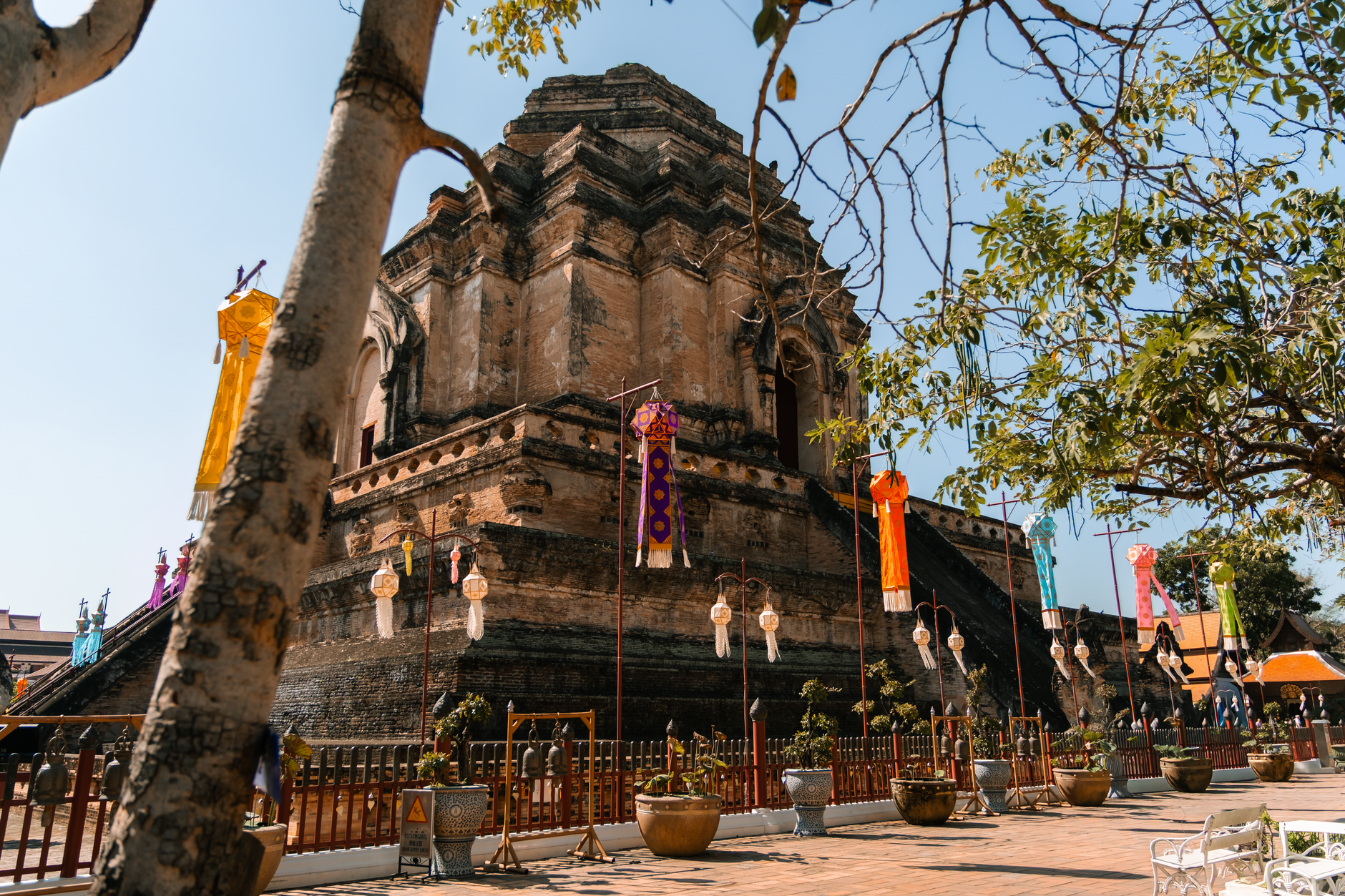
The historic centre - the square defined by the moat - has somewhere around 30 temples within its walls alone. In peak season, Wat Chedi Luang and Wat Phra Singh operate at a scale that makes contemplation difficult. In June, you can sit in the viharn at Wat Chedi Luang for twenty minutes without another tourist appearing. The monks go about their morning routines without pivoting around selfie sticks. It changes the quality of the visit in ways that are hard to quantify but immediately obvious.
Accommodation rates drop noticeably from November highs. Many of the boutique guesthouses in the Nimman area - the neighbourhood around Nimmanhaemin Road - offer rates in June that are roughly half what they charge during the cool season.
What the Rain Actually Costs You
One afternoon activity, sometimes two. That’s the honest trade-off. If you had plans to trek to a viewpoint after lunch, the rain will likely cancel them. But it also pushes you toward the covered markets, the cooking class you kept putting off, the massage streets behind Tha Phae Gate where a two-hour traditional massage costs less than a café lunch in most Western cities.
The Food Scene Doesn’t Have an Off-Season
Khao soi - the northern Thai coconut curry noodle soup - is at its best eaten just after the first afternoon rain, when the temperature drops enough to justify something heavy and warm. The cluster of khao soi shops near the Kad Luang market is worth the short tuk-tuk ride from the old city. The version at Khao Soi Mae Sai, a small shopfront operation on Charoen Rat Road, is particularly good, though “best in the city” is a debate locals take seriously and tourists shouldn’t try to settle.
Chiang Mai in June rewards the kind of traveller who builds a loose schedule and treats an unexpected hour of shelter from the rain as time that just opened up rather than time that was taken.