Most travel writing about Chiang Mai assumes you’re arriving in November - cool air, the Yi Peng lantern festival somewhere on the horizon, guesthouses full. July is the opposite of that, and it’s better in almost every way that matters to me.
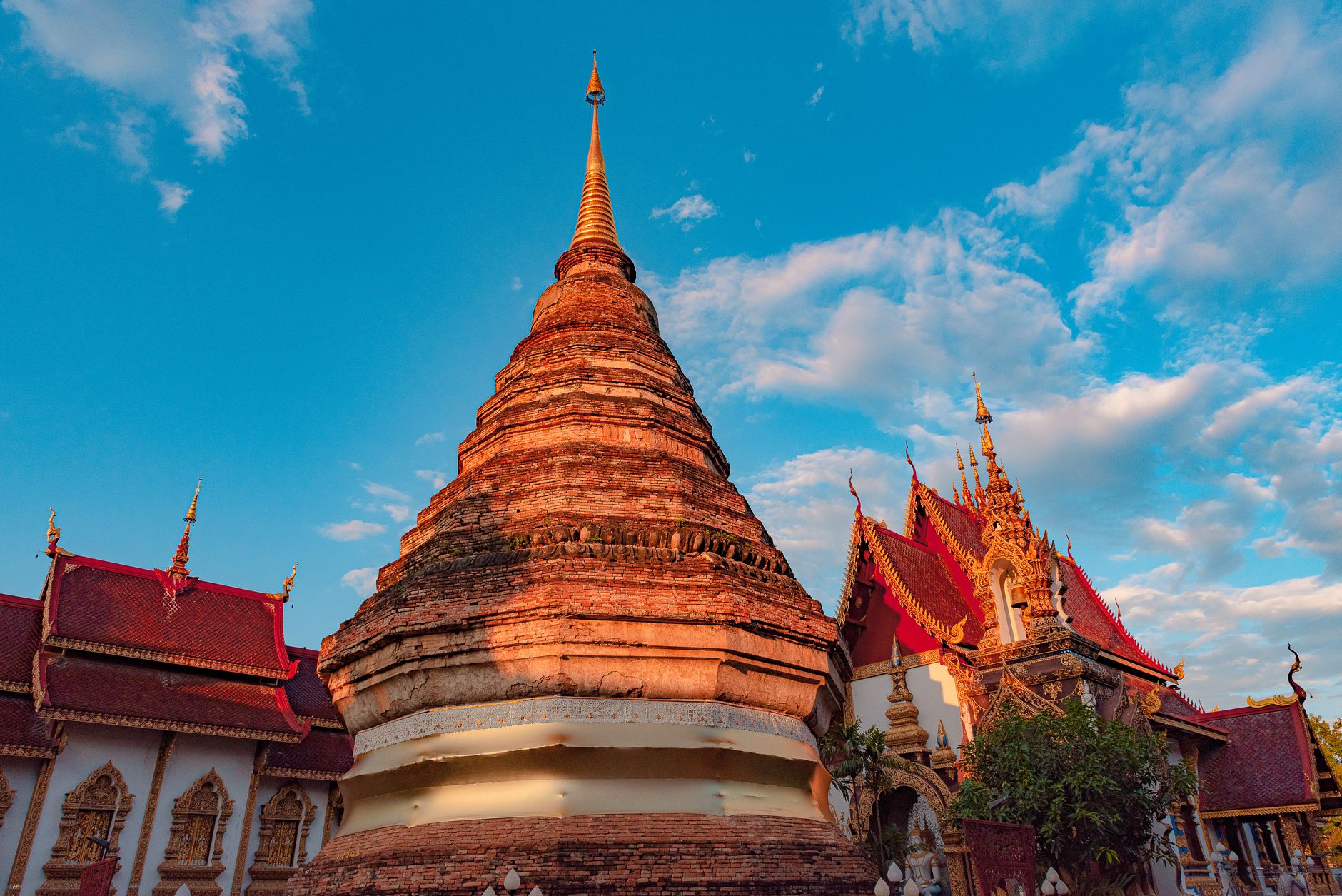
The rain is real. The wet season in northern Thailand runs roughly May through October, and July sits in the middle of it. Afternoon downpours are common, sometimes lasting an hour, sometimes three. But the mornings are often clear, and the light after rain on a temple roof - the gilded chedi at Wat Chedi Luang still dripping, the surrounding moat reflecting low cloud - is not the postcard version of Chiang Mai, which makes it feel like something you found rather than something you booked.
The Crowds Thin Out Considerably
Chiang Mai’s Old City has a density problem in peak season. Guesthouses on Moonmuang Road raise prices, the Sunday Night Market on Wualai Road gets genuinely difficult to move through, and cooking classes at the well-reviewed schools book out weeks ahead. In July, that pressure drops. You can walk into Huen Phen on Ratchamankha Road - one of the city’s better-known northern Thai restaurants - without a wait. That’s not a small thing.
Prices drop too. Guesthouses and smaller boutique hotels that sit at 1,800–2,500 baht a night in December often come down to 1,100–1,600 baht in July. That’s a meaningful difference over a week.
What the Rain Actually Disrupts
Doi Inthanon, Thailand’s highest peak and about 90 kilometres southwest of the city, can be fogged in completely during July - visibility on the summit trails sometimes drops to almost nothing. If that’s a central part of your itinerary, you might be disappointed. The elephant sanctuaries north of the city operate rain or shine, but some of the longer forest walks get shortened when trails become unstable.
The elephant sanctuaries are worth raising briefly: there are now several operating under legitimate rescue and rehabilitation models - Elephant Nature Park being the most established - and none of them involve riding. Booking directly with the sanctuary is both more reliable and ensures the fee reaches the operation rather than a reseller.
The City’s Pace Changes
Chiang Mai in July moves slower. The café culture that the city has built over the past decade - serious coffee, a lot of it, much of it using beans from the surrounding hill regions - feels more like a reason to stay put than a stop on a list. Ristr8to on Nimman Road and Graph on Nimmanhaemin Soi 1 both take their sourcing seriously and are consistently good. Sitting in either through a long afternoon rainstorm is not killing time. It’s the point.
The night markets still run. The food doesn’t change with the season. Khao soi, the northern Thai coconut curry noodle soup, tastes the same in July as it does in December - which is to say, excellent, and available everywhere from 50 baht upward.