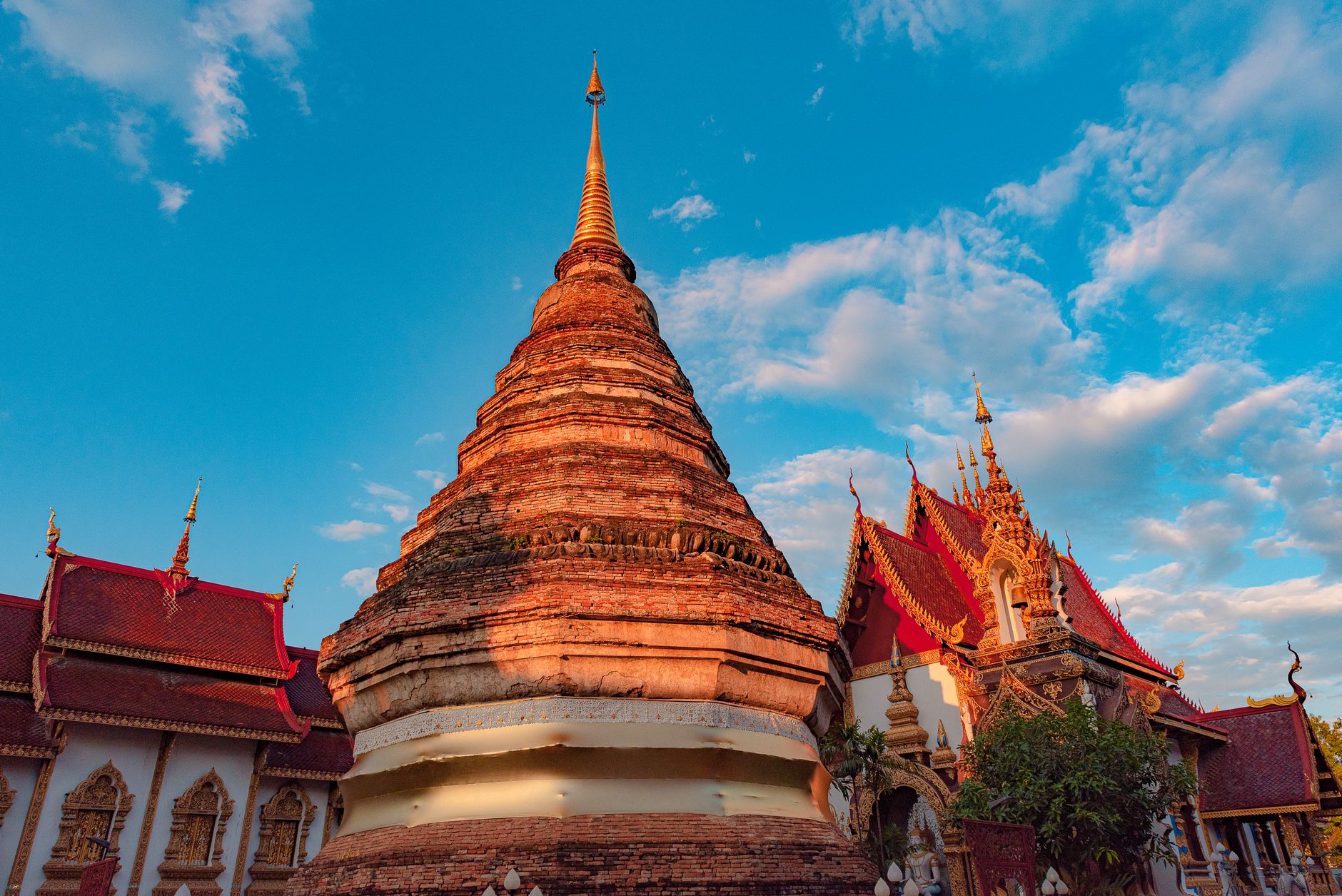
Most travel writing about Chiang Mai is set in November, when the air is cool and the lantern festival photographs beautifully. July gets a sentence at best - usually a warning about the rain. What that warning omits is that the rain in northern Thailand in July arrives in the afternoon, lasts a couple of hours, and leaves the evenings genuinely cool and the temples empty.
The city operates differently in low season. The Sunday Walking Street along Wualai Road is quieter than its reputation suggests - vendors are there, the sausages and the sticky rice are still there, but the shoulder-to-shoulder density of peak months is gone. Guesthouses in the Nimman area, which can fill weeks ahead in December and January, are bookable with two or three days’ notice. Prices at smaller properties drop noticeably.
Doi Suthep is the clearest illustration of why July works. The temple sits at around 1,080 metres above the city and is one of the most visited sites in Thailand. On a Saturday morning in February, the terrace is packed to the point where the view is partially blocked by selfie sticks. In July, the mist comes in off the hills and the terrace clears out. You can sit near the golden chedi for twenty minutes without anyone moving around you. That’s not a minor difference - it changes what the place actually feels like.
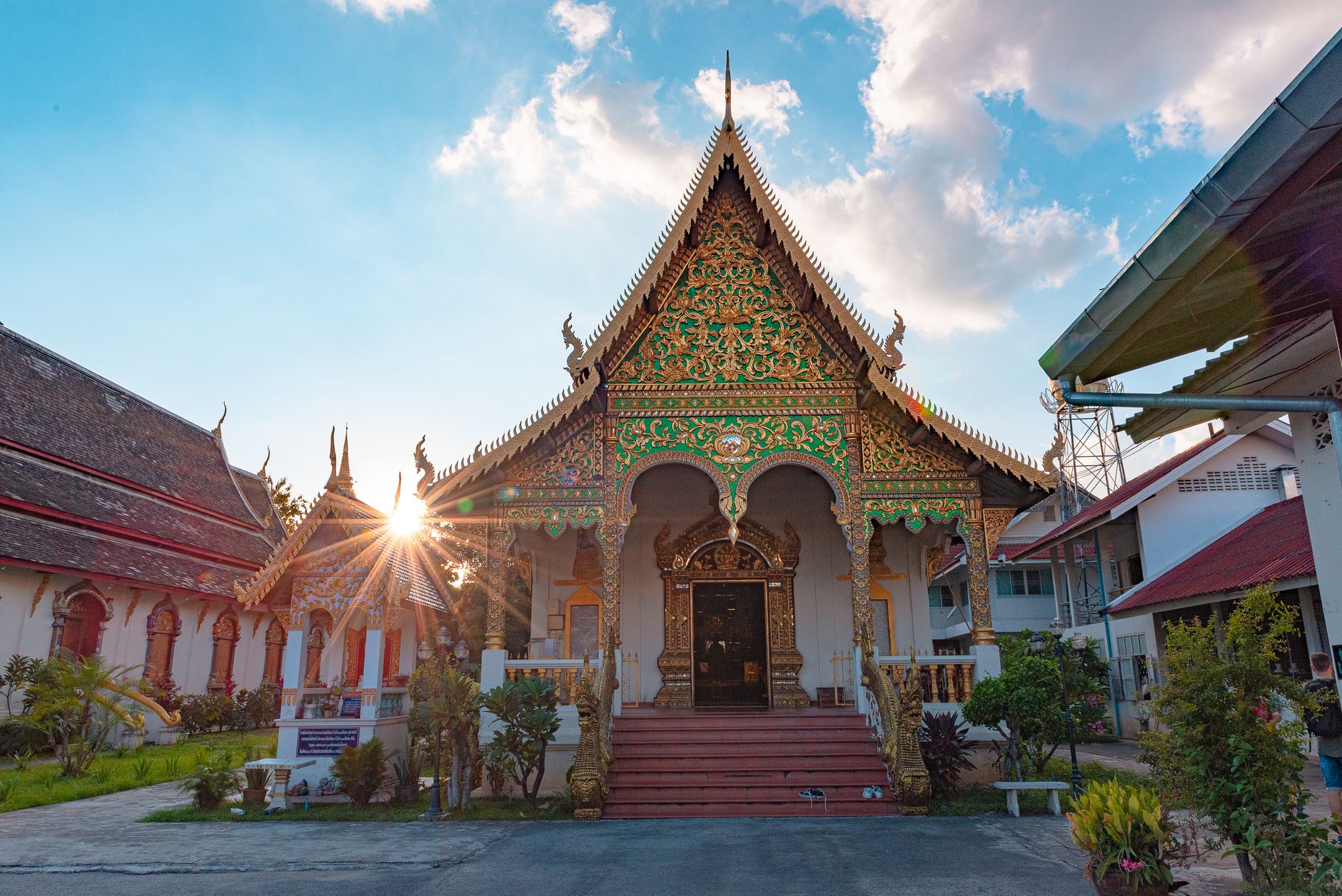
The wet season also does something useful to the surrounding landscape. The rice paddies north and west of the city fill out, the hills above Mae Rim go genuinely green rather than dusty brown, and the Mae Sa Waterfall - which is barely worth visiting in the dry months - runs properly.
The one real problem
Air quality. Chiang Mai has a serious smoke season from roughly February through April, when agricultural burning in the region pushes particulate levels high enough to affect outdoor plans and breathing. July has no such problem. The air after a rain shower is cleaner than almost any other major city in Southeast Asia at that time of year. If you’ve avoided Chiang Mai because of the smoke reports and defaulted to Bangkok instead, July specifically is the inversion of that logic.
The case for Chiang Mai in monsoon season isn’t about finding a hidden gem. It’s about visiting a well-known city when it’s functioning at a pace that lets you actually see it.