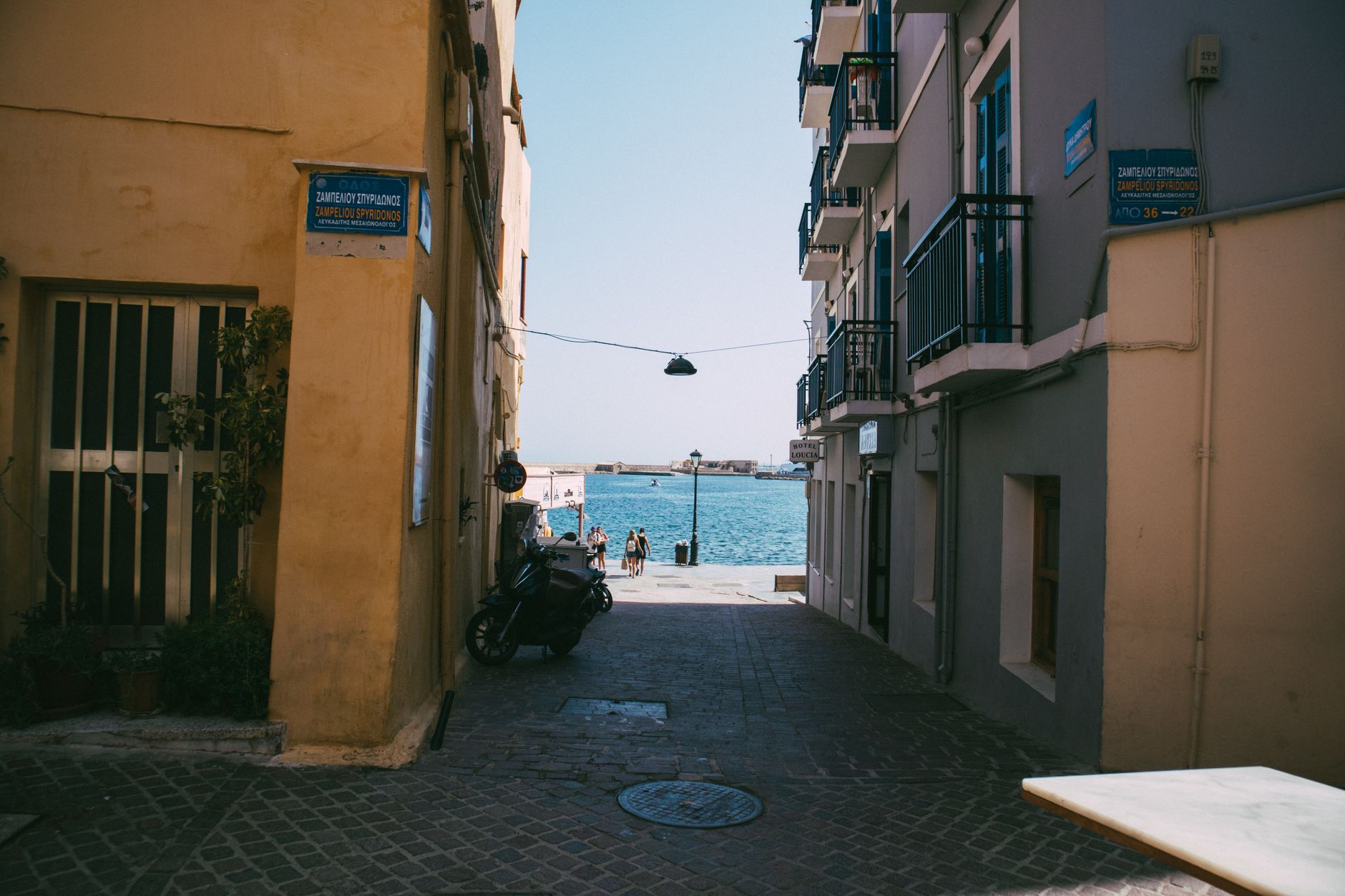
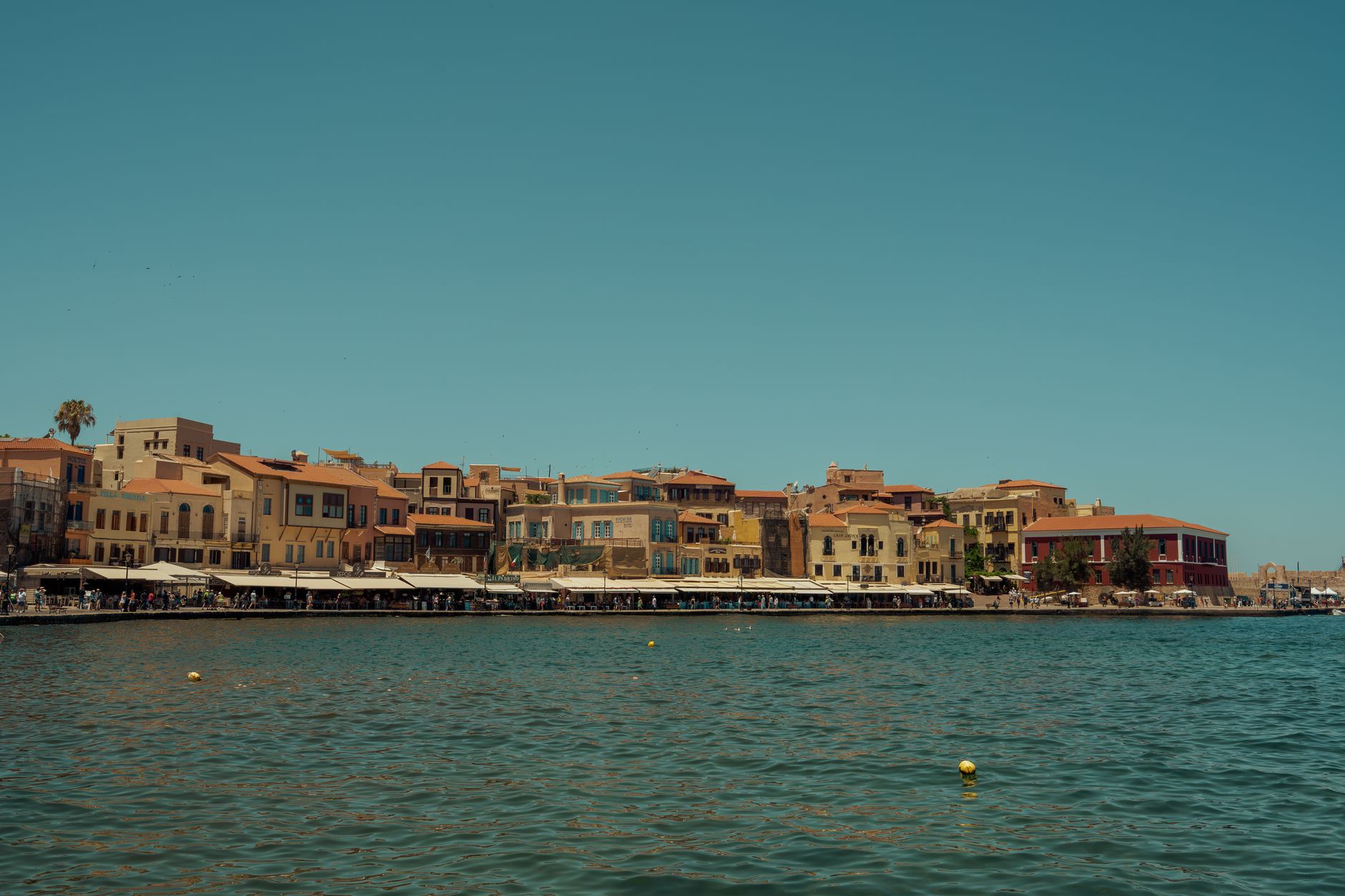
Most people book a room inside Chania’s old town because they’ve seen the photographs - the Ottoman lighthouse, the curved harbour, the pastel-painted houses that look like someone colour-corrected the whole district. Then they arrive and discover that the alleyways flood with people by 10am, that restaurant prices near the waterfront carry a significant location surcharge, and that sleeping inside the walls means listening to bar noise until 2am in peak summer.
The newer residential grid that sits directly south and east of the covered market - roughly the area around Chalepa and the streets fanning out from Plateia 1866 - is a different proposition entirely. This is where Chania’s pharmacies, hardware shops, and neighbourhood kafeneions exist without any particular interest in attracting you. Coffee here costs what coffee should cost. Tavernas serve lunch at actual lunch prices because their customers are locals eating lunch, not tourists photographing octopus drying on a line.
The Market Is the Hinge Point
Chania’s covered market, the Agora, is a 1911 cross-shaped building modelled loosely on the market in Marseille. It functions as an almost perfect dividing line between the touristified old town and the working city around it. The eastern exits drop you into streets with bakeries and a small produce market most mornings. The western exits send you toward the harbour and its version of Crete.
Staying on the eastern side means the old town is still walkable in under ten minutes - you’re not sacrificing access, you’re just not paying rent on the view.
On the Accommodation Logic
Hotels and apartments in Chalepa and the streets south of the Agora run noticeably cheaper than equivalent rooms inside the Venetian walls, particularly in July and August. That difference is meaningful over a week’s stay. The trade-off is that you won’t open your shutters to harbour light - you’ll open them to a residential street, possibly with a cat on a parked car and someone watering a balcony plant. This is not a consolation prize.
One Practical Note
Chania’s bus station (KTEL) sits on Kydonias, close to the western edge of the new town. If you’re arriving from Heraklion or heading to the Samaria Gorge trailhead at Xyloskalo, staying outside the old walls puts you significantly closer to where Cretan buses actually go.
The harbour photographs will still be there. You can walk to them every evening. You just won’t be sleeping on top of them.